A child can be bright, curious, and motivated – yet still struggle to read fluently, follow instructions, stay organized, or finish schoolwork without frustration. For many families, that gap between potential and performance is what makes learning challenges so painful. Neurofeedback for learning difficulties is often considered when parents want a drug-free, non-invasive way to support attention, processing, and self-regulation at the brain level.
This approach is not about forcing better grades through pressure. It is about helping the brain practice healthier patterns so learning can feel less effortful and daily life becomes more manageable.
What neurofeedback for learning difficulties actually does
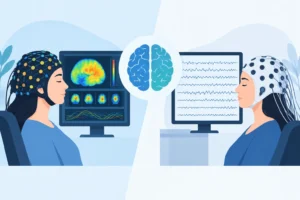
Neurofeedback is a form of EEG-based brain training. Sensors are placed on the scalp to read brainwave activity, and that information is fed back in real time through visual or auditory cues. The brain is rewarded when it moves toward more efficient patterns, much like exercise helps strengthen a muscle through repetition and feedback.
When learning is difficult, the issue is not always intelligence. In many cases, the brain may be working too hard to regulate focus, shift between tasks, process language, manage working memory, or stay calm under academic stress. A child might know the material but lose track halfway through a sentence. Another may understand a lesson verbally but struggle when reading independently. Someone else may become overwhelmed so quickly that the emotional reaction blocks learning altogether.
Neurofeedback aims to improve the regulation behind those struggles. It does not teach phonics, math facts, or handwriting directly. Instead, it supports the brain functions that make learning more available, including sustained attention, processing speed, impulse control, and emotional stability.
Why learning difficulties are rarely just one thing
Learning difficulties can look similar on the surface but come from different patterns underneath. One child may appear inattentive because of ADHD-related brain dysregulation. Another may be exhausted from poor sleep. A teen may have strong reasoning skills but struggle with reading because language processing is inefficient. Anxiety can also mimic or worsen learning problems by narrowing attention and increasing mental fatigue.
That is why a one-size-fits-all approach often falls short. Two students can both have trouble completing homework, but one needs help with attention control while the other needs support for emotional regulation and cognitive flexibility.
This is where assessment matters. In a clinical neurofeedback setting, practitioners do not simply apply the same protocol to everyone with academic struggles. They look at symptoms, history, and brain-based data to understand what may be contributing to the difficulty. QEEG brain mapping can add another layer of insight by showing patterns of underactivity, overactivity, or poor communication across brain regions associated with focus, executive function, and processing.
Who may benefit from neurofeedback
Neurofeedback can be relevant for children, teens, and even adults whose learning has been affected by regulation issues. That includes people with attention problems, processing delays, test anxiety, reading struggles, working memory weakness, or school-related emotional overwhelm.
It may also help when learning challenges sit alongside ADHD, anxiety, sleep problems, sensory overload, or low frustration tolerance. In those cases, the academic issue is only part of the picture. If the brain is frequently dysregulated, learning becomes harder than it needs to be.
That said, neurofeedback is not a cure-all. If a child has a specific learning disorder such as dyslexia, they may still need targeted educational support. If vision, hearing, trauma, or developmental conditions are involved, those factors also deserve attention. The strongest outcomes often come from matching neurofeedback with the right broader plan rather than treating it as a standalone fix for every issue.
What changes people often notice first
Families usually do not start by saying, “My child needs better brainwave regulation.” They say things like, “Homework ends in tears,” “He cannot sit with a task,” or “She knows the answer but freezes during tests.” Those daily frustrations are often where progress becomes visible first.
As training progresses, some people report that they can settle into tasks more easily, recover from mistakes faster, and stay with schoolwork longer without mental burnout. Parents may notice less resistance around routines. Teachers may comment on improved attention, better classroom stamina, or fewer emotional blowups.
In some cases, reading feels smoother because the child is less mentally scattered. In others, written work improves because working memory and focus are less taxed. For adults in college or professional training, the shift may show up as better concentration, more consistent follow-through, and less cognitive fatigue.
The pace varies. Some clients respond quickly, while others improve gradually over a series of sessions. Progress is usually monitored through symptom tracking, functional changes, and when appropriate, follow-up brain-based evaluation.
What a personalized neurofeedback process should include
A thoughtful neurofeedback program starts before the first training session. It begins with understanding the person, not just the problem. That includes medical and developmental history, current symptoms, academic or workplace concerns, sleep patterns, stress levels, and any coexisting emotional challenges.
If QEEG brain mapping is used, it helps create a more individualized picture of how the brain is functioning. That matters because effective training is based on precision. The goal is not to stimulate the brain randomly. The goal is to train specific patterns linked to the person’s real-world struggles.
During sessions, the client typically watches a screen or listens to audio while the system detects brain activity. The process is non-invasive and does not involve electrical stimulation. The brain receives immediate feedback and gradually learns to produce more efficient states.
In a quality clinical setting, treatment is adjusted over time. Practitioners review response patterns, symptom changes, and tolerance. If a protocol is too activating or not effective enough, it can be refined. That kind of professional oversight is especially important for children and for clients with overlapping concerns such as anxiety, trauma sensitivity, or mood instability.
At Positive Living UAE, this individualized model is part of the value. Neurofeedback is supported by assessment, progress reviews, and the option of broader therapeutic care when emotional or behavioral factors are also affecting learning.
The benefits of a drug-free approach
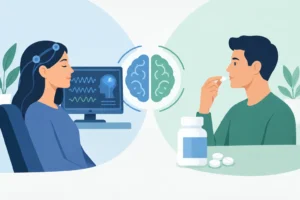
Many parents and adults are drawn to neurofeedback because it is medication-free. That does not mean medication is never appropriate, but some people prefer to start with a non-invasive option or use it alongside other supports under proper guidance.
One advantage is that neurofeedback is skill-building rather than symptom masking. The brain is being trained toward improved self-regulation, which may support benefits that carry into school, work, and home life. Another advantage is that sessions can be tailored to the individual instead of relying on a general solution for a broad diagnosis.
Still, realistic expectations matter. Neurofeedback is not magic, and it is not identical to tutoring, psychotherapy, or occupational therapy. Each has a different role. The question is not which single method is best in all cases. The better question is what combination best fits the person in front of you.
Questions worth asking before starting
If you are considering neurofeedback for learning difficulties, look for a provider who explains the process clearly, assesses thoroughly, and avoids overpromising. Ask how protocols are chosen, how progress is measured, and what kind of professional credentials and supervision are involved.
It is also reasonable to ask whether the provider has experience with attention issues, school-related stress, and cognitive performance concerns. Learning difficulties are rarely just academic. They often affect confidence, family dynamics, and a person’s sense of capability. The right environment should feel both clinically competent and genuinely supportive.
For many people, that combination makes all the difference. When the brain becomes more regulated, learning may stop feeling like a daily battle and start feeling more possible. Sometimes that shift begins not with harder effort, but with better support for the system doing the learning in the first place.