A parent may see a child who is bright but cannot settle into homework. A professional may be exhausted, anxious, and unable to switch off at night despite doing all the “right” things. These experiences can feel confusing because symptoms alone do not always explain what is happening beneath the surface. A QEEG brain mapping review can provide a clearer starting point by showing patterns in brain activity that may be contributing to attention, mood, sleep, or emotional regulation challenges.
QEEG stands for quantitative electroencephalography. It is a non-invasive assessment that measures and analyzes the brain’s electrical activity through sensors placed on the scalp. Think of it as a detailed fitness assessment before beginning a training program. It does not define a person or replace a full medical evaluation, but it can help a qualified practitioner create a more individualized path forward.
What Happens During a QEEG Brain Mapping Review?
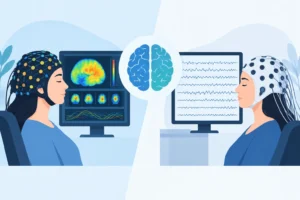
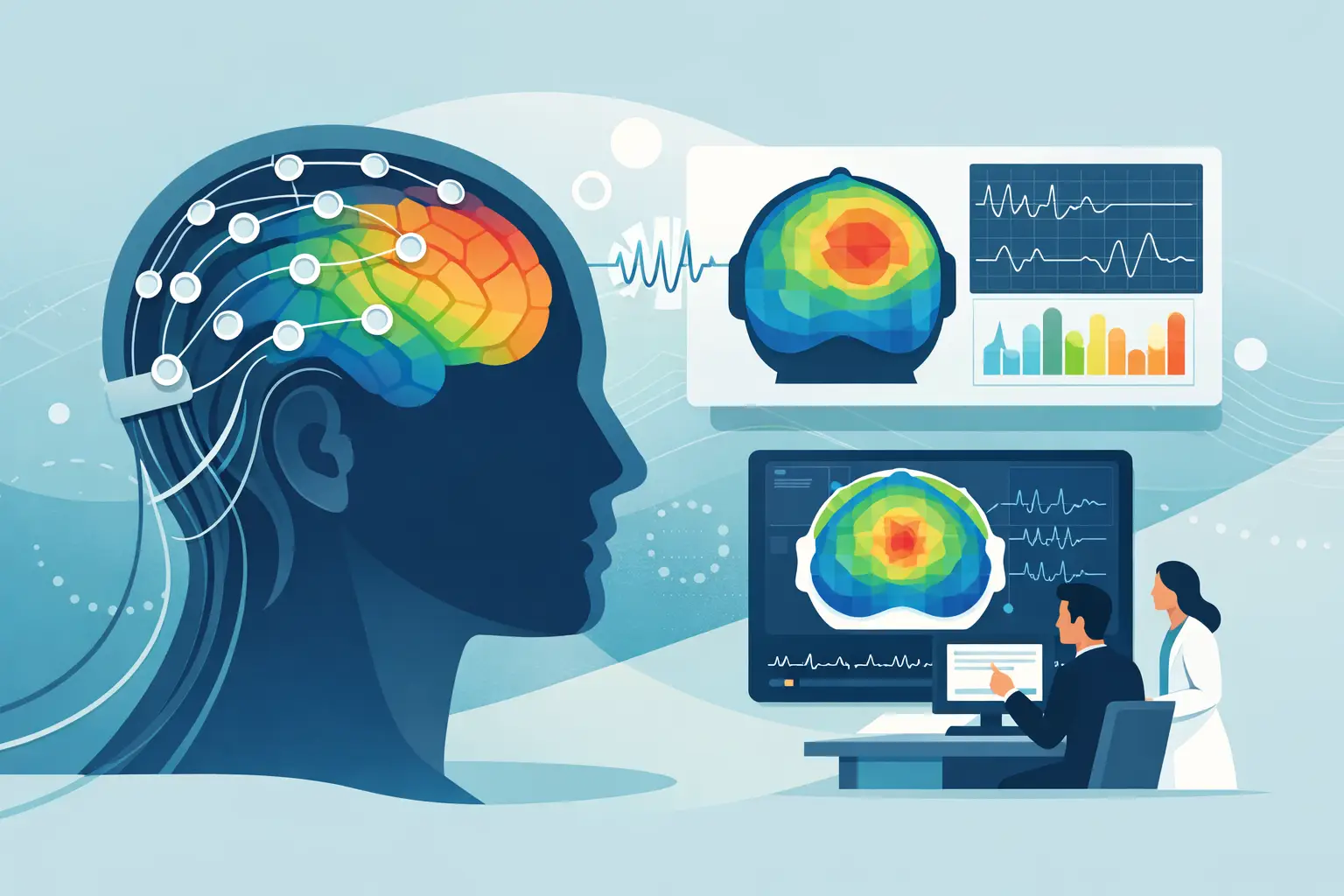
The assessment begins with a standard EEG recording. Small sensors are placed on the scalp using a conductive gel or paste. They do not send electricity into the brain, cause pain, or involve radiation. They simply record the brain’s natural electrical signals while the client rests with eyes open and closed, and sometimes completes simple tasks.
The recording is then cleaned and analyzed with specialized software. A practitioner reviews patterns across different brain regions and frequency bands, such as delta, theta, alpha, beta, and high beta activity. These patterns can be compared with age-based normative databases, alongside the client’s symptoms, health history, goals, and other relevant assessments.
That last point matters. A brain map is not a standalone diagnosis. It is a clinical tool that becomes useful when interpreted in context. Two people can have similar-looking patterns but different life experiences, stressors, medications, sleep quality, or medical histories. A responsible QEEG brain mapping review connects data with the whole person rather than treating a chart as the final answer.
What Can a Brain Map Reveal?
A QEEG may identify patterns associated with inefficient regulation, under- or over-arousal, and communication differences between brain regions. For example, some people struggling with focus may show patterns that suggest difficulty sustaining an alert, organized state. Someone with persistent anxiety or sleep disruption may show signs of a nervous system that has trouble settling.
These findings are not labels, and they do not prove that one specific pattern causes one specific condition. Brain activity changes with age, fatigue, stress, medication, caffeine, and many other factors. The value of the map is its ability to guide questions and personalize care.
For children, this can be especially reassuring. Rather than framing a learning or behavior challenge as laziness, defiance, or a lack of ability, parents can explore whether regulation, attention, or processing may be playing a role. For adults, the assessment may help explain why willpower alone has not resolved burnout, poor sleep, emotional reactivity, or brain fog.
How QEEG Guides Neurofeedback Training
Neurofeedback is often described as a gym for the brain. Just as physical training gives the body feedback to build strength and coordination, neurofeedback gives the brain real-time feedback to practice more efficient activity patterns.
After reviewing the QEEG and conducting a thorough intake, the practitioner develops a training plan tailored to the individual. During sessions, sensors monitor brain activity while the client watches a video, listens to audio, or engages with a visual display. When the brain moves toward the targeted pattern, the feedback responds positively. Over repeated sessions, the brain can learn through practice.
This approach is medication-free and non-invasive, but it should not be presented as a quick fix. Meaningful change commonly depends on the concern being addressed, the complexity of the person’s history, consistency with sessions, sleep habits, stress levels, and whether counseling, coaching, medical care, or lifestyle changes are also needed. Neurofeedback can be a valuable part of a broader care plan, not necessarily the only part.
At Positive Living UAE, QEEG-guided neurofeedback is supported by clinical oversight and structured progress evaluations. This makes it possible to adjust training as a client’s needs change rather than relying on a one-size-fits-all protocol.
What a Quality Review Should Include
Not every brain map is interpreted with the same level of care. A high-quality review should feel thorough, understandable, and grounded in your real-life concerns. You should leave knowing what was observed, what it may mean, what remains uncertain, and what the recommended next steps are.
Look for a provider who includes these elements:
- A detailed intake covering symptoms, goals, sleep, health history, medication, and current stressors.
- Proper EEG acquisition and artifact removal, since muscle tension, blinking, and movement can affect recordings.
- Interpretation by a trained, qualified professional who understands both EEG data and clinical context.
- A personalized neurofeedback plan rather than a generic protocol used for every client.
- Clear progress tracking through symptom check-ins, functional goals, and follow-up assessments when appropriate.
A reputable provider should also be comfortable discussing limits. QEEG is not a substitute for emergency mental health support, neurological care, or medical diagnosis. If someone has new seizures, sudden cognitive changes, severe headaches, suicidal thoughts, or other urgent symptoms, they need prompt evaluation by the appropriate medical professional.
Questions Families and Adults Often Ask
Is QEEG brain mapping safe?
Yes. QEEG recording is passive: the sensors read electrical activity already produced by the brain. There is no radiation and no electrical stimulation involved in the assessment itself. Some people find the setup mildly inconvenient because of the gel used on the scalp, but the procedure is generally comfortable for children, adults, and seniors.
Can it diagnose ADHD, anxiety, depression, or a learning disorder?
No. A QEEG cannot independently diagnose these conditions. Diagnosis requires a qualified clinician to consider symptoms, developmental history, behavior, medical factors, and standardized assessments where appropriate. The map can offer additional objective information that supports more personalized planning.
How soon will results be available?
Timing varies by clinic and the depth of analysis involved. The key is not speed alone. A careful review requires clean data, thoughtful interpretation, and time to discuss findings in language that makes sense to the client or family.
Will everyone need the same number of neurofeedback sessions?
No. Some people notice early improvements in sleep, calmness, or concentration, while others need more time, particularly when symptoms are longstanding or multiple issues overlap. A good provider sets realistic expectations and regularly reviews whether the plan is helping.
Using Results to Build Lasting Change
The most helpful outcome of a QEEG assessment is not a complicated graph. It is a practical plan. That plan may include neurofeedback training, counseling for emotional patterns, coaching for habits and performance, sleep support, or coordination with a medical provider. For many people, lasting progress comes from addressing both brain regulation and the daily environments that place the nervous system under strain.
If you are considering a QEEG brain mapping review, bring your questions honestly. Describe what daily life feels like, when symptoms are worst, what you have already tried, and what improvement would actually look like at home, school, work, or in relationships. The right assessment should leave you feeling more understood, not more overwhelmed.
A brain map cannot tell your whole story. But when it is reviewed with skill, compassion, and appropriate clinical perspective, it can help turn uncertainty into a more informed next step.