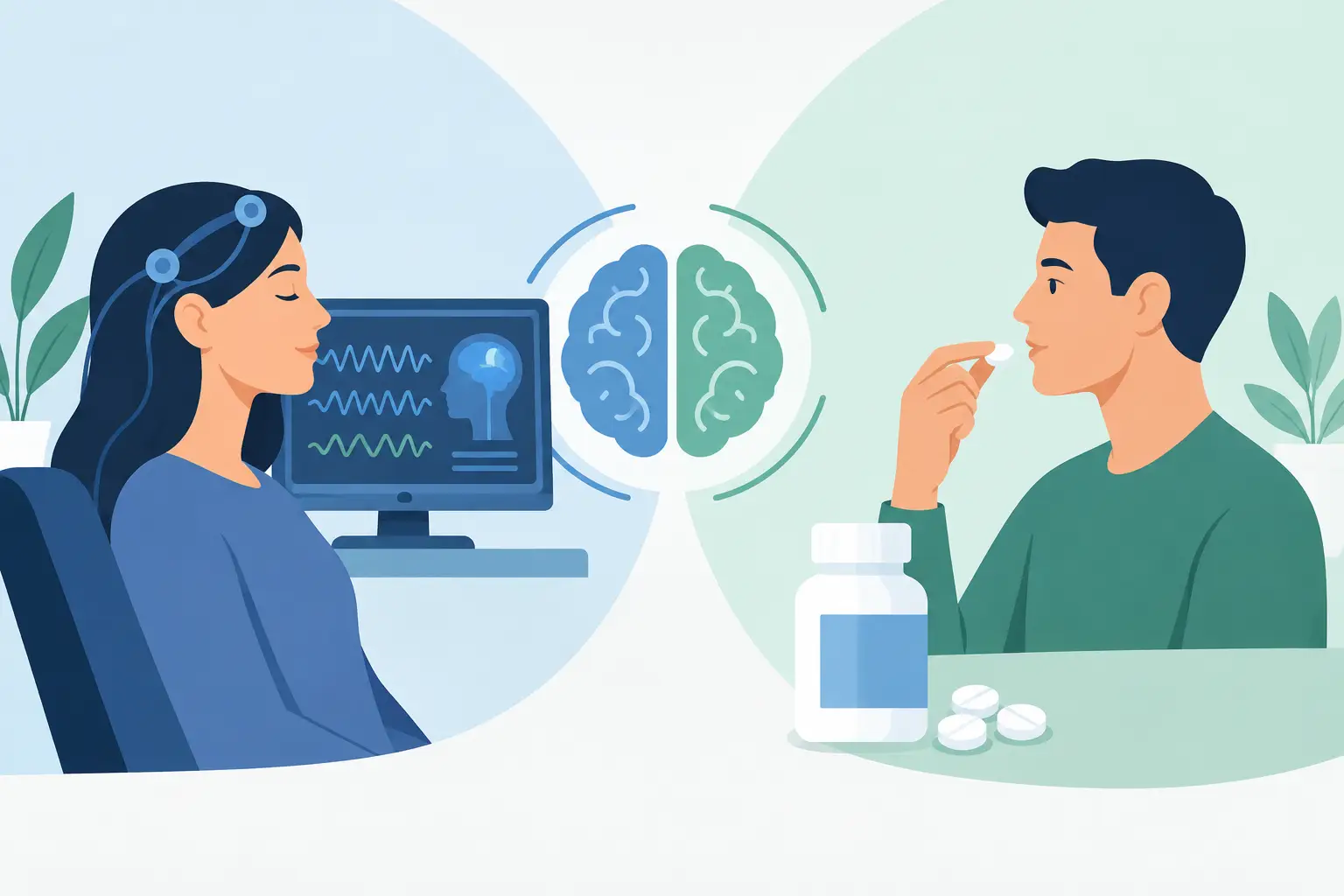
A child who cannot settle into homework, a professional whose focus disappears by midafternoon, or an adult overwhelmed by racing thoughts may all ask the same question: is neurofeedback versus stimulant medication the better path? The honest answer is not a one-size-fits-all recommendation. Both approaches can be valuable, but they work differently, carry different considerations, and may fit different goals, health histories, and family preferences.
For many people, the real goal is bigger than getting through the next school day or meeting. It is building steadier attention, emotional regulation, sleep, confidence, and resilience. That is why a thoughtful assessment matters more than choosing a treatment based on a headline or someone else’s experience.
How stimulant medication supports attention
Stimulant medication is commonly prescribed for ADHD and has a substantial body of research supporting its ability to reduce core symptoms for many children and adults. Depending on the medication and person, it may help improve concentration, impulse control, task completion, and hyperactivity. Some people notice benefits quickly, sometimes within the first day of taking a prescribed dose.
Stimulants generally work by affecting neurotransmitters involved in attention, motivation, and executive functioning. For someone whose ADHD symptoms are significantly disrupting school, work, driving, relationships, or daily safety, that prompt symptom relief can be meaningful. Medication may create enough breathing room for a person to practice organizational skills, engage in therapy, or feel more in control of their day.
Yet a fast response does not mean medication is the complete answer for every person. Effects can fade when the medication wears off, and finding the right medication and dose may take time and close medical supervision. Some individuals experience appetite changes, sleep difficulties, headaches, irritability, elevated heart rate, or increased anxiety. Others do very well with medication and have few troublesome side effects.
Medication decisions should always be made with a qualified prescribing clinician, particularly for children, people with heart conditions, those taking other medications, or individuals with a history of anxiety, mood concerns, or substance misuse. Stimulants can be highly effective, but they require monitoring rather than a trial-and-forget approach.
What neurofeedback training is designed to do
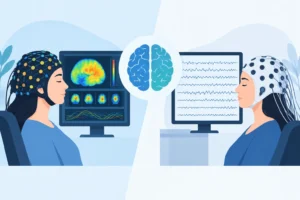
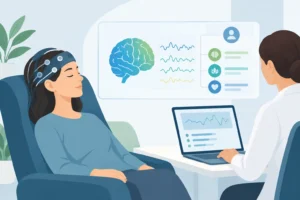
Neurofeedback is a non-invasive form of brain training that uses EEG technology to measure brain activity in real time. Sensors are placed on the scalp to read electrical patterns produced by the brain. The sensors do not send electricity into the brain. Instead, specialized software provides feedback, often through sounds or visuals, when the brain moves toward a desired pattern of activity.
A useful analogy is a gym for your brain. Just as physical training gives the body repeated opportunities to build strength and coordination, neurofeedback gives the brain repeated opportunities to practice more efficient self-regulation. Sessions are typically comfortable and do not require medication or invasive procedures.
For ADHD-related concerns, a personalized protocol may aim to support sustained attention, calmer regulation, impulse control, or sleep quality. A QEEG brain map can help a trained practitioner understand patterns that may be relevant to a client’s symptoms and create a more individualized training plan. Progress should be reviewed through symptom tracking, client feedback, functional changes at home or school, and periodic reassessment when appropriate.
Neurofeedback is not a quick fix, and it should not be presented as one. Training usually involves a course of sessions because the objective is learning and repetition. People may notice gradual changes in focus, emotional steadiness, frustration tolerance, or sleep. Others may see limited change, especially if factors such as chronic stress, trauma, learning differences, medical conditions, inadequate sleep, or an unsuitable protocol are not addressed alongside training.
Neurofeedback versus stimulant medication: key differences
The clearest difference is timing. Stimulant medication can often reduce symptoms while it is active in the body. Neurofeedback aims to build regulation skills over repeated sessions, so results are generally expected to develop more gradually.
The second difference is mechanism. Medication alters neurochemical activity through a prescribed substance. Neurofeedback uses information about brain activity to reinforce healthier patterns of regulation without introducing a drug. For families seeking a medication-free approach, or adults who have not tolerated stimulants well, that distinction can be especially important.
The third difference is the evidence conversation. Stimulant medication has stronger and more consistent evidence for short-term reduction of core ADHD symptoms. Neurofeedback research is promising, and some individuals report meaningful improvements, but outcomes vary across studies, training methods, and participants. Neurofeedback should be delivered with transparent expectations, qualified oversight, and a plan for measuring whether it is helping in real life.
This does not make the choice a simple contest. The right question is often: what support will help this person function better while respecting their health needs, values, and long-term goals?
When one approach may be a better fit
A person may lean toward stimulant medication when ADHD symptoms are severe, immediate support is needed, and there are no medical reasons to avoid a carefully monitored prescription. For example, a college student at risk of failing classes because of severe inattention may benefit from discussing medication promptly with a physician, alongside coaching or therapy.
Neurofeedback may appeal to people who want a non-drug option, have experienced unwanted medication effects, or want support that targets self-regulation more broadly. It can be particularly attractive for parents who want to explore medication-free care for a child, professionals dealing with focus and burnout, or people whose attention difficulties overlap with sleep disruption, anxiety, or emotional reactivity.
Neither choice should be driven by guilt. Parents are not failing if medication is appropriate for their child. Adults are not being unrealistic if they want to explore non-medication support. Good care makes room for informed preferences while staying grounded in clinical assessment and measurable outcomes.
Combination care is often more practical than either-or thinking
For some clients, stimulant medication and neurofeedback are not competing options. A prescribing clinician may use medication to reduce disruptive symptoms while neurofeedback, counseling, coaching, and practical habit changes support longer-term regulation and daily skills.
This can be useful when medication helps with focus but does not fully address emotional outbursts, procrastination, poor sleep, test anxiety, family conflict, or burnout. It can also help when a person wants to work toward the lowest effective medication dose under medical supervision. Neurofeedback should never be used as a reason to stop or change prescribed medication without consulting the prescribing clinician.
A comprehensive plan may also consider nutrition, sleep routines, movement, screen habits, school accommodations, workplace structure, psychotherapy, and parent coaching. Attention is not created by one brain system alone. It is shaped by the nervous system, environment, habits, relationships, and overall health.
Questions to ask before choosing care
Before starting either route, ask how progress will be measured. “Feeling better” matters, but concrete indicators are equally helpful: fewer missed assignments, smoother mornings, better sleep, less conflict, stronger work performance, or improved ability to recover from frustration.
It is also reasonable to ask about clinician qualifications, assessment methods, possible side effects, expected timelines, and what happens if the first plan does not work. For neurofeedback, ask whether care is individualized through EEG or QEEG-informed assessment, how protocols are reviewed, and how the provider tracks functional change. For medication, ask about dosing, follow-up frequency, sleep and appetite monitoring, and alternatives if side effects occur.
At Positive Living UAE, neurofeedback is approached as part of a wider, personalized wellness pathway rather than a generic session package. Clinical brain-based training can be combined with counseling, coaching, and other supportive therapies when appropriate, helping clients work toward changes that show up beyond the treatment room.
The most helpful next step is not choosing a side prematurely. It is finding experienced professionals who listen carefully, assess the whole picture, and help you or your child build a plan that feels safe, measurable, and genuinely sustainable.