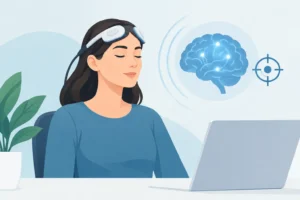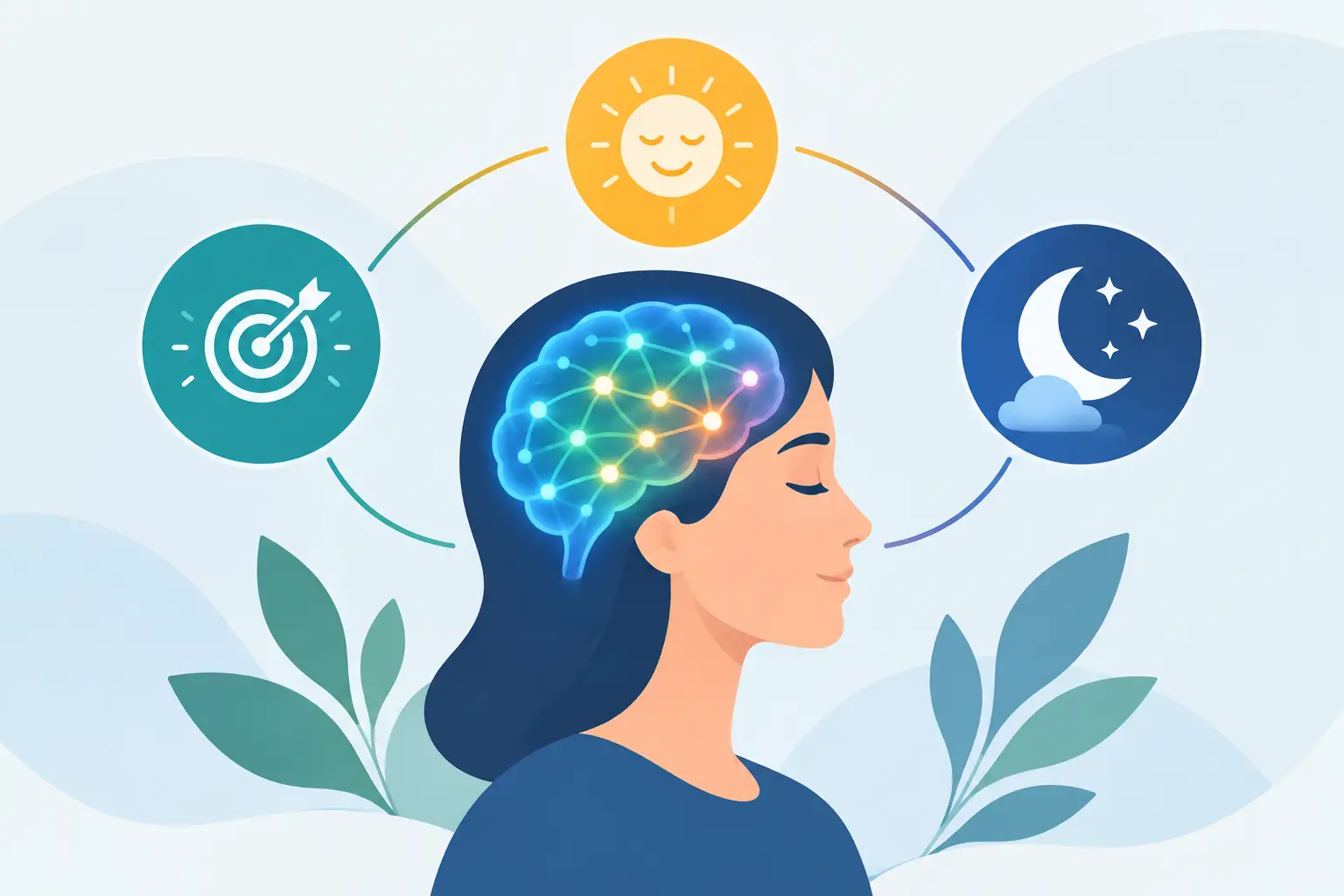
A child can be bright and curious yet struggle to sit through homework. A professional can be capable and driven yet feel mentally exhausted by midafternoon. Someone else may lie awake each night, despite being tired, with a mind that will not settle. These experiences can look very different on the surface, but brain mapping can help reveal patterns in brain activity that may be contributing to them.
Rather than guessing which approach may fit best, a QEEG brain map gives practitioners a clearer starting point. It is a noninvasive assessment that measures electrical activity in the brain and organizes that information into an understandable picture. For people seeking drug-free support for attention, emotional regulation, sleep, or mental performance, that picture can make care feel more personal, measurable, and purposeful.
What is brain mapping?
Brain mapping, often called quantitative electroencephalography or QEEG, records the brain’s electrical signals through small sensors placed on the scalp. The process is painless. The sensors do not send electricity into the brain. They simply detect and record the natural brainwave activity already taking place.
Your brain produces different rhythms throughout the day. Some patterns are commonly associated with deep rest, others with drowsiness, focused attention, active thinking, or stress. None of these brainwaves are inherently good or bad. What matters is whether their activity, speed, and balance appear appropriate for your age, state, and goals.
A QEEG assessment compares recorded activity with age-based normative data and looks for meaningful patterns across different brain regions. The resulting map may show areas that appear overactive, underactive, poorly regulated, or not communicating efficiently with other areas. It is not a stand-alone medical diagnosis, and it should never replace a thorough clinical assessment. It is a valuable piece of information that helps experienced practitioners understand the nervous system more clearly.
Why a QEEG brain map is more than a test
Many people arrive for support after trying broad solutions: a new routine, supplements, tutoring, counseling, medication, or simply pushing through. Any of these may be helpful in the right circumstances. Yet when progress stalls, the question becomes more specific: what does this person’s brain need to regulate more effectively?
A brain map helps move the conversation beyond labels alone. Two people with anxiety may have very different patterns of arousal. One may feel constantly wired and unable to slow down. Another may feel mentally foggy, disconnected, and easily overwhelmed. Likewise, attention difficulties can involve restlessness, low alertness, inconsistent focus, sleep deprivation, emotional stress, or a combination of factors.
This distinction matters because neurofeedback is not meant to be a one-size-fits-all experience. At Positive Living UAE, the map can help inform an individualized training plan alongside a person’s symptoms, health history, daily demands, and therapeutic goals. The goal is not to create a “perfect” brainwave chart. It is to support healthier regulation that improves life outside the clinic.
What happens during a brain mapping appointment?
The appointment usually begins with a detailed conversation. For a child, this may include developmental history, school concerns, behavior at home, sleep habits, and any previous assessments. For adults, it may cover stress load, work demands, mood, memory, concentration, trauma history, headaches, and medication use. Context is essential because a brain map has meaning only when interpreted alongside the person living with those symptoms.
During the recording, a practitioner places a fitted cap or individual sensors on the scalp using conductive gel. You may be asked to sit quietly with your eyes open and closed for short periods. In some cases, additional tasks may be used to capture how the brain responds to attention or processing demands. The recording itself is generally comfortable and does not require recovery time.
Afterward, the data is cleaned to remove interference from blinking, muscle tension, or movement. A trained clinician reviews the findings rather than relying only on automated software. This professional interpretation is crucial. A map can point to patterns worth exploring, but it cannot explain every symptom or predict a person’s future on its own.
How brain mapping guides neurofeedback
Neurofeedback is often described as a gym for the brain. Just as physical training uses feedback and repetition to strengthen useful movement patterns, neurofeedback gives the brain real-time information about its own activity. Over repeated sessions, the brain can learn to shift toward more efficient regulation.
During training, sensors monitor brain activity while the client watches a film, listens to audio, or engages with a simple visual display. When the brain moves toward selected training targets, the feedback responds positively. There is no need to consciously force a particular brainwave. The nervous system learns through practice.
The brain map may help determine where to train, what patterns to encourage or reduce, and how to sequence sessions. Progress should also be monitored carefully. A thoughtful plan includes regular check-ins on real-life changes, such as fewer emotional outbursts, easier task completion, more restorative sleep, reduced migraine frequency, or improved resilience under pressure. Follow-up QEEG assessments may be useful when clinically appropriate.
Who may benefit from a brain map?
Brain mapping can be useful for people who want a clearer, data-informed view of cognitive or emotional concerns. Parents may seek it when a child has attention challenges, learning difficulties, impulsivity, emotional reactivity, or persistent sleep problems. Adults may explore it for anxiety, burnout, low mood, memory concerns, migraines, or a feeling of being mentally “on” all the time.
It can also support performance goals. Executives, athletes, students, and creatives often want steadier focus, better recovery from stress, sharper mental clarity, and more consistent performance. In these cases, the aim is not symptom relief alone. It is building the capacity to stay calm, alert, and adaptable when demands are high.
Still, brain mapping is not necessary for every concern, and neurofeedback is not the only helpful intervention. Counseling may be central when someone is processing grief, relationship difficulties, or painful experiences. Medical evaluation is essential for new, severe, or rapidly worsening symptoms. Sleep, nutrition, movement, and social support also shape brain health. The strongest care plans respect the whole person rather than treating a brain map as the entire answer.
Questions people often ask before starting
Is brain mapping safe?
Yes. QEEG recording is noninvasive and does not stimulate the brain. It involves measuring electrical activity from the scalp, much like a thermometer measures temperature without changing it. Some people find the gel mildly inconvenient, but the assessment itself is generally easy to tolerate for children, adults, and seniors.
Can a brain map diagnose ADHD, anxiety, or depression?
No. A QEEG brain map may provide supportive clinical information, but it does not independently diagnose ADHD, anxiety, depression, or other conditions. Diagnosis requires qualified clinical evaluation that considers symptoms, history, functioning, and when needed, medical factors.
How quickly will results appear?
The timing varies. Some clients notice shifts in sleep, calmness, or mental clarity early in training, while others need more time and consistency. Progress can depend on the concerns being addressed, the complexity of a person’s history, attendance, stress levels, and whether neurofeedback is combined with counseling, coaching, or other supports. Sustainable change is usually built session by session.
A brain map cannot define you, and it is not a verdict on what your brain can or cannot do. It is a practical starting point – one that can replace uncertainty with a more informed, compassionate plan for helping your brain and nervous system function at their best.