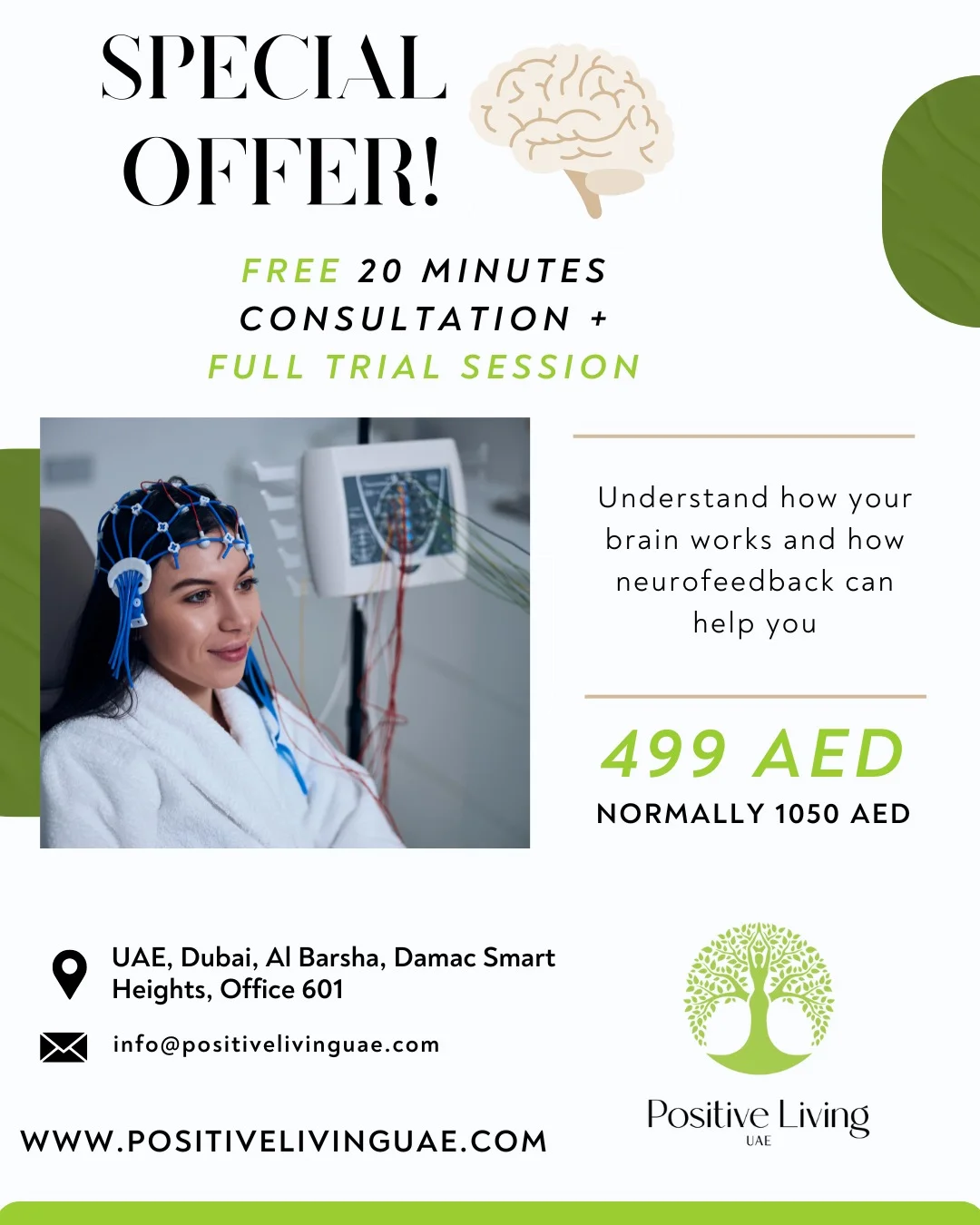
Neurofeedback therapy trains your brain directly through real-time feedback, differing from traditional talk therapy’s focus on verbal exploration of emotions and behaviours. Both approaches support mental wellness in Dubai’s demanding lifestyle, but they target change differently—neurofeedback at the neurological level, therapy through insight and coping skills.
Core Differences in Approach
Neurofeedback uses EEG sensors to track real-time brainwave activity and gives instant feedback through visuals or sounds—almost like a game that rewards calmer or more regulated states. The brain learns through this feedback loop passively.
Although the training itself doesn’t require talking, there is conversation during consultations to understand the client’s symptoms and ongoing progress, and practitioners stay in consistent communication with clients to update protocols as needed.
Traditional talk therapy, such as CBT, relies on verbal discussions about thoughts, behaviours, and past experiences. It actively builds emotional insight and coping strategies. Talk therapy requires ongoing dialogue throughout the process, which helps deepen understanding and strengthens the therapeutic relationship.
Neurofeedback can be especially helpful for clients who find verbal expression difficult—such as teenagers, neurodivergent clients, or trauma survivors—while talk therapy is often more effective for relational challenges like grief, interpersonal conflict, or exploring meaning and emotions.
Speed and Session Experience
Most people begin noticing shifts from neurofeedback somewhere between 5–20 sessions. Because it works directly with brain patterns, the physiological changes can appear earlier, though the exact timeline varies for each individual. Many report improvements by around session 10. The sessions themselves tend to feel calm and restorative: you simply sit, watch a screen, and let your brain adjust over 30 minutes.
For optimal and lasting results, neurofeedback is most effective when completed 2–3 times per week, as consistent repetition helps the brain consolidate new neural patterns.
Talk therapy often requires weeks or months for insights and behavioural changes to solidify. Sessions involve active conversation, reflection, and emotional processing—which can feel draining at times but is valuable for deeper personal growth.
For busy professionals in Dubai, neurofeedback offers a non-verbal, time-efficient option that can fit naturally alongside demanding work schedules.
Long-Term Results and Sustainability
Neurofeedback creates lasting brain rewiring, reducing relapse without ongoing sessions. Effects hold for anxiety, focus, and sleep once patterns stabilise.
Talk therapy equips lifelong strategies, though medication-dependent cases may need continuous use. Combining both yields the best outcomes—neurofeedback for brain balance, therapy for emotional processing.
Side Effects and Accessibility
Neurofeedback stays non-invasive with rare mild fatigue, no drugs involved. It is measurable through brain maps and structured symptom tracking, allowing progress to be monitored objectively.
Traditional therapy risks emotional intensity but remains widely available and affordable. Medications carry side effects like dependency.
Both are safe for most; consult for seizures or pacemakers with neurofeedback.
| Aspect | Neurofeedback | Traditional Therapy |
| Focus | Brainwave regulation | Emotional/behavioural insights |
| Session Style | Passive, tech-based | Verbal discussion |
| Time to Results | 10-40 sessions, quicker neuro changes | Weeks/months |
| Best For | ADHD, anxiety, sleep | Trauma, relationships |
| Sustainability | Long-lasting rewiring | Lifelong tools, possible meds |
| Side Effects | Minimal | Emotional processing |
When to Choose Each—or Both
Pick neurofeedback for neurological tweaks like ADHD focus or insomnia relief. Opt for talk therapy on relational hurdles.
Many thrive by combining them: neurofeedback optimises brain function, therapy processes feelings. Ideal for Dubai families tackling teen stress or couple dynamics.
Why Positive Living UAE Excels in Both
At Positive Living UAE, certified therapists offer neurofeedback therapy alongside counselling and Imago couple work. Our holistic Dubai centre tailors blends for anxiety, teen issues, or peak performance.
Experience science-backed calm without words alone. Book a consult today—discover what fits your journey.