If your mind feels like it is always working against you – racing at night, losing focus during the day, overreacting under stress, or struggling to switch gears – it is natural to ask: what is neurofeedback therapy, and can it actually help?
Neurofeedback therapy is a non-invasive form of brain training that uses real-time EEG monitoring to help the brain recognize and improve its own activity patterns. In simple terms, it gives your brain information about how it is functioning, then rewards healthier patterns so they become easier to repeat. Many people describe it as a gym for your brain. You are not forcing the brain. You are training it.
That distinction matters. Neurofeedback is not talk therapy, and it is not medication. It does not rely on discussing every symptom in depth, and it does not change brain function through chemicals. Instead, it works through learning. The brain receives feedback, notices what is working better, and gradually shifts toward more regulated performance.
What is neurofeedback therapy used for?
Neurofeedback is used for a wide range of concerns tied to emotional regulation, attention, sleep, stress response, and cognitive performance. That includes ADHD, anxiety, depression, migraines, burnout, anger dysregulation, memory issues, learning difficulties, and sleep disruption. It is also used by people who are not in crisis at all but want sharper focus, faster recovery from stress, and better mental stamina.
The reason one method can support so many different challenges is that neurofeedback is not aimed at a diagnosis label alone. It looks at how the brain is functioning underneath the symptoms. Two people may both say they feel anxious, but one may have a brain that is stuck in high alert while another struggles to calm down after cognitive overload. Effective training should reflect those differences.
That is why personalized care matters. A quality neurofeedback program does not treat every client the same way, because the brain patterns behind similar complaints can be very different.
How neurofeedback therapy works
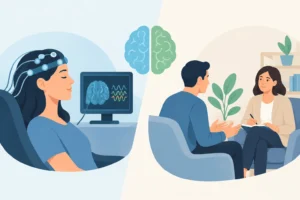
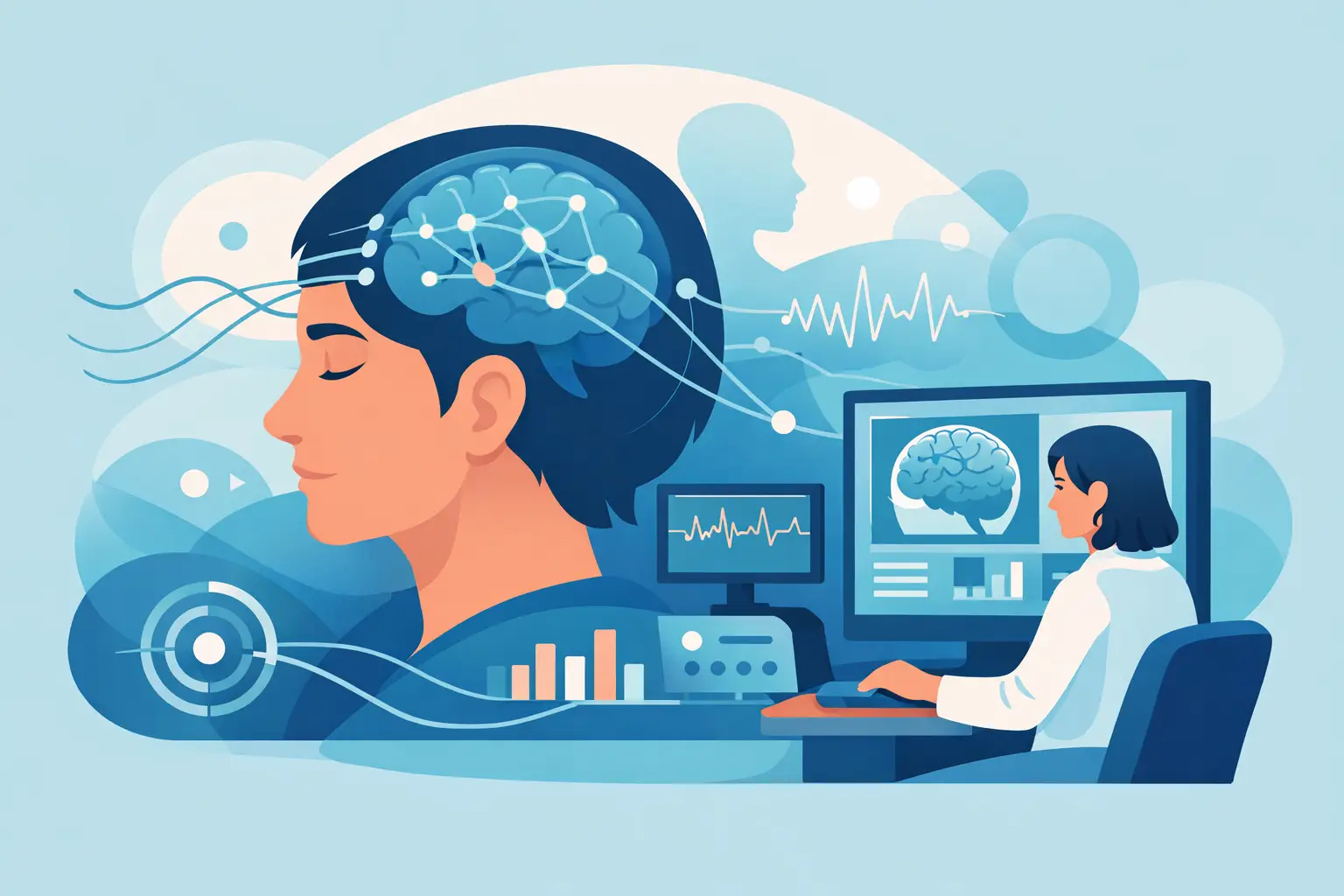
During a session, sensors are placed on the scalp to read electrical activity in the brain. These sensors do not send anything into the body. They only measure. The EEG data is then used by specialized software to track brainwave activity in real time.
As the brain produces a more helpful pattern, the system gives immediate feedback. That feedback may come through a video becoming brighter, a sound playing smoothly, or a game continuing successfully. When the brain shifts away from the desired pattern, the reward changes. Over time, the brain learns which states are more efficient and stable.
This is based on operant conditioning, which is a well-established learning process. The brain is constantly adapting. Neurofeedback simply makes some of that adaptation visible and trainable.
For many clients, the process feels surprisingly simple. You sit comfortably, watch a screen, and let the training happen. The work is happening in the background, where the brain is picking up cues and adjusting itself. That can make neurofeedback especially appealing for children, busy professionals, and people who feel exhausted by approaches that require constant verbal effort.
Why brain mapping often comes first
One of the most valuable tools in neurofeedback care is QEEG brain mapping. This is a more detailed assessment that compares brainwave activity across different regions of the brain and helps identify areas of dysregulation.
Think of it like getting a map before starting a journey. Without that map, training can be too general. With it, practitioners can design a protocol that reflects the client’s actual brain patterns rather than making broad assumptions.
A QEEG does not diagnose every problem on its own, and it should not replace clinical judgment. But it can add an important layer of precision. For someone struggling with attention, emotional reactivity, or poor sleep, it helps answer a more useful question than “What is wrong with me?” It asks, “How is my brain functioning right now, and what can we train more effectively?”
What does neurofeedback therapy feel like?
Most people find it comfortable. There is no pain, no electric current, and no sedation. The sensors simply read brain activity from the scalp. Sessions are often calming, and some clients feel more settled afterward. Others notice gradual changes over several weeks rather than dramatic shifts after one visit.
That gradual change is normal. Neurofeedback is training, not a quick override. Just as physical fitness improves through repetition, brain regulation tends to strengthen through consistent sessions. Some people notice better sleep first. Others report that they feel less reactive, more focused, or less mentally drained. The order of improvements can vary.
This is also where expectations need to stay realistic. Neurofeedback can be powerful, but it is not magic. Progress depends on the issue being treated, how long it has been present, the quality of the assessment, and whether the treatment plan is properly individualized.
Who may benefit most from neurofeedback?
Children with ADHD or learning challenges often benefit because neurofeedback can support attention, impulse control, and emotional steadiness without adding medication side effects. For parents, that can feel like a meaningful option when they want support that is safe, measurable, and tailored.
Adults dealing with anxiety, burnout, low mood, or poor sleep may benefit because neurofeedback targets the underlying patterns of overactivation, dysregulation, and cognitive fatigue. It can be particularly helpful for people who say, “I know what I should do, but my nervous system does not cooperate.”
Seniors and adults concerned about memory, focus, or mental sharpness may also explore neurofeedback as part of a broader cognitive wellness plan. And for high performers – executives, athletes, students, creatives – training can help refine focus, recovery, composure, and mental endurance.
The best candidates are not defined by age alone. They are people looking for a structured, evidence-informed way to improve how the brain self-regulates.
What neurofeedback can and cannot do
Neurofeedback can help the brain become more flexible, stable, and efficient. That may translate into better concentration, calmer mood, improved sleep, fewer stress spikes, and stronger resilience under pressure. It is especially valuable for people who want measurable progress and a non-invasive path forward.
What it cannot do is guarantee the same result for everyone or replace comprehensive care when multiple factors are involved. If someone is dealing with trauma, relationship stress, unhealthy routines, or major life transitions, neurofeedback may be one part of the solution rather than the whole solution.
That is why a holistic model often works better than a single modality. Brain training can create the regulation needed for deeper therapeutic work, while counseling, coaching, or other supportive approaches help people turn that internal change into better habits, choices, and relationships. In a clinic such as Positive Living UAE, that integration can make care more complete.
How long does treatment take?
This depends on the client’s goals and the complexity of the symptoms. Some people come in for performance optimization and want a shorter course focused on concentration or resilience. Others are working through long-standing issues such as ADHD, sleep disruption, or emotional dysregulation and may need a more extended plan.
A responsible provider will usually explain that neurofeedback is a process. There should be a clear intake, baseline assessment, individualized protocol, and regular review of progress. Symptom tracking and follow-up evaluations help show whether the brain is responding in the expected way.
That kind of structure matters. It keeps treatment from becoming vague and gives clients confidence that changes are being monitored, not guessed.
Is neurofeedback therapy evidence-based?
Neurofeedback has been studied for decades, especially in areas such as ADHD, anxiety, seizure regulation, sleep issues, and peak performance. The strength of the evidence varies by condition, and honest practitioners should say so. Some applications are better established than others.
Still, the larger point is that neurofeedback is grounded in neuroscience and learning theory, not wishful thinking. When delivered by trained professionals using appropriate assessment tools and clinically sound protocols, it offers a credible option for people seeking drug-free brain-based support.
That said, technology alone is not enough. The skill of the practitioner, the quality of the assessment, and the ability to adjust treatment based on response all shape outcomes.
What to look for in a provider
If you are considering neurofeedback, look beyond marketing claims. Ask whether the clinic uses EEG-based assessment, whether QEEG mapping is available when appropriate, how protocols are personalized, and how progress is reviewed over time. You also want to know who is supervising care and what credentials they hold.
A strong provider should be able to explain the process in plain language, answer questions without pressure, and set realistic expectations. You should feel both informed and supported. Brain health work is deeply personal, and the setting should reflect that.
For many people, the most reassuring part of neurofeedback is that it does not ask them to choose between science and compassion. It offers both. And when your brain begins to regulate more naturally, everyday life often starts to feel less like a struggle and more like something you can actually steer.