If you have ever wondered how does neurofeedback work, the short answer is this: it trains your brain to recognize and change unhelpful activity patterns in real time. Think of it as a gym for your brain. Instead of talking your way through a problem or taking medication to manage symptoms, neurofeedback helps the brain practice better regulation by showing it what it is doing moment by moment.
That idea can sound almost too simple at first. But the science behind it is grounded in measurable brainwave activity, learning theory, and repeated practice. For many people, that matters because they are not looking for another temporary fix. They want to feel calmer, think more clearly, sleep better, and respond to life with more control.
How does neurofeedback work in the brain?
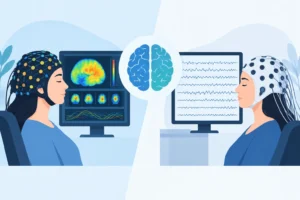
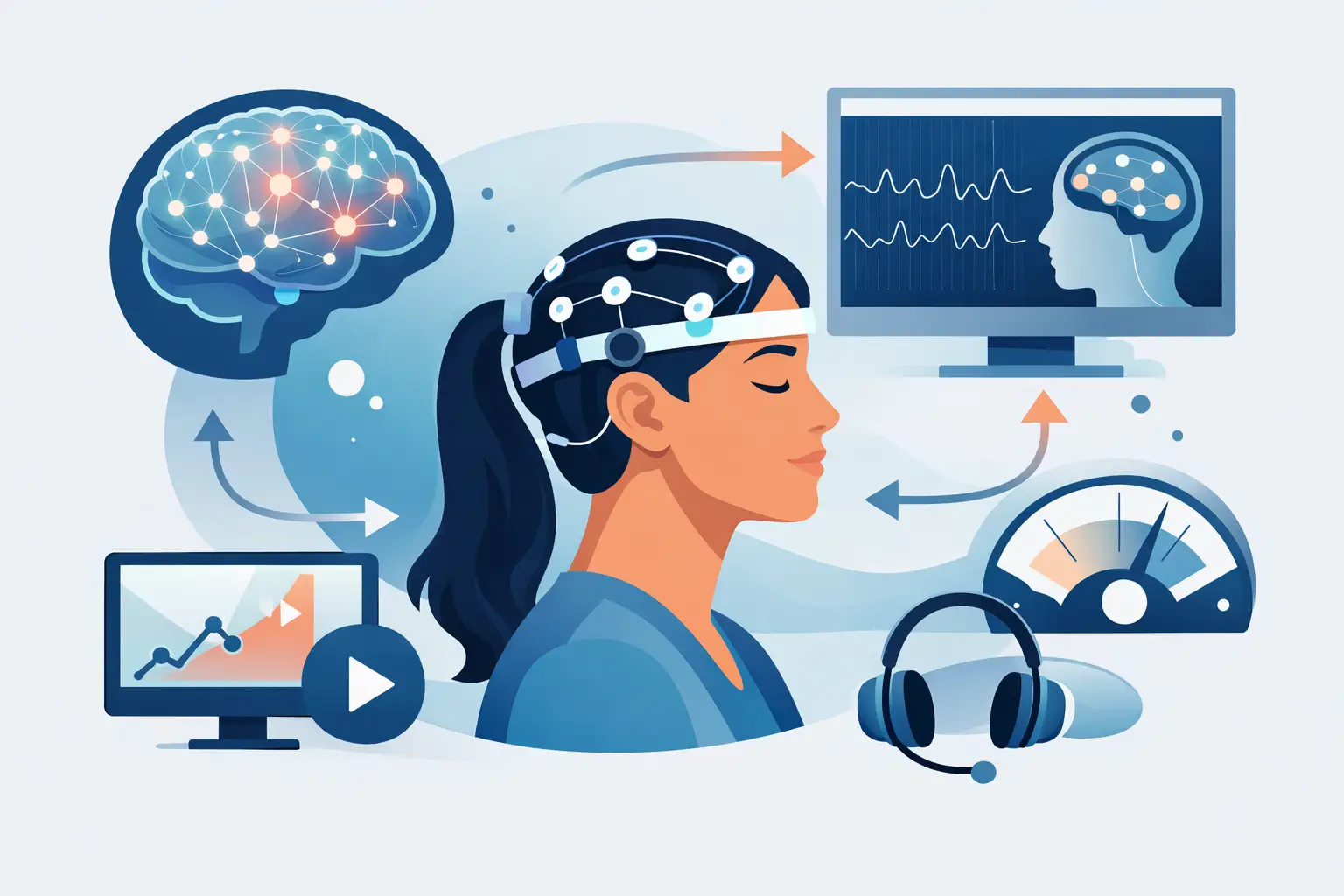
Neurofeedback uses sensors placed on the scalp to read brainwave activity through an EEG, or electroencephalogram. These sensors do not put anything into the brain. They simply measure electrical patterns the brain is already producing.
During a session, that brain activity is fed into specialized software. The software identifies whether the brain is moving toward a more balanced pattern or drifting into patterns associated with dysregulation. The client then receives immediate feedback, often through a video, sound, or game-like display. When the brain produces a more desired pattern, the feedback becomes more rewarding. When it shifts away, the reward changes.
This is where learning happens. The brain is constantly trying to adapt. When it gets real-time information about what works better, it begins to repeat those patterns more often. Over time, that repetition can support healthier regulation.
A useful way to picture it is this: if your brain has been stuck in habits of overactivation, underactivation, or poor flexibility, neurofeedback gives it a mirror. Not a diagnosis by itself, and not a magic reset button, but a mirror that helps it practice new responses.
Why brainwaves matter
Your brain uses different frequency ranges for different states. Some patterns are linked with alertness and focus. Others are associated with relaxation, sleep, or deep internal processing. Problems can arise when those patterns are poorly timed, too intense, too weak, or not well coordinated.
For example, a child with attention difficulties may show patterns related to underarousal in some brain regions. An anxious adult may show the opposite, with excessive fast-wave activity linked to hypervigilance. Someone dealing with poor sleep may struggle to shift out of a busy, activated state when the body needs rest.
Neurofeedback does not treat everyone the same way because the same symptom can come from different brain patterns. That is one reason personalized care matters. Two people may both report anxiety, but one may need support for overactivation while another may need help with instability or poor emotional regulation.
What happens before training starts
In a clinical setting, neurofeedback usually begins with a detailed assessment. That may include a conversation about symptoms, history, goals, and day-to-day challenges. It often also includes QEEG brain mapping, which records brainwave activity and compares it to normative patterns.
This step matters because neurofeedback works best when training is guided by data rather than guesswork. A QEEG does not replace a full psychological or medical evaluation, but it can provide valuable information about how the brain is functioning. It helps practitioners see where regulation may be off and build a training plan around the individual rather than the label.
That is especially important for families and adults who have tried generic solutions before and felt disappointed. Personalized protocols give a clearer starting point and a better way to track change over time.
What a session feels like
Most people are surprised by how comfortable neurofeedback feels. You sit in a chair, sensors are placed on specific points of the scalp, and then you watch or listen to the feedback. There is no shock, no pain, and no need to force your brain to do something dramatic.
The work is subtle. Your brain is doing the learning, often below the level of conscious effort. Some people feel relaxed during sessions. Others feel mentally alert. Children often engage well because the process can feel interactive without being overwhelming.
A single session is usually not the goal. Neurofeedback is a training process, and training depends on repetition. Just as one workout does not build long-term fitness, one session does not create stable change. Progress tends to build over a series of sessions, with adjustments made as the brain responds.
What neurofeedback may help with
Because neurofeedback is focused on regulation, it can support a wide range of concerns. This includes attention problems, anxiety, burnout, sleep issues, emotional reactivity, migraines, learning difficulties, and performance blocks. It is also used by people who are functioning fairly well but want better mental clarity, resilience, and consistency.
That said, results are not identical for everyone. Neurofeedback is not a one-size-fits-all fix, and it is not a replacement for all forms of care. Some clients do best when neurofeedback is part of a broader plan that may also include counseling, coaching, behavioral support, or lifestyle changes. For others, brain training becomes a strong core intervention because it targets the nervous system patterns driving the symptoms.
This is one reason an integrated clinic model can be so valuable. When neurofeedback is paired with the right therapeutic support, clients are often better able to translate brain-based gains into real-life change.
How does neurofeedback work over time?
The first changes people notice are often practical. They may fall asleep faster, recover from stress more easily, feel less reactive, or find it easier to focus on tasks they used to avoid. Parents may notice fewer meltdowns, better homework tolerance, or improved emotional control. Professionals may notice clearer thinking and less mental fatigue late in the day.
As training continues, these small shifts can become more stable. The goal is not to create a perfect brain. The goal is to help the brain become more flexible, efficient, and self-regulating. In other words, less stuck.
That process works best when progress is monitored rather than assumed. Strong clinical programs typically track symptoms, review response patterns, and adjust protocols when needed. In some cases, follow-up QEEG testing is used to compare early baseline data with later patterns. That gives clients something many wellness approaches do not offer: measurable feedback on whether the plan is actually helping.
Common questions and realistic expectations
A fair question is whether neurofeedback is scientifically valid. The answer is that the field includes both strong clinical applications and some variation in quality between providers. Research supports neurofeedback for several concerns, particularly attention and self-regulation, but outcomes depend on assessment quality, practitioner skill, protocol selection, and consistency.
Another common question is whether it is FDA-approved. The equipment used in EEG neurofeedback can be FDA-registered or FDA-cleared for specific applications, but that should not be confused with a blanket promise that every provider or every protocol will produce the same result. Credentials, oversight, and customization still matter.
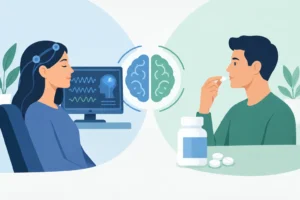
It is also worth saying that neurofeedback is not mind reading, and it is not hypnosis. It does not analyze your private thoughts. It measures electrical activity and uses feedback to support learning. That makes it appealing for people who want a non-invasive, medication-free option grounded in observable data.
At Positive Living UAE, this kind of care is approached with both clinical precision and human understanding. That balance matters. People come in with real stress, real frustration, and often a long history of trying to hold things together. They need science, but they also need support.
Who is a good fit?
Neurofeedback can be a strong option for children, adults, and older adults who want help with regulation rather than symptom suppression alone. It often appeals to parents seeking a drug-free path for a child, adults who feel burned out or emotionally overwhelmed, and high performers who want sharper focus without relying on constant stimulation.
The best fit is usually someone open to a process. Neurofeedback is not passive, even though the sessions feel easy. It asks for consistency, patience, and a willingness to let the brain learn gradually. For many people, that trade-off feels worthwhile because the gains can reach beyond one symptom and improve everyday functioning more broadly.
If you have been stuck in cycles of stress, poor concentration, low mood, or restless sleep, understanding how neurofeedback works can change the way you think about healing. Sometimes the next step is not pushing harder. Sometimes it is helping the brain learn a better pattern, one session at a time.