You can learn a lot in one conversation when the right questions are asked. A free neurofeedback consultation is often where people stop guessing and start understanding whether their anxiety, focus issues, sleep problems, burnout, or emotional overwhelm may be tied to how their brain is functioning – and whether brain training could help.
For many people, that first step matters because they are not looking for another quick fix. They want a safe, non-invasive option that makes sense, is grounded in science, and is tailored to what they are actually experiencing. That is exactly why a consultation should do more than “sell” treatment. It should help you feel informed, respected, and clear about your options.
What a free neurofeedback consultation should actually do
A strong consultation is not a generic intake call. It should give you a realistic picture of whether neurofeedback is appropriate for your goals, what the process may involve, and what kind of results are reasonable to expect.
Neurofeedback is often described as a gym for your brain. That analogy works because the goal is training, not masking. Instead of forcing change through medication, neurofeedback uses real-time EEG feedback to help the brain recognize and shift patterns linked to dysregulation. Over time, those patterns can become more stable and efficient.
Still, not every concern points to the same protocol, and not every person needs the same level of assessment. That is where the consultation becomes valuable. It helps connect symptoms to a broader clinical picture.
Who benefits most from a free neurofeedback consultation
This kind of appointment can be helpful if you are trying to decide between approaches or if you have tried other forms of support without enough progress. It is especially relevant for people who want drug-free care but still want structure, measurement, and professional oversight.
Parents often seek a consultation when a child is struggling with attention, emotional regulation, learning, or behavior. Adults may come in feeling wired but exhausted, unable to focus, sleeping poorly, or reacting more strongly than they want to. Some are dealing with migraines, memory lapses, or long-standing stress patterns. Others are functioning well on the surface but know their brain is working harder than it should.
High performers also benefit from this first step. Neurofeedback is not only for symptom relief. It can also support mental clarity, resilience under pressure, faster recovery from stress, and more consistent performance.
What happens during a free neurofeedback consultation
The best consultations are structured but human. You should expect a thoughtful conversation about your symptoms, your history, your daily functioning, and your goals. If the clinic works with children, adults, and older adults, that conversation should reflect the different ways brain dysregulation can show up across life stages.
A discussion of symptoms and patterns
The practitioner will usually ask what brought you in, how long the issue has been going on, what makes it worse, and what you have already tried. This matters because difficulty concentrating, irritability, low mood, poor sleep, and mental fatigue can overlap across many conditions. Surface symptoms alone do not tell the full story.
A credible provider will not promise a one-size-fits-all answer. They will look at your pattern as a whole. For example, anxiety with insomnia may call for a different training strategy than attention problems with impulsivity, even if both involve nervous system dysregulation.
An explanation of how neurofeedback works
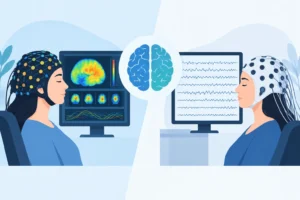
You should leave knowing what neurofeedback is and what it is not. It is non-invasive, does not send electricity into the brain, and is designed to support self-regulation through feedback. Sensors read brainwave activity, and the system responds in real time so the brain can learn more balanced patterns.
That explanation should be clear and practical, not overly technical. If a clinic cannot explain the method in plain language, it becomes harder to trust the process.
Guidance on assessment and next steps
In many cases, the consultation is also where you learn whether a QEEG brain map is recommended. A QEEG can provide a more detailed picture of brainwave activity and help shape a personalized training plan. Not everyone understands the value of this step at first, but it often separates targeted care from guesswork.
A good provider will explain why an assessment is being suggested, what information it can reveal, and how progress may be tracked over time. That kind of transparency builds trust.
What to look for in a provider offering a free neurofeedback consultation
Not all consultations are equally useful. Some are little more than sales conversations. Others are clinically grounded and genuinely educational.
Look for a provider that explains its process with confidence but without pressure. Neurofeedback works best when protocols are individualized, progress is monitored, and treatment is overseen by qualified professionals. If a clinic talks only about broad benefits but cannot describe how it measures improvement, that is worth noticing.
It also helps to ask whether the technology used is FDA-approved, whether brain mapping is available, how progress reviews are handled, and whether care can be adapted if your response changes over time. These details matter because neurofeedback is not just about equipment. It is about interpretation, protocol design, and clinical judgment.
For many clients, a holistic setting is another advantage. Brain training can be powerful on its own, but some people make stronger progress when it is paired with counseling, coaching, or other supportive therapies. That does not mean everyone needs everything. It means the care plan can reflect the full person rather than a single symptom.
Questions worth asking in your free neurofeedback consultation
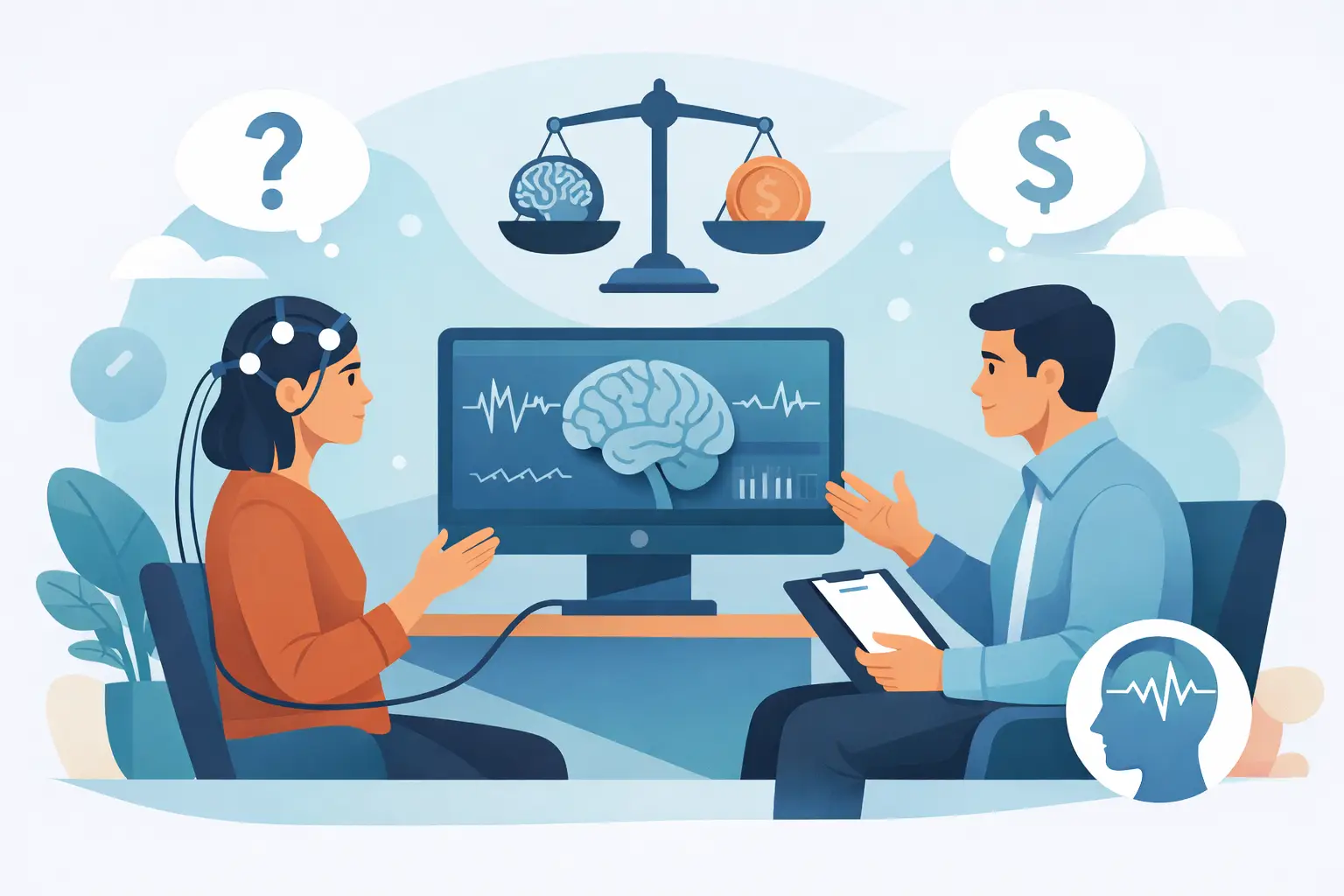
A useful consultation should leave room for your questions. If you are considering treatment, ask how the clinic determines candidacy, what a typical care plan looks like, how often sessions are scheduled, and how outcomes are tracked.
You can also ask what changes tend to appear first. For some people, sleep improves early. For others, emotional reactivity, focus, or mental stamina begins to shift first. Results are individual, and a trustworthy provider will say so. Neurofeedback is promising, but it is not magic, and response timelines vary.
It is also reasonable to ask whether the clinic has experience with your specific concern. ADHD, anxiety, depression, migraines, burnout, and performance optimization may all fall under the neurofeedback umbrella, but the clinical approach should still be specific.
What a consultation cannot tell you
A consultation is valuable, but it has limits. It can help determine fit, explain the method, and outline the likely next steps. It cannot replace a full assessment, and it should not guarantee exact outcomes.
That distinction matters. Ethical providers do not overpromise. They can explain patterns they commonly see, describe how treatment is personalized, and show how progress is measured, but they should also acknowledge that the brain is complex. Factors such as age, symptom history, lifestyle stress, sleep quality, and consistency with sessions can all influence results.
In other words, the consultation should give you clarity, not certainty. That is still extremely useful.
Why this first conversation often changes the decision-making process
Many people arrive skeptical, overwhelmed, or simply tired of trying things that only help temporarily. Once they understand that neurofeedback is built around measurable brain-based training rather than symptom suppression, the conversation shifts. They begin to see a path that feels both scientific and hopeful.
That is especially true when the consultation is handled with care. A strong provider will not treat you like a diagnosis or a package of symptoms. They will look at your goals, explain your options, and help you decide whether moving forward makes sense.
At Positive Living UAE, that balance of clinical precision and compassionate support is part of what makes the first step feel safer. People want expertise, but they also want to feel understood.
Is a free neurofeedback consultation worth your time?
If you are curious about neurofeedback but unsure whether it fits your needs, the answer is usually yes. A well-run consultation can save you time, reduce uncertainty, and help you make a more informed choice about treatment. It gives you a chance to understand the method, evaluate the provider, and decide whether a personalized brain training plan feels like the right next step.
The key is to treat the consultation as more than a quick inquiry. Use it to ask thoughtful questions. Pay attention to whether the provider listens carefully, explains clearly, and respects the fact that meaningful change takes both expertise and an individualized plan.
Sometimes the most important part of care is not the first session. It is the first honest conversation that helps you see your challenges more clearly and your options with a little more confidence.