Burnout rarely arrives all at once. For many people, it builds quietly through restless sleep, a shorter temper, mental fog, and the strange feeling that even simple tasks take more effort than they used to. When clients ask how neurofeedback supports burnout recovery, they are often really asking a deeper question: can the brain relearn calm, focus, and resilience after being stuck in survival mode for too long?
In many cases, the answer is yes. Neurofeedback does not force the brain or numb symptoms. It works by giving the brain real-time information about its own activity, so it can begin to shift out of inefficient stress patterns and into healthier regulation. For people recovering from burnout, that can mean better sleep, steadier energy, clearer thinking, and a nervous system that no longer feels constantly on edge.
What burnout does to the brain and nervous system
Burnout is more than feeling tired after a demanding week. It is a state of prolonged physical, mental, and emotional depletion that can affect attention, mood, memory, motivation, and the body’s stress response. Many professionals describe it as feeling wired and exhausted at the same time. That paradox matters.
When stress becomes chronic, the brain can get stuck in patterns of hyperarousal or dysregulation. Some people feel anxious, overstimulated, and unable to switch off. Others feel flat, detached, and mentally slowed down. Many move between both states. Sleep often suffers first, and once sleep quality drops, emotional regulation and cognitive performance usually follow.
This is one reason burnout can be so frustrating. Rest alone does not always restore the brain’s rhythm. You may take time off and still feel tense, foggy, or emotionally depleted. The issue is not simply effort. It is regulation.
How neurofeedback supports burnout recovery in practical terms
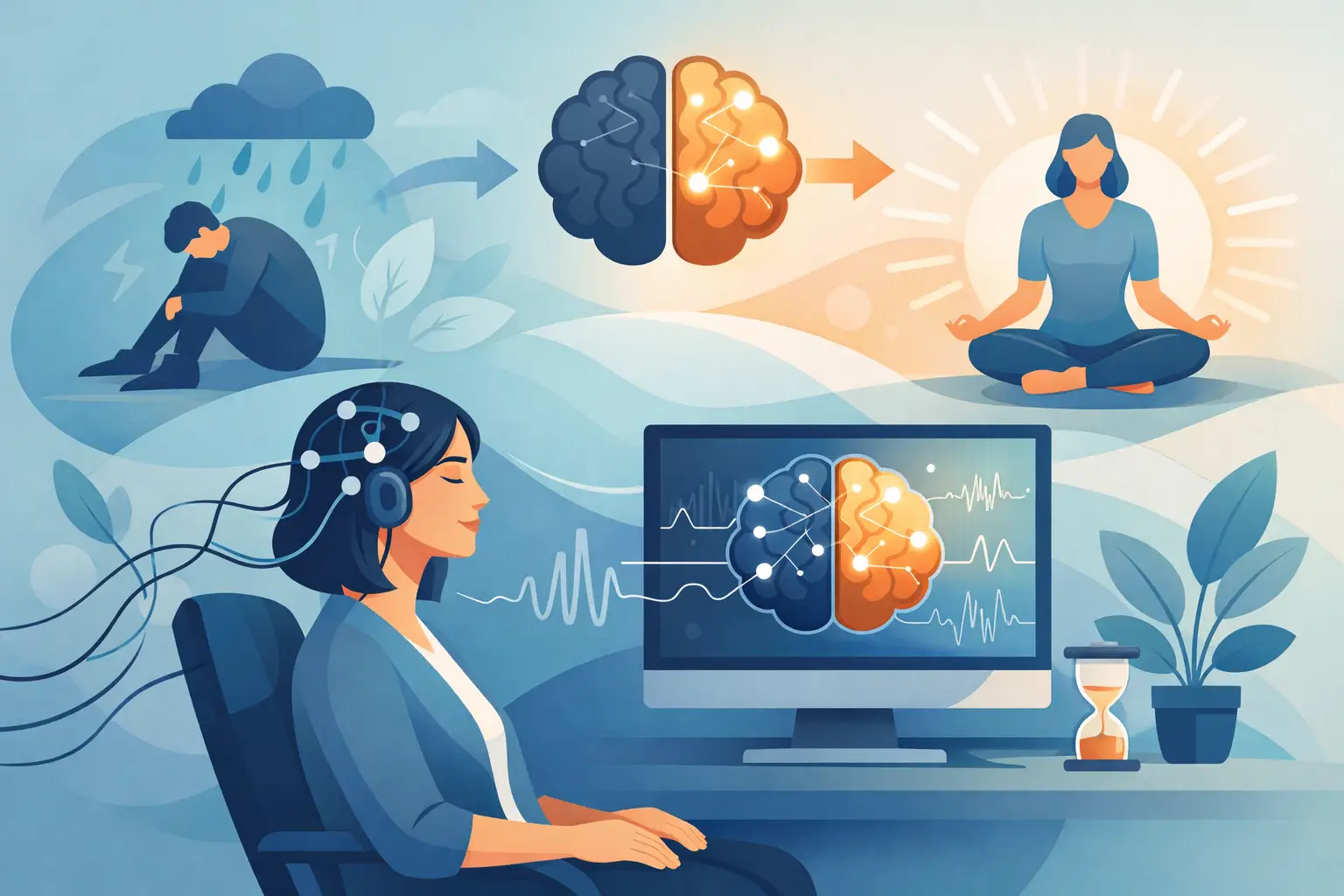
A simple way to understand neurofeedback is to think of it as a gym for your brain. During a session, sensors are placed on the scalp to read EEG activity. The system monitors brainwave patterns in real time and provides feedback, often through audio or visual cues. When the brain begins producing healthier patterns, it receives positive reinforcement. Over time, it learns to spend less time in unhelpful states and more time in balanced ones.
For burnout recovery, this matters because the brain is often overtrained in stress. It has practiced urgency, vigilance, and mental overdrive for so long that those patterns become automatic. Neurofeedback helps interrupt that loop.
People often notice changes in areas that burnout commonly affects. Sleep may become deeper. Racing thoughts may ease. Focus may become more reliable without the same sense of internal strain. Emotional reactions may feel less intense and more manageable. That does not mean every session feels dramatic or that everyone improves at the same pace. Burnout can be layered with anxiety, trauma, perfectionism, hormonal changes, or longstanding sleep issues. The right protocol depends on the person, not just the label.
Why brain-based training can help when rest is not enough
Burnout is often addressed with sensible advice: reduce workload, improve boundaries, sleep more, exercise, and talk to someone. All of that can be helpful. But many people do those things and still feel stuck. They understand what they should do, yet their nervous system does not seem to cooperate.
That is where neurofeedback can be especially useful. It works below the level of willpower. Rather than asking you to think your way out of dysregulation, it helps the brain practice a different state directly. For a person who feels tired but cannot relax, or emotionally numb but still overstimulated, that shift can be meaningful.
There is also value in the fact that neurofeedback is non-invasive and medication-free. Some clients want support without adding another layer of side effects or dependency concerns. Others are already receiving counseling and want a complementary method that addresses brain regulation more directly. Neurofeedback can fit well into both situations, especially when treatment is tailored and professionally monitored.
Signs burnout may involve nervous system dysregulation
Not every case of exhaustion is burnout, and not every person with burnout needs the same kind of support. Still, neurofeedback may be worth considering when symptoms include persistent sleep disruption, poor concentration, irritability, emotional reactivity, mental fatigue, headaches, or the feeling that your body cannot downshift even when you are safe.
Some clients also report procrastination, low motivation, forgetfulness, or a drop in confidence at work. These symptoms are often misread as laziness or lack of discipline. In reality, an overwhelmed brain tends to protect itself by conserving resources, narrowing attention, and becoming less flexible. That is not a character flaw. It is a sign the system is overloaded.
How a personalized neurofeedback plan is built
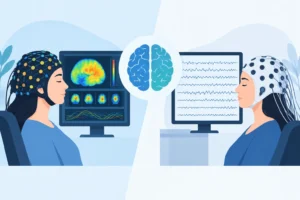
One of the most important parts of effective care is assessment. Quality neurofeedback should not begin with guesswork. In a clinical setting, practitioners often use a QEEG brain map, symptom history, and ongoing progress tracking to understand how the brain is functioning and where regulation may be breaking down.
That matters because two people can both say, “I’m burned out,” while showing very different patterns. One may be dealing with high-frequency overactivation linked to anxiety and insomnia. Another may show slower, underactive patterns associated with mental fatigue, low mood, and poor concentration. If the training is too generic, results may be limited.
A personalized plan allows the protocol to match the brain’s actual needs. It also gives clients something burnout often takes away: objective feedback. Progress can be monitored through symptom changes, functional improvements, and follow-up evaluations rather than vague impressions alone.
How neurofeedback fits with broader burnout recovery
Neurofeedback is powerful, but it is not magic. If a person returns every day to impossible workload demands, severe sleep deprivation, or unresolved emotional stress, brain training can help, but it may not be enough on its own. Burnout recovery usually works best when the brain, mind, and lifestyle are addressed together.
That is why an integrated approach can make such a difference. Counseling may help you process chronic pressure, people-pleasing patterns, or work-related distress. Coaching can support boundaries, routines, and sustainable performance habits. Relaxation-based therapies may help reduce the baseline level of tension in the body. Neurofeedback then adds a brain-based layer, helping the nervous system actually absorb and maintain those changes.
For many clients, this combination feels more complete than symptom management alone. They are not just trying to get through the week. They are rebuilding stability from the inside out.
What to expect from the process
Neurofeedback sessions are generally comfortable and non-invasive. The sensors read brain activity, but they do not send electricity into the brain. Most people sit back and watch or listen to feedback while the system tracks patterns and rewards shifts toward healthier regulation.
Results vary. Some people notice early improvements in sleep or calmness, while others experience more gradual change. Burnout that has developed over years usually takes time to unwind. Consistency matters, and so does working with experienced practitioners who know how to adjust the training as the brain responds.
A well-run program should feel structured, not vague. You should understand what is being monitored, how progress is evaluated, and why your protocol is being used. In a clinical environment such as Positive Living UAE, that process may include professional oversight, QEEG-based planning, and periodic review to make sure the training remains aligned with your goals.
How neurofeedback supports burnout recovery over the long term
The real value of neurofeedback is not just symptom relief. It is the possibility of helping the brain become more flexible and efficient under stress. That can support better recovery after a hard day, fewer emotional crashes, stronger concentration, and a more stable sense of energy.
For high-functioning adults especially, this distinction matters. Many people with burnout are still performing on paper. They are meeting deadlines, showing up for family, and pushing through responsibilities while quietly feeling depleted. Neurofeedback can help restore the internal capacity that performance has been masking.
If burnout has left you feeling unlike yourself, that does not mean you are broken. It may mean your brain has adapted to prolonged pressure and now needs the right kind of training to find balance again. With personalized care, measurable feedback, and a supportive treatment plan, recovery can become more than a hope. It can become a process you can actually feel, session by session, in the way your mind settles and your life starts to feel manageable again.