A brain assessment can sound intimidating, especially when you are seeking answers for anxiety, ADHD, sleep problems, migraines, or persistent burnout. Understanding QEEG mapping versus EEG can make the process feel far clearer. Both tests measure the brain’s electrical activity through small sensors placed on the scalp, but they are used for different clinical questions and can support different next steps.
For families, professionals, and individuals looking for drug-free support, the distinction matters. A standard EEG is often used to identify specific neurological abnormalities. A QEEG brain map adds a detailed, data-based view of brainwave patterns that can help guide personalized neurofeedback training and track progress over time.
QEEG Mapping Versus EEG: The Core Difference
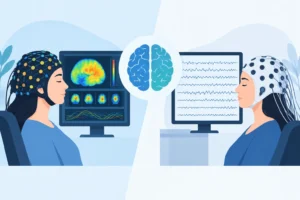
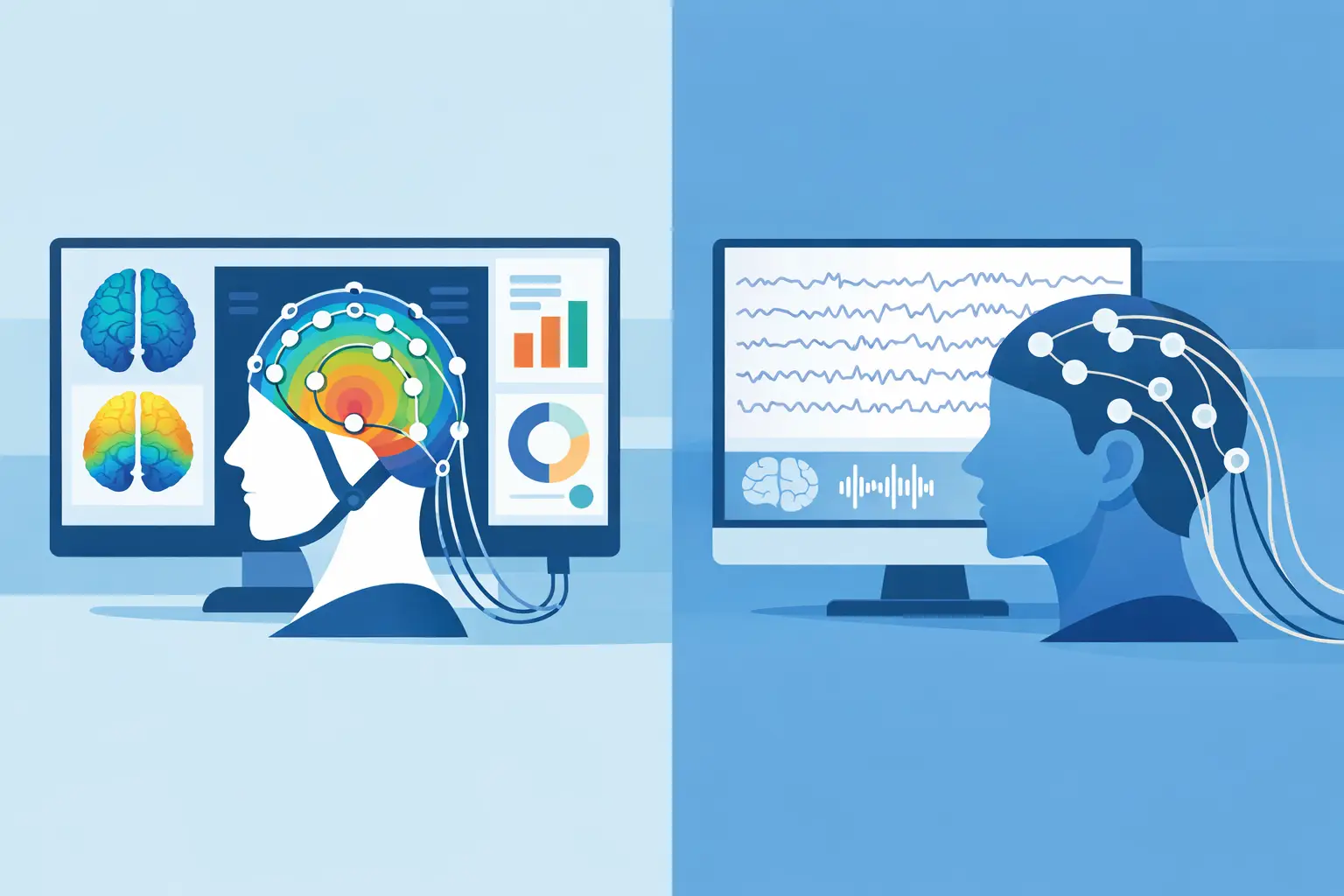
An EEG, or electroencephalogram, records electrical signals produced by brain cells communicating with one another. The test captures these signals in real time, usually as wave-like lines across a screen. It is a well-established medical tool, commonly used in hospitals and neurology settings when a clinician needs to investigate seizures, episodes of lost awareness, unusual movements, head injuries, or certain sleep-related concerns.
A QEEG, or quantitative electroencephalogram, begins with EEG data but analyzes it more deeply. Specialized software measures features of the recording, such as the amount, speed, location, and balance of different brainwave patterns. Those measurements can then be compared with age-appropriate normative databases and displayed visually as a color-coded brain map.
A simple way to think about it is this: an EEG is like listening carefully to an engine to identify an obvious mechanical issue. A QEEG is like running a detailed diagnostic report that shows how each system is performing, where patterns may be out of balance, and what areas may need more attention.
Neither test reads thoughts, judges personality, or labels someone as “broken.” Both are non-invasive recordings of electrical activity. The value comes from thoughtful interpretation by a qualified professional who considers the results alongside symptoms, health history, lifestyle, and treatment goals.
What a Standard EEG Is Designed to Do
A conventional EEG is primarily a diagnostic medical test. A neurologist may order one when there is concern about epilepsy or another condition that causes distinct electrical events in the brain. Depending on the situation, the recording may be brief, extended over several hours, completed during sleep, or combined with video monitoring.
During a standard EEG, the clinician is often looking for patterns such as epileptiform discharges, seizure activity, slowing that may indicate neurological dysfunction, or changes associated with sleep stages. This information can be essential for medical diagnosis and treatment planning.
An EEG is not typically designed to create an individualized neurofeedback training protocol. While it may reveal clinically significant findings, it does not usually provide the detailed quantitative comparison and functional brainwave analysis used in many neurofeedback settings.
If someone has new seizures, fainting, significant confusion, sudden neurological changes, or concerning episodes of altered awareness, medical evaluation should come first. QEEG and neurofeedback are not replacements for emergency care, neurological assessment, or a physician’s diagnosis.
What a QEEG Brain Map Can Show
QEEG mapping organizes EEG data into measurable patterns. It may examine brainwave activity across frequency bands, including delta, theta, alpha, beta, and high beta. Each type of activity has normal roles. For example, slower waves are more common during sleep and deep rest, while faster activity supports alertness and active thinking.
The concern is not whether a particular brainwave exists. Every healthy brain produces a range of brainwaves. The question is whether activity appears unusually high, low, fast, slow, or poorly balanced for a person’s age, state, and reported challenges.
A QEEG may help identify patterns that are relevant to concerns such as:
- trouble sustaining attention, impulsivity, or learning challenges
- anxious overthinking, tension, or difficulty calming down
- sleep disruption, fatigue, or burnout
- emotional reactivity, anger, or low mood
- cognitive fog, memory concerns, or reduced mental performance
These patterns do not automatically prove a diagnosis. For example, increased fast-wave activity may be associated with stress or hyperarousal, but it can also be influenced by poor sleep, medication, caffeine, muscle tension, or recording conditions. This is why expert review and a comprehensive intake are essential.
How QEEG Supports Personalized Neurofeedback
Neurofeedback is often described as a gym for the brain. It uses real-time feedback to help the brain practice more efficient patterns of self-regulation. During training, sensors monitor brain activity while the client watches a video, listens to audio, or engages with a visual display. When the brain moves toward the desired pattern, the feedback responds positively.
A QEEG can help make this process more individualized. Rather than taking a one-size-fits-all approach, a practitioner can use the map, symptom profile, and clinical goals to select training locations and protocols that fit the person in front of them.
For a child struggling with focus and classroom regulation, the goal may be to support attention and reduce patterns linked with distractibility. For an exhausted executive who feels wired at night and drained during the day, the focus may be calming hyperarousal and improving sleep-related regulation. For an athlete or creative professional, training may be oriented toward consistency, recovery, and sustained mental clarity.
At Positive Living UAE, QEEG findings can be combined with symptom tracking, progress evaluations, and supportive services such as counseling, coaching, or hypnotherapy when appropriate. This whole-person perspective recognizes that brain regulation, habits, emotions, relationships, and life stress often influence one another.
What to Expect During Each Assessment
Both EEG and QEEG are painless. Sensors are placed on the scalp using a cap or individual electrodes. They record activity only – they do not send electricity into the brain. Most people sit comfortably with their eyes open and closed for portions of the session. In some cases, simple tasks may be included to observe how the brain responds.
For a QEEG, clean data is especially important. Clients may be asked to arrive with clean, dry hair and avoid products that interfere with electrode contact. Depending on professional guidance, it may also help to limit excessive caffeine and follow instructions about medication, sleep, or supplements before the appointment. Prescribed medications should never be stopped without guidance from the prescribing clinician.
The recording itself may take less than an hour, while the full process can take longer because setup, data review, and interpretation require care. A meaningful feedback appointment should explain the findings in plain language, connect them to the person’s lived experience, and discuss whether neurofeedback is a suitable next step.
Which One Do You Need?
The right choice depends on the question you need answered. If there are signs of a potentially serious neurological condition, a medical EEG ordered by a physician or neurologist is usually the appropriate starting point. If the goal is to understand functional brainwave patterns related to focus, stress regulation, sleep, emotional resilience, or cognitive performance, a QEEG may offer more actionable detail for neurofeedback planning.
Some people need both. A person with a history of seizures may require medical oversight and a conventional EEG, while also exploring supportive wellness options after their physician has evaluated the situation. Others may not need a medical EEG at all but may benefit from a QEEG-based assessment as part of a personalized neurofeedback program.
It is also fair to ask how results will be used. A quality provider should explain the clinician’s qualifications, the technology and analysis process, the limits of the assessment, how progress will be measured, and when referral to a medical specialist is needed. Brain mapping should support careful decision-making, not create fear or overpromise outcomes.
Your brain is adaptable, and better regulation often begins with understanding the patterns behind your daily experience. Whether you are seeking support for your child, relief from chronic stress, or sharper performance in demanding work, an informed assessment can help you choose a path that feels both evidence-based and personal.