A child who cannot settle into homework, a professional who feels wired long after work ends, and a senior worried about mental sharpness may appear to have little in common. Yet each may be asking the same question: who benefits from brain training? The answer is not simply anyone who wants a better brain. Brain training is most useful when it is personalized to the way a person’s nervous system is functioning, the challenges they face, and the outcomes that matter in everyday life.
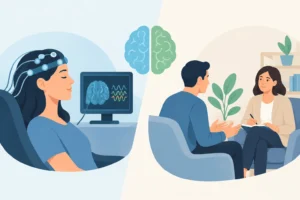
Neurofeedback is one form of brain training used in clinical wellness settings. It is a non-invasive, medication-free approach that uses EEG technology to observe brainwave activity and provide feedback in real time. Think of it as a gym for the brain: rather than forcing change, it gives the brain repeated opportunities to practice healthier patterns of regulation. For some people, that may mean steadier attention. For others, it may mean calmer sleep, less emotional reactivity, or more consistent mental energy.
Who Benefits From Brain Training?
People of different ages can benefit, but the best candidates are not defined by a diagnosis alone. They are people whose focus, mood, sleep, learning, memory, or stress response is getting in the way of the life they want to lead. A careful assessment helps determine whether neurofeedback is a suitable part of their care plan.
Children and teens with attention or learning challenges
For parents, the concern is rarely just a report card. It may be the daily friction around getting ready for school, finishing assignments, managing frustration, or making friends. Children with ADHD traits, learning difficulties, test anxiety, sensory overwhelm, or emotional outbursts can struggle because their brains have difficulty maintaining the level of alertness and regulation a task requires.
Personalized brain training may support attention, impulse control, emotional balance, and sleep quality. These improvements can make school and home life feel more manageable. It should not be presented as a replacement for thoughtful educational support, parenting strategies, or medical care when those are needed. Instead, it can complement a broader plan designed around the child.
For younger clients especially, engagement matters. Sessions are typically designed to feel approachable, with the brain receiving feedback through visual or audio-based activities. Progress is best judged beyond a single session, through changes in routines, teacher observations, symptom tracking, and periodic clinical review.
Adults dealing with anxiety, low mood, or emotional reactivity
Anxiety is not always obvious. It can look like overthinking, jaw tension, procrastination, irritability, difficulty resting, or an inability to switch off at night. Depression may show up as low motivation, mental fog, disrupted sleep, and a sense that ordinary tasks require too much effort. Anger can be a sign of a nervous system that is repeatedly pushed beyond its capacity to regulate.
For adults experiencing these patterns, neurofeedback may help train greater flexibility in the nervous system. The goal is not to erase normal emotions. Fear, sadness, and frustration all have a place. The goal is to reduce the intensity, frequency, or duration of responses that no longer feel proportionate or helpful.
Results vary because anxiety and mood symptoms have many possible contributors, including trauma, relationships, hormones, medical conditions, and life stress. That is why a holistic approach can be valuable. Counseling, coaching, and other therapeutic support may address the experiences and habits surrounding the symptoms, while neurofeedback focuses on brain regulation patterns.
Professionals facing burnout and persistent mental overload
High-functioning burnout is often easy to miss. A person may still meet deadlines and appear successful while relying on caffeine, late-night work, and sheer determination to keep going. Then focus slips, patience shrinks, sleep becomes lighter, and even time off fails to restore energy.
Brain training may be helpful for professionals who feel mentally overextended and want to build more sustainable concentration and recovery. The aim is not to make someone productive at all costs. A healthier outcome might be clearer thinking in meetings, fewer stress-driven reactions, better boundaries after work, and the ability to sleep without mentally rehearsing tomorrow’s tasks.
It also requires honest expectations. No training protocol can compensate for an unsustainable workload, chronic sleep deprivation, or a workplace that continually demands more than a person can give. Brain-based support works best alongside practical changes in rest, workload, movement, nutrition, and emotional support.
Brain Training for Sleep, Migraines, and Cognitive Changes
Sleep is one of the clearest indicators of nervous system regulation. Some people are exhausted but cannot fall asleep. Others wake repeatedly, rise too early, or sleep for long hours without feeling restored. When poor sleep continues, attention, memory, mood, and pain tolerance often suffer with it.
People with sleep difficulties may benefit from a clinical assessment that looks at their symptoms and relevant brainwave patterns. Neurofeedback may support relaxation and regulation for some individuals, particularly when racing thoughts or hyperarousal are part of the picture. However, persistent insomnia can also have medical, behavioral, or medication-related causes. A responsible plan considers those factors rather than treating every sleep concern as a brainwave issue.
Adults concerned about memory lapses or slower processing may also seek brain training. Normal age-related changes are different from sudden or progressive cognitive decline, which should be evaluated medically. For seniors with mild concerns, the focus may be on supporting attention, sleep, stress management, and mental engagement. For people living with migraines, training may be considered as part of a wider strategy that includes medical guidance and trigger management.
High performers seeking steadier focus
Executives, athletes, students, and creative professionals often seek neurofeedback without a formal diagnosis. They may want more reliable focus under pressure, faster recovery after demanding work, or a calmer mental state before performance. This is a valid goal, but it calls for the same individualized approach as symptom-focused care.
Peak performance is not constant intensity. A well-regulated brain can shift gears: alert when a challenge demands it, calm when recovery is needed, and flexible when plans change. Training may help sharpen that capacity, but strong performance also depends on skill practice, physical health, preparation, and realistic recovery.
What Makes Someone a Good Candidate?
The most promising starting point is a clear goal. It might be completing homework with fewer battles, sleeping through the night more consistently, reducing panic-like physical tension, or staying present during an important presentation. Specific goals make it easier to measure meaningful progress.
A quality provider should also take time to understand the whole person. At Positive Living UAE, QEEG brain mapping can help create a picture of brainwave activity before a personalized neurofeedback protocol is developed. Follow-up evaluations and symptom tracking help ensure that care remains responsive rather than relying on a one-size-fits-all program.
Brain training may be less appropriate as a stand-alone solution when symptoms are acute, unexplained, or rapidly worsening. Severe depression, thoughts of self-harm, psychosis, seizures, sudden cognitive changes, and intense headaches need prompt medical or mental health evaluation. Neurofeedback can sometimes be incorporated into coordinated care, but safety and proper diagnosis come first.
Choosing Progress Over Perfection
The people who benefit most from brain training are often not searching for a quick fix. They are looking for a supported way to understand their patterns and practice change over time. Some notice early shifts in calmness or sleep; others experience gradual gains that become clearer in daily routines, relationships, school, and work.
A thoughtful consultation can help turn a vague feeling of being stuck into a practical question: what would feeling more regulated, focused, and well-rested make possible in your life? That answer is a far better place to begin than any promise of perfection.