A child who cannot settle into homework, a professional waking at 3 a.m. with racing thoughts, and an adult experiencing unexplained episodes may all have questions about brain activity. Yet the best assessment is not always the same. QEEG versus standard EEG is less a contest between two tests and more a question of purpose: Are we looking for signs of a neurological event, or trying to understand broader patterns that may guide individualized brain training?
Both assessments record the brain’s electrical activity through small sensors placed on the scalp. Neither sends electricity into the brain, and neither is painful. The difference lies in how the recording is analyzed, what questions it is designed to answer, and which professional should interpret the results.
QEEG Versus Standard EEG: The Core Difference
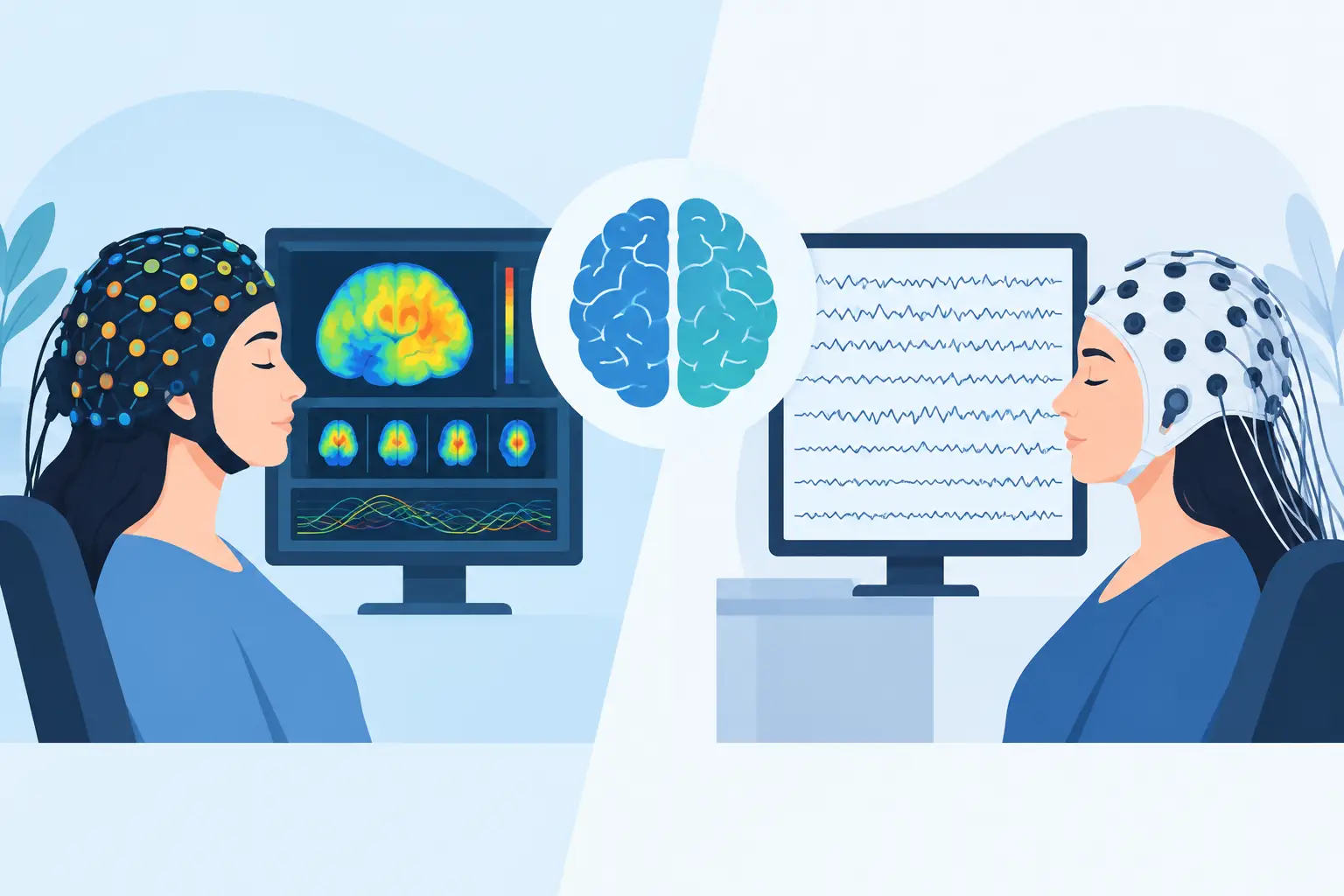
A standard EEG, also called an electroencephalogram, is primarily a medical diagnostic test. It captures brainwave activity over a period of time and is usually reviewed by a neurologist. Its central role is to identify patterns that may be associated with seizures, epilepsy, altered consciousness, encephalopathy, or certain sleep-related neurological concerns.
A QEEG, or quantitative electroencephalogram, begins with EEG data but adds computerized analysis. Brainwave activity is measured across multiple locations, then compared with age-based normative databases and displayed as a visual brain map. This process can highlight patterns in frequency, amplitude, connectivity, or balance between brain regions that may be relevant to attention, emotional regulation, sleep, or cognitive performance.
Think of a standard EEG as a physician listening carefully for a specific heart rhythm concern. A QEEG is closer to a detailed fitness assessment that maps how different systems are performing together. Both can be valuable, but they are not interchangeable and should not be used to make the same claims.
What a Standard EEG Can Reveal
A routine EEG is often recommended when someone has experienced possible seizures, blackouts, unexplained confusion, unusual movements, or episodes of lost awareness. During the test, a clinician records brain activity while the person rests. They may also use prompts such as opening and closing the eyes, deep breathing, or flashing lights to observe how the brain responds.
The recording is reviewed for unusual electrical discharges and other clinically significant changes. A normal routine EEG does not always rule out epilepsy, because unusual activity may not occur during the recording window. For that reason, a neurologist may recommend a longer ambulatory EEG, a sleep-deprived EEG, or video EEG monitoring when symptoms warrant further investigation.
Standard EEG is not usually designed to explain why a person feels mentally fatigued after meetings, struggles to focus during study, or feels more reactive under stress. Those experiences are real, but they require a broader clinical conversation that considers medical history, sleep, mood, environment, medications, and daily functioning.
What a QEEG Brain Map Adds
QEEG analysis turns raw EEG information into measurable patterns. A trained practitioner can examine the relative activity of common brainwave bands, such as delta, theta, alpha, beta, and high beta, and review how activity differs across regions of the brain.
For example, the map may identify patterns worth exploring in a client with attention concerns, insomnia, migraines, anxiety, or cognitive overload. It may also establish a baseline for a high performer who wants to improve sustained focus, recovery, or mental flexibility. The key word is exploring. A QEEG pattern is not a diagnosis on its own, and it should never replace a full medical or psychological assessment.
At Positive Living UAE, QEEG brain mapping can help inform a personalized neurofeedback protocol. Neurofeedback is often described as a gym for the brain: through real-time feedback, the brain practices more efficient self-regulation. Rather than applying the same training plan to everyone with a similar symptom, a map can help shape a more individualized starting point and provide a baseline for reviewing progress.
The Experience: What Happens During Each Test?
Both tests use a cap or individual sensors on the scalp with conductive gel or paste. Clients can expect to sit or recline comfortably while the equipment records electrical signals generated by the brain. The process is noninvasive, medication-free, and generally well tolerated by children, adults, and seniors.
A standard EEG may take roughly 20 to 60 minutes for the recording itself, although the appointment can be longer. The clinician may ask the person to rest quietly, breathe deeply, or respond to visual stimulation. The focus is on obtaining a clear clinical recording for medical interpretation.
A QEEG appointment typically includes a detailed intake alongside recordings with eyes open and eyes closed. The data must be cleaned to remove artifacts caused by blinking, muscle tension, movement, or poor sensor contact. Careful data collection matters. A sophisticated report is only as useful as the quality of the recording and the expertise used to interpret it.
When Is QEEG More Useful Than a Standard EEG?
QEEG can be especially useful when the goal is to personalize a neurofeedback program or establish measurable benchmarks for training. It may support treatment planning for people seeking drug-free help with focus, sleep, stress regulation, emotional reactivity, learning challenges, or peak cognitive performance.
Parents may appreciate a clearer picture of patterns that could be relevant to a child’s attention and learning profile. Professionals dealing with burnout may value an objective baseline alongside counseling, coaching, sleep support, and practical stress-management work. For clients pursuing performance goals, QEEG can offer a structured way to track changes over time rather than relying only on a general feeling of improvement.
That said, QEEG is not automatically necessary for every person beginning neurofeedback. Some programs use symptom history, clinical screening, and ongoing response to training to guide care. The right approach depends on the client’s goals, complexity of symptoms, budget, and the provider’s assessment process.
When a Standard EEG Comes First
New or unexplained neurological symptoms deserve medical attention before a wellness-based brain training program begins. Seek prompt medical evaluation for seizures or seizure-like episodes, fainting, sudden confusion, new weakness, significant head injury, dramatic personality changes, or severe and sudden headaches.
If epilepsy is known or suspected, a neurologist should guide diagnosis and medical care. A QEEG should not be presented as a substitute for a standard EEG, neurological examination, imaging when indicated, or emergency care. Responsible providers recognize these boundaries and coordinate care when appropriate.
Evidence, Expectations, and Personalized Care
Both standard EEG and QEEG have value, but the strength of evidence differs depending on the intended use. Standard EEG has an established role in evaluating specific neurological conditions. QEEG is widely used in research and in some clinical settings for assessment and neurofeedback planning, yet its interpretation requires caution. Brainwave patterns can be influenced by sleep, stress, medication, age, caffeine, medical conditions, and the quality of the recording.
This is why a brain map should be one part of a larger clinical picture, not a label. A compassionate, well-trained practitioner listens to the person behind the data. They ask what happens at school, at work, in relationships, and at night when the house is quiet. They track symptoms and goals over time, adjust when needed, and keep expectations realistic.
The most meaningful outcome is not a colorful report. It is the ability to concentrate through a task, sleep more peacefully, respond rather than react, or feel more present with the people who matter.
Choosing the Right Next Step
If your concern involves possible seizures or sudden neurological symptoms, start with a medical professional who can determine whether a standard EEG or other diagnostic testing is appropriate. If your goal is to understand patterns related to self-regulation, attention, stress, sleep, or performance, a QEEG consultation may help clarify whether personalized neurofeedback is a suitable option.
You do not need to have every answer before asking for support. A thoughtful assessment can turn vague frustration into a clearer, safer plan for moving forward.