A child may understand the classroom rules yet still struggle to sit still. A high-performing professional may know exactly why burnout happened but remain unable to switch off at night. These are the moments when counseling vs neurofeedback therapy becomes a practical question, not just a clinical one. Both approaches can support emotional well-being and daily functioning, but they work through different pathways.
Counseling helps people make sense of thoughts, emotions, relationships, and life experiences. Neurofeedback uses real-time EEG feedback to help the brain practice healthier patterns of regulation. Neither is automatically the better choice for every person. The most effective path depends on what is driving the symptoms, the person’s goals, and whether they would benefit from working with both the mind and the nervous system.
Counseling vs Neurofeedback Therapy: The Core Difference
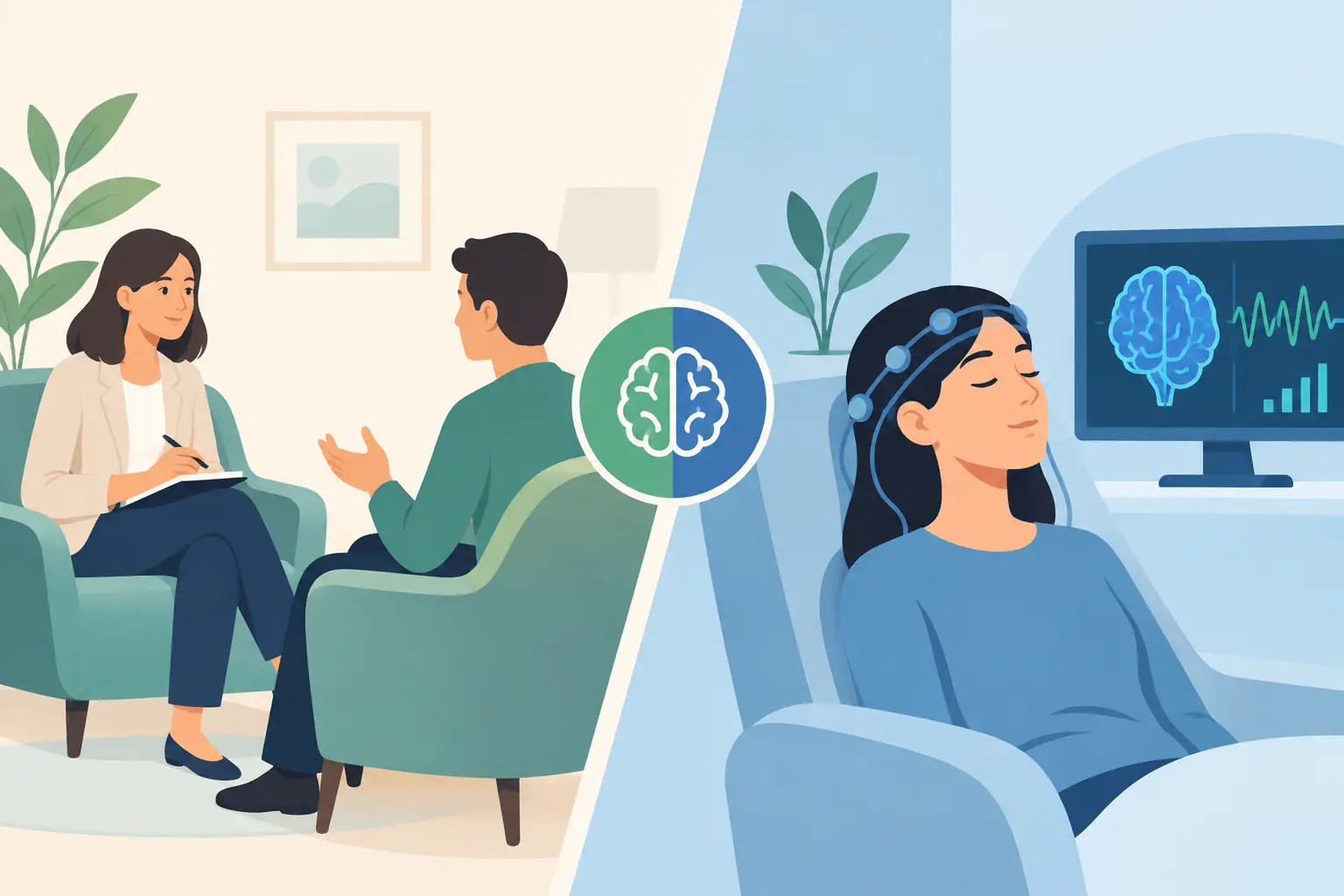
Counseling is a conversation-based form of care. With a trained therapist or counselor, clients explore challenges, identify unhelpful patterns, develop coping skills, and create meaningful changes in behavior. Depending on the approach, sessions may focus on stress management, emotional processing, communication, trauma-informed support, parenting tools, or practical strategies for anxiety and low mood.
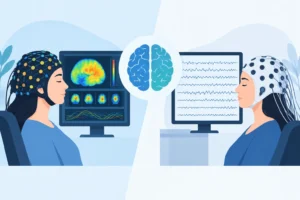
Neurofeedback is a noninvasive form of brain training. Sensors are placed on the scalp to measure brainwave activity through an EEG. The sensors do not send electricity into the brain. Instead, specialized software translates selected brain activity into feedback, often through visual or audio cues. When the brain moves toward the targeted pattern, the feedback responds. Over repeated sessions, the brain may learn to regulate itself more efficiently.
A useful analogy is that counseling can help you understand the map and choose a new route. Neurofeedback can be like a gym for your brain, giving the nervous system repeated practice in the skills that support focus, calm, sleep, and emotional regulation.
What counseling is especially good at
Counseling is often a strong fit when a person needs space to process a specific life event, relationship conflict, grief, workplace stress, or a long-standing belief pattern. It can help clients put language to experiences that have felt confusing or overwhelming. For parents, counseling can also provide strategies for responding to a child’s behavior with more consistency and confidence.
It is an active process. Progress may involve practicing boundaries, noticing emotional triggers, challenging self-critical thoughts, or learning ways to respond differently during conflict. The quality of the therapeutic relationship matters greatly, so feeling safe, heard, and respected by the practitioner is essential.
What neurofeedback is especially good at
Neurofeedback may be worth considering when symptoms feel strongly tied to regulation. This can include difficulty sustaining attention, racing thoughts, restless sleep, emotional reactivity, mental fatigue, migraines, or feeling constantly on edge even when life seems relatively stable.
Rather than asking a person to consciously control every reaction, neurofeedback aims to train underlying brain patterns through repetition. A personalized protocol is important. At a clinical center, a QEEG brain map may be used to understand patterns of brain activity and guide training decisions. A QEEG is not a stand-alone diagnosis, but it can provide useful data alongside a thorough clinical history and symptom assessment.
Research on neurofeedback is evolving, and results vary by condition, protocol, provider expertise, consistency of sessions, and the individual. Ethical providers avoid guarantees. They track progress over time and adjust care when the data and the client’s lived experience point in a different direction.
Which Option Fits Your Main Goal?
The choice often becomes clearer when you start with the problem you most want to solve. Someone who is grieving a loss or navigating a difficult marriage may benefit first from counseling because the central need is emotional processing and support. Someone whose anxiety shows up as persistent physical tension, poor sleep, and an overactivated nervous system may want to explore neurofeedback alongside counseling.
For ADHD and learning concerns, the picture can be more layered. Counseling or coaching can build organization, study habits, motivation, and emotional resilience. Neurofeedback may support attention and self-regulation training. A child still needs appropriate educational support, family involvement, and, when indicated, medical evaluation. Brain training should be part of a thoughtful care plan, not a promise of an instant fix.
For depression, counseling can help address isolation, negative thought patterns, loss of purpose, and difficult experiences. Neurofeedback may be considered when concentration, sleep, energy regulation, or emotional stability are also major concerns. If someone has severe depression, thoughts of self-harm, psychosis, mania, or a sudden decline in functioning, prompt assessment by a qualified mental health or medical professional is essential. Neurofeedback does not replace urgent care or necessary medical treatment.
When Combining Counseling and Neurofeedback Makes Sense
For many clients, the question is not counseling or neurofeedback, but how the two can complement each other. Counseling creates insight and gives people tools for daily life. Neurofeedback can support the capacity to use those tools when the nervous system is overwhelmed, fatigued, or reactive.
Consider a professional who knows their perfectionism fuels anxiety. Counseling may help them examine the pressure they place on themselves and practice healthier boundaries. Yet if they still experience racing thoughts, poor sleep, and difficulty recovering after stress, neurofeedback may provide another layer of support for regulation.
The same principle applies to children. A child may learn calming strategies in counseling but struggle to use them when frustrated because their attention and impulse control are inconsistent. Family guidance, skill-building, and personalized neurofeedback training can work together to support steadier progress at home and school.
At Positive Living UAE, this integrated view allows clients to access neuroscience-informed neurofeedback alongside counseling, coaching, and other supportive services when appropriate. The goal is not to add more appointments for the sake of it. It is to build a plan that matches the whole person.
What a High-Quality Neurofeedback Assessment Should Include
Neurofeedback should not begin with a one-size-fits-all protocol. A responsible process starts with a detailed conversation about symptoms, health history, medications, sleep, stress, goals, and prior treatment. For children, this should include developmental, academic, and family context.
A QEEG brain map can add objective information about brainwave patterns. The clinician then considers that data alongside the person’s experience rather than treating the map as the whole story. Training sessions should be supervised by qualified professionals using clinical-grade equipment, with clear explanations of what is being measured and why.
Progress also needs to be reviewed. Symptom tracking may include sleep quality, mood, attention, emotional reactions, headaches, work performance, or school functioning. If a protocol is not producing meaningful change, the provider should reassess rather than simply continue without a plan. Ask whether the clinic performs structured follow-ups and whether it coordinates care with other providers when needed.
Questions to Ask Before Choosing Care
Before committing to counseling, neurofeedback, or both, ask what assessment process the provider uses and how they define progress. Find out who will oversee your care, what credentials they hold, and how they tailor treatment for your age, symptoms, and goals.
For neurofeedback, it is reasonable to ask whether a QEEG assessment is recommended, how many sessions may be considered, how progress is measured, and what happens if you do not respond as expected. If a clinic uses FDA-cleared EEG equipment, ask how that technology is used within its clinical process. FDA clearance for a device does not mean every individual outcome is guaranteed.
For counseling, ask about the therapist’s experience with your concern and the approach they use. A good practitioner will be able to explain the process in plain language, welcome questions, and refer you elsewhere if another level of care would be safer or more appropriate.
Cost, time, and readiness matter too. Counseling requires emotional engagement and practice between sessions. Neurofeedback usually requires consistency across a course of training. Some people begin with one modality and add the other later. There is no failure in adjusting the plan as your needs become clearer.
A More Personal Way to Decide
If you want help understanding your emotions, changing patterns, and handling a specific life challenge, counseling may be the best starting point. If your struggle feels rooted in attention, sleep, stress reactivity, or a nervous system that will not settle, a neurofeedback consultation may offer useful direction. If both descriptions feel true, an integrated plan may be the most compassionate choice.
The right care should leave you feeling informed, supported, and actively involved in your progress. Lasting change often begins when you stop asking what is wrong with you and start asking what your brain, body, and life experience may need to feel more regulated and capable.