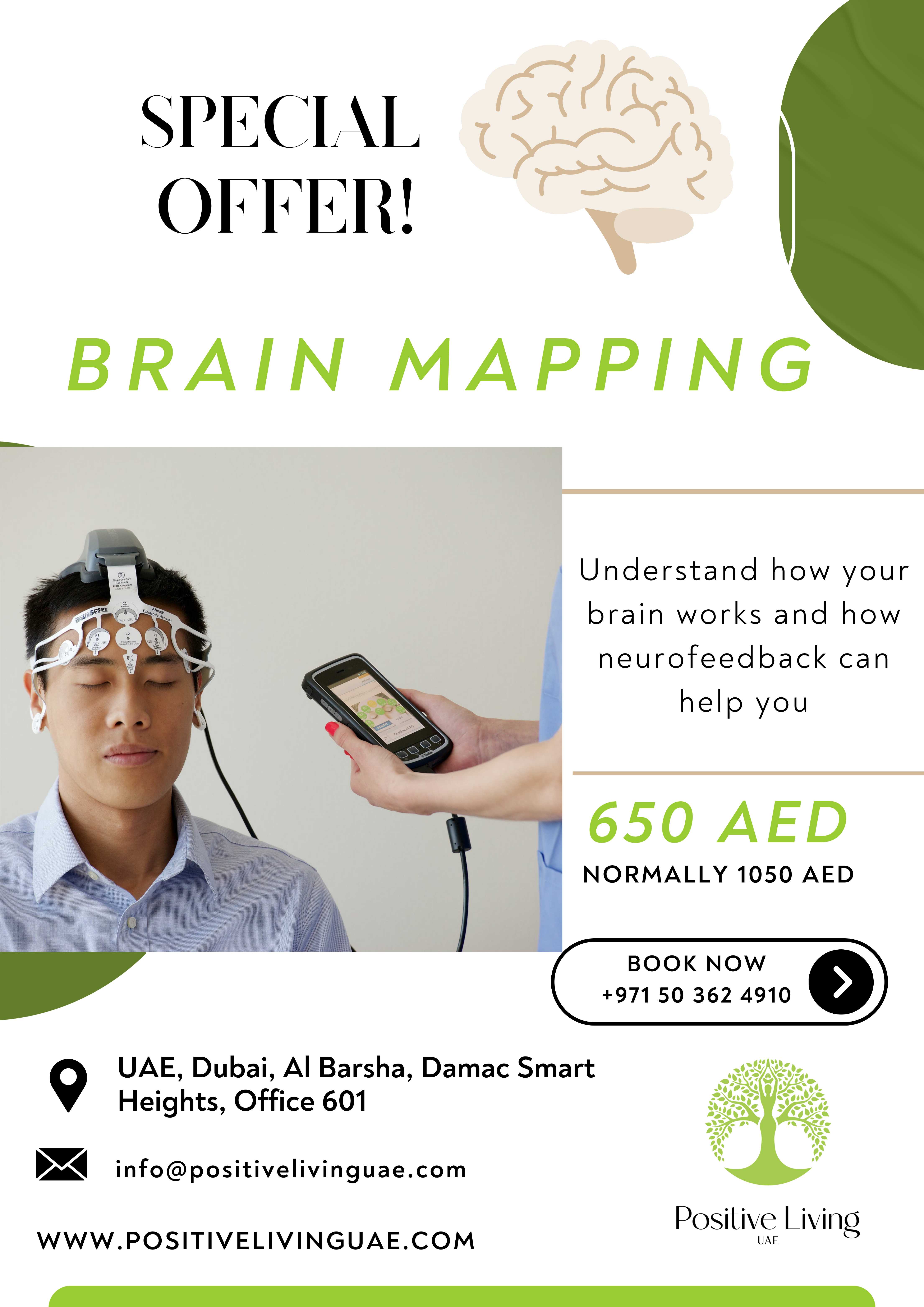
Neurofeedback and biofeedback are both non-invasive therapies designed to improve self-regulation and overall well-being. While they share similarities, they focus on different aspects of the body’s functioning and use different types of feedback to help individuals achieve positive changes.
Understanding the differences between these approaches can help individuals determine which therapy may best support their mental wellness, emotional balance, and personal goals.
At Positive Living UAE, we offer evidence-based neurofeedback therapy to help clients improve brain function, emotional regulation, and cognitive performance through personalised treatment programs.
What Is Neurofeedback?
Neurofeedback is a specialised form of biofeedback that focuses specifically on brainwave activity.
Using EEG technology, neurofeedback monitors neural activity in real time and provides feedback that helps individuals improve brain regulation and optimise brain function. The goal is to train the brain to operate more efficiently and develop healthier neural patterns.
Neurofeedback therapy is often used to support attention, mental focus, concentration, and overall cognitive functioning.
What Is Biofeedback?
Biofeedback focuses on the body’s physiological responses rather than brainwaves.
During biofeedback sessions, various physical signals such as heart rate, breathing patterns, and muscle tension are monitored. The individual receives real-time information about these bodily processes and learns techniques to influence them voluntarily.
Biofeedback helps increase bodily awareness, improve the relaxation response, and support healthier management of the body’s stress response.
The Similarities Between Neurofeedback and Biofeedback
Both therapies are designed to improve self-regulation and increase awareness of internal processes.
They use a feedback loop that allows individuals to observe how their body or brain responds to different situations. Through repeated training and conditioning, clients learn to make adjustments that support better health and well-being.
Both approaches are:
- Non-invasive
- Drug-free
- Personalized
- Focused on long-term improvement
- Based on real-time monitoring
The Main Difference: Brain vs Body
The biggest difference between neurofeedback and biofeedback is what they measure and train.
Neurofeedback Trains the Brain
Neurofeedback focuses on:
- Brainwaves
- EEG activity
- Neural pathways
- Cognitive function
- Mental performance
- Neuroplasticity
The therapy aims to strengthen the brain’s ability to regulate itself and improve overall brain efficiency.
Biofeedback Trains Physiological Responses
Biofeedback focuses on:
- Heart rate
- Breathing patterns
- Skin temperature
- Muscle tension
- Heart rate variability (HRV)
- Autonomic nervous system activity
The goal is to help individuals gain greater control over physical responses associated with stress and emotional reactions.
How Neurofeedback Supports Mental Health
Neurofeedback helps improve the way the brain functions.
By enhancing cognitive flexibility, attention, and executive functioning, neurofeedback may support individuals experiencing challenges related to focus, emotional regulation, and mental performance.
Common areas where neurofeedback may be beneficial include:
- ADHD
- Anxiety disorders
- Sleep disorders
- Focus issues
- Attention difficulties
- Emotional dysregulation
- Learning difficulties
Neurofeedback is particularly valuable when improving brain-based performance and regulation is the primary goal.
How Biofeedback Supports Physical and Emotional Regulation
Biofeedback helps individuals better understand the connection between their body and emotions.
Through increased awareness of physiological signals, people can develop stronger relaxation skills, improve stress management, and strengthen the mind-body connection.
Biofeedback is often used to support:
- Chronic stress
- Performance anxiety
- Emotional balance
- Headaches
- Migraines
- Sleep quality concerns
It can be especially helpful for individuals whose symptoms are strongly connected to physical stress responses.
Which Therapy Is Better for Anxiety?
Neither therapy is universally better.
Neurofeedback may be beneficial when anxiety is associated with patterns of brain activity and emotional regulation challenges. Biofeedback may be beneficial when anxiety produces noticeable physical symptoms such as rapid heart rate, muscle tension, or breathing difficulties.
In some cases, both approaches can complement each other.
Which Therapy Is Better for Sleep Problems?
Both therapies can support better sleep quality, but they do so differently.
Neurofeedback may help improve brain regulation, reduce mental hyperarousal, and support healthier sleep patterns. Biofeedback may help individuals reduce physical tension, improve relaxation, and regulate physiological stress responses that interfere with sleep.
The most appropriate approach depends on the underlying factors contributing to the sleep difficulty.
Benefits of Neurofeedback
Some potential benefits of neurofeedback include:
- Improved focus
- Better concentration
- Enhanced cognitive performance
- Stronger emotional regulation
- Increased mental clarity
- Improved resilience
- Better behavioral regulation
Because neurofeedback leverages the brain’s ability to adapt through neuroplasticity, many individuals experience improvements that extend beyond specific symptoms.
Benefits of Biofeedback
Some potential benefits of biofeedback include:
- Better stress management
- Improved self-awareness
- Enhanced relaxation skills
- Improved emotional balance
- Better control over physical responses
- Stronger mind-body awareness
- Improved recovery from stress
These benefits can support both physical and psychological well-being.
Choosing the Right Therapy
The best choice depends on your goals and individual needs.
If the focus is on optimising brain function, improving mental focus, enhancing cognitive function, or supporting challenges related to attention and emotional regulation, neurofeedback may be the preferred option.
If the goal is to improve awareness of physiological responses, manage stress more effectively, and strengthen relaxation skills, biofeedback may be a suitable choice.
A professional assessment can help determine the most appropriate treatment plan.
Final Thoughts
Both neurofeedback and biofeedback are valuable therapies that help individuals improve self-regulation and overall well-being. While neurofeedback focuses on brainwaves, neural activity, and brain function, biofeedback focuses on heart rate, breathing patterns, and other physiological signals.
Understanding these differences allows individuals to choose the approach that best aligns with their needs. At Positive Living UAE, we help clients explore evidence-based neurofeedback therapy options designed to support mental wellness, emotional resilience, cognitive performance, and long-term personal growth.