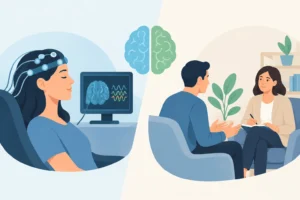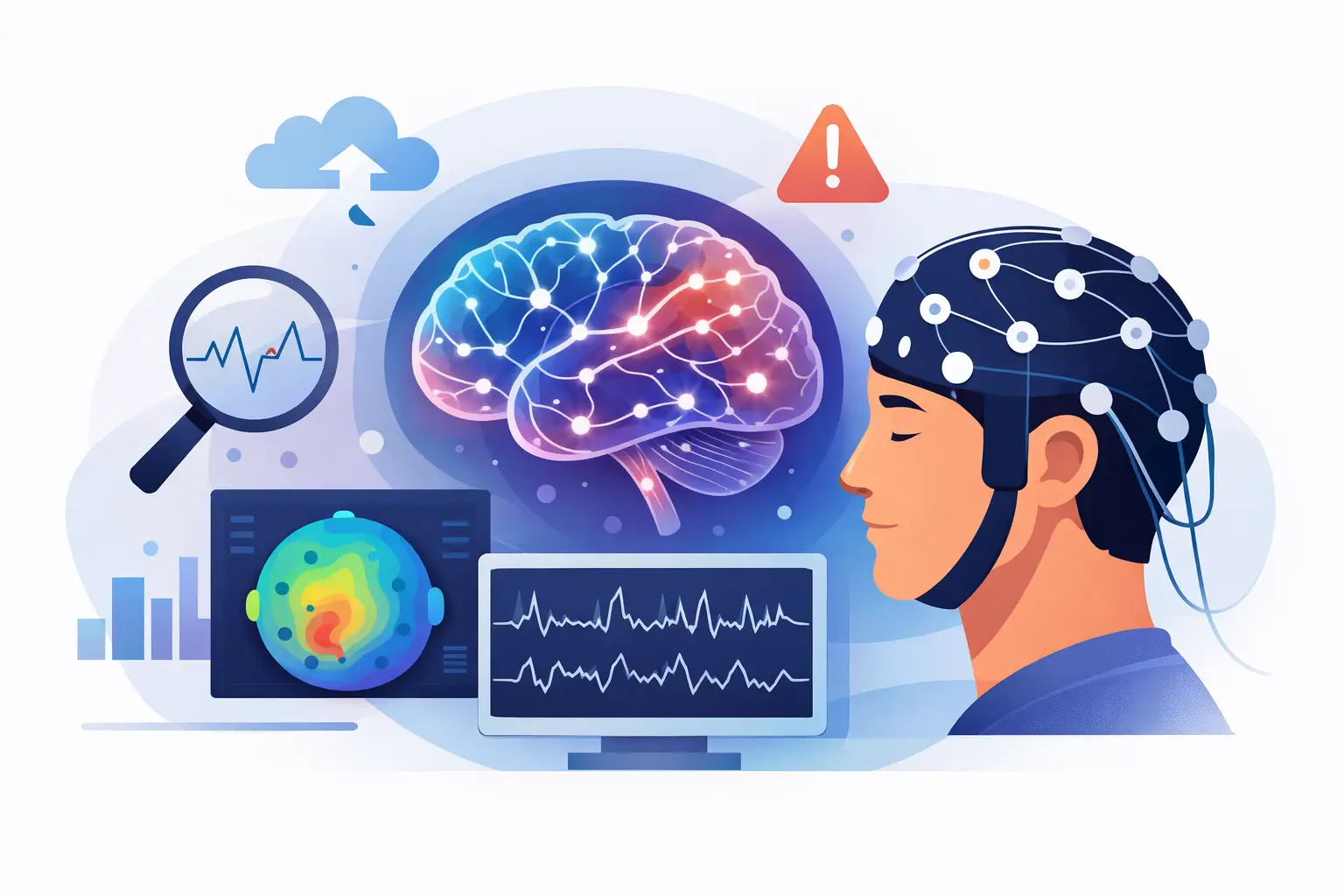
A QEEG brain map can feel like a powerful promise: a clearer view of what may be happening beneath anxiety, inattention, poor sleep, burnout, or mental fog. But brain mapping accuracy does not come from putting a cap on the head and printing a colorful report. It comes from the quality of the recording, the care taken during review, and the clinical expertise used to turn data into a thoughtful next step.
For families, professionals, and high performers seeking drug-free support, that distinction matters. A well-conducted brain map can help guide personalized neurofeedback training. A rushed or poorly interpreted one can create confusion, unnecessary concern, or a treatment plan that misses the person behind the data.
What a QEEG Brain Map Actually Measures
A quantitative electroencephalogram, or QEEG, records the brain’s electrical activity through sensors placed on the scalp. The recording is then compared with age-based normative data to identify patterns that may be associated with difficulties in regulation, attention, mood, sleep, or cognitive performance.
Think of it as a detailed snapshot of communication patterns in the brain. It can show where certain brainwave frequencies may be unusually high, low, fast, slow, or poorly coordinated. This information can be valuable when developing a neurofeedback program, much like an assessment helps a personal trainer design the right exercise plan.
A QEEG is not a diagnosis on its own. It cannot tell the whole story of a child’s ADHD symptoms, an executive’s burnout, or an adult’s depression. Brain activity needs to be considered alongside health history, current symptoms, lifestyle, medications, sleep, stress exposure, and functional challenges at school, work, and home.
Brain Mapping Accuracy Starts With a Clean Recording
The first question is simple: did the equipment capture a reliable signal? EEG sensors measure extremely small electrical signals. That makes them sensitive to interference from movement, muscle tension, blinking, sweating, loose sensors, and electrical noise in the environment.
A skilled clinician does not assume every line of data represents brain activity. They review the recording and remove artifacts, which are signals created by something other than the brain. Jaw clenching can look very different from relaxed brain activity. Frequent eye movements can distort readings at the front of the head. A child who is tired, restless, or uncomfortable may need additional support and time to produce useful data.
Several practical details influence recording quality:
- Proper sensor placement and good contact with the scalp help ensure each area is measured correctly.
- A calm, comfortable setting reduces movement and muscle tension that can contaminate the signal.
- Clear instructions for eyes-open and eyes-closed recordings support consistency.
- Enough artifact-free data gives the clinician a stronger basis for analysis.
These steps may sound technical, but they reflect a caring principle: a person deserves to be assessed carefully, not hurried through a process.
Preparation changes the picture
Brain activity naturally varies from day to day. Poor sleep, acute stress, dehydration, illness, caffeine, alcohol, recent exercise, and some medications can all influence an EEG recording. That does not mean a brain map is unreliable. It means context is essential.
Before a mapping appointment, clients should receive clear preparation guidance. They should also share relevant information honestly, including medication use and major changes in sleep or health. Medication should never be stopped or adjusted solely for a brain map unless the prescribing medical professional gives that instruction.
For example, a professional who slept three hours before an assessment may show patterns affected by sleep deprivation. That data may still be meaningful, especially if disrupted sleep is part of the concern. The clinician simply needs to interpret it within the right context rather than treating it as a permanent baseline.
Why Normative Databases and Age Matter
QEEG analysis often compares a person’s results with a normative database, which is a large reference set of EEG recordings from people of similar ages. This comparison helps identify statistical differences in brainwave activity or connectivity patterns.
The quality and appropriateness of that reference data affect brain mapping accuracy. Children, teenagers, adults, and seniors have different developmental and neurological profiles. A pattern that may be expected at one age could be less typical at another. A responsible provider uses age-appropriate standards and understands the limits of statistical comparisons.
Cultural background, individual neurodevelopment, and life circumstances also matter. A brain map should never be used to label someone as broken or define their potential. It is one source of information that may help explain why regulation feels difficult and where training could be helpful.
Expert Interpretation Is Where Data Becomes Care
Colorful QEEG images can be compelling, but the colors are not the conclusion. They are visual representations of data that require clinical interpretation. A meaningful review asks questions such as: Does this pattern align with the person’s reported symptoms? Is it consistent across recording conditions? Could fatigue, anxiety, muscle artifact, or medication explain part of the finding? What should be monitored over time?
This is particularly important because similar symptoms can have different drivers. Difficulty concentrating may relate to ADHD, chronic stress, poor sleep, anxiety, learning challenges, depression, hormonal changes, or a combination of factors. Likewise, two people with the same diagnosis may have very different QEEG patterns and need different approaches.
At Positive Living UAE, QEEG findings are considered alongside a detailed consultation and progress tracking so neurofeedback is tailored to the individual rather than selected from a generic protocol. That combination of technology and professional oversight helps keep care grounded in the person’s lived experience.
A map should guide, not replace, clinical judgment
The most useful brain mapping process avoids two extremes. It does not dismiss objective data, and it does not treat data as more meaningful than the person. A clinician should listen carefully to concerns, evaluate functional impact, and explain findings in plain language.
If a client is experiencing severe depression, thoughts of self-harm, sudden cognitive decline, seizures, or other urgent symptoms, a QEEG assessment is not a substitute for prompt medical or mental health evaluation. Neurofeedback may be part of a broader wellness plan for some people, but appropriate referrals and coordinated care are essential when needed.
How Accurate Mapping Supports Better Neurofeedback
Neurofeedback is often described as a gym for the brain. During training, real-time feedback encourages the brain to practice more efficient and stable patterns. The goal is not to force every brain into one “ideal” shape. It is to support better self-regulation in ways that relate to the person’s goals, such as calmer reactions, more consistent attention, clearer thinking, or better sleep.
A high-quality brain map can help identify training priorities and establish a starting point. Yet even the strongest baseline assessment should not lock someone into one protocol forever. The brain responds differently from person to person. Effective care includes ongoing observation, symptom tracking, and adjustments when the response suggests a different approach would be more helpful.
This is why progress evaluations matter. Parents may notice fewer emotional outbursts or improved homework tolerance. An adult may report falling asleep more easily, recovering faster after stress, or staying focused through meetings. QEEG follow-ups can add another layer of objective information, but daily function remains central.
Questions Worth Asking Before a Brain Mapping Appointment
When choosing a provider, look beyond the promise of advanced technology. Ask who conducts the recording, who interprets the data, and how artifacts are identified and removed. Find out whether the assessment includes a clinical consultation, individualized recommendations, and a plan for measuring progress.
It is also reasonable to ask how the provider handles complex presentations. Children with learning difficulties, adults with trauma histories, seniors concerned about memory, and athletes seeking performance support all deserve protocols designed around their needs. A reputable center will explain both potential benefits and realistic limitations without promising instant or guaranteed results.
Brain mapping is most valuable when it gives you understanding, direction, and a practical way to measure change. If you are considering neurofeedback, choose a team that treats the map as the beginning of a conversation about your brain health, not the final word on who you are.