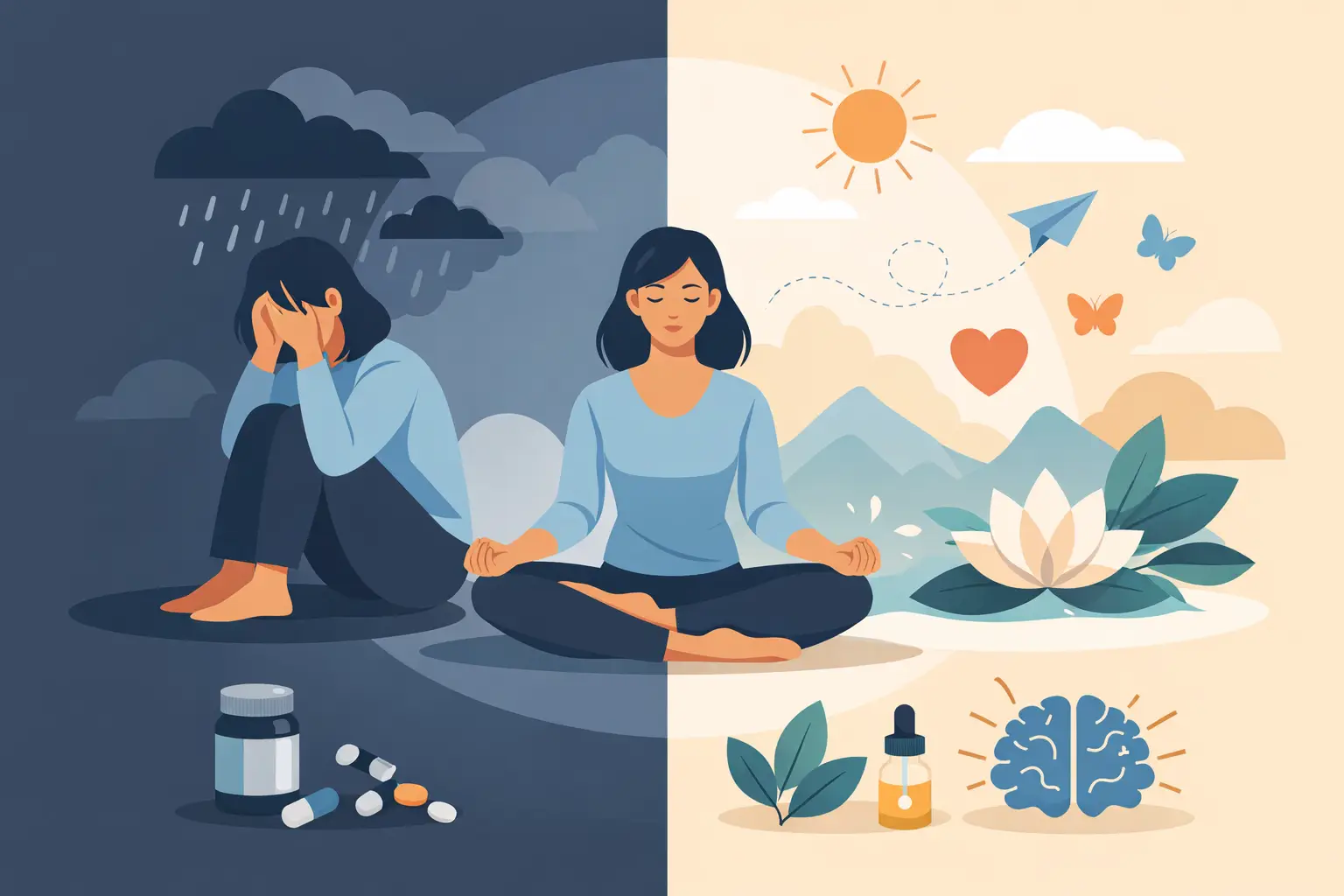
Some people know they need help with depression, but they hesitate at the same point: they are not ready for medication, they cannot tolerate side effects, or they want to explore other paths first. That is where drug free depression treatment options can become not just appealing, but genuinely meaningful. For many adults, teens, and even older clients, the right non-medication plan can support mood, energy, motivation, sleep, and emotional balance in a way that feels both practical and sustainable.
Depression is not simply sadness. It can show up as mental fog, irritability, emotional numbness, poor sleep, low drive, social withdrawal, or feeling heavy for weeks at a time. In some cases, it is linked to chronic stress, burnout, grief, trauma, nervous system dysregulation, hormonal shifts, or long-standing patterns in brain function. That is why effective care usually works best when it is personalized rather than generic.
What drug free depression treatment options actually involve
When people hear the word treatment, they often picture one solution. In reality, drug free depression treatment options usually work as a tailored combination. The goal is not to mask symptoms for a few hours. It is to help the brain and body regulate more effectively so the person can think clearly, feel more stable, and engage with life again.
That may include talk therapy, structured lifestyle support, brain-based training, and therapeutic methods that improve resilience over time. For one person, the biggest breakthrough comes from restoring sleep and reducing nervous system overload. For another, it comes from addressing negative thought patterns, unresolved stress, or inefficient brainwave activity.
The key point is this: depression has more than one pathway in, so recovery often has more than one pathway out.
Therapy remains one of the most effective non-medication choices
Psychotherapy is still one of the strongest evidence-based approaches for depression. Cognitive behavioral therapy helps people identify distorted thinking patterns and replace them with more accurate, constructive responses. That does not mean pretending everything is fine. It means learning how thoughts, behaviors, and emotions reinforce each other, then interrupting that cycle.
Other forms of therapy may be a better fit depending on the person. Someone dealing with grief or relationship pain may benefit from counseling that focuses on emotional processing and attachment patterns. A person with trauma history may need a gentler, more regulation-focused approach before traditional cognitive work feels useful. Someone with burnout may need support around boundaries, perfectionism, and chronic overdrive.
This is one reason personalized care matters. Depression can look similar on the surface while coming from very different internal experiences.
Neurofeedback for depression: training the brain, not sedating it
For people looking for a more brain-based, medication-free path, neurofeedback is increasingly part of the conversation. In simple terms, neurofeedback is like a gym for your brain. It uses EEG technology to monitor brainwave activity and provide real-time feedback, helping the brain learn healthier patterns of self-regulation.
In a clinical setting, this process often begins with QEEG brain mapping. That assessment helps identify areas of dysregulation that may be contributing to mood problems, poor focus, sleep disruption, stress sensitivity, or emotional instability. Instead of guessing, clinicians can use measurable data to guide a more individualized training plan.
For depression, neurofeedback may support better emotional regulation, improved mental clarity, steadier energy, and a greater sense of internal control. It is non-invasive and does not involve medication. Many clients are drawn to it because it addresses function rather than suppression. The goal is to help the brain perform more efficiently so mood can improve from the inside out.
That said, neurofeedback is not a one-session fix. It works through repetition and guided training over time. Some people notice early changes in sleep, calmness, or focus before mood shifts become more obvious. Others need a longer course, especially if symptoms have been present for years or overlap with anxiety, trauma, or burnout.
Lifestyle changes matter, but they need structure
People with depression are often told to sleep better, exercise, and eat well. The advice is not wrong. The problem is that it is usually delivered without enough support.
When someone is depressed, even basic tasks can feel unusually hard. So lifestyle treatment works best when it is realistic, measurable, and compassionate. Instead of saying exercise more, a clinician may recommend ten minutes of walking at the same time each day. Instead of saying fix your sleep, they may help create a consistent wind-down routine, reduce evening overstimulation, and identify whether anxiety or rumination is disrupting rest.
Physical movement can improve mood by supporting neurotransmitter activity, circulation, stress reduction, and sleep quality. Sunlight exposure can help regulate circadian rhythm. Nutrition plays a role in energy stability and brain function. None of these strategies should be treated as simplistic cures, but together they can create a stronger foundation for recovery.
Nervous system regulation is often the missing piece
Many people with depression are not only low in mood. They are also stuck in survival physiology. Their system has been under strain for so long that shutdown, numbness, or exhaustion becomes the default setting.
That is why calming the nervous system can be so important. Breathwork, guided relaxation, mindfulness-based practices, hypnotherapy, and somatic techniques may help reduce internal overload and improve self-awareness. These approaches can make it easier to sleep, think, connect, and respond instead of just endure.
This area is often overlooked because it does not look dramatic from the outside. But when a person begins to feel safer in their own body, many other treatments become more effective.
Why combined care often works better than a single method
The most effective drug free depression treatment options are often layered. A person may begin with counseling to process emotions and learn coping skills, use neurofeedback to improve regulation at the brain level, and work on sleep and stress habits to reinforce the gains.
That combination can be especially valuable when depression overlaps with anxiety, ADHD, trauma, poor concentration, irritability, or burnout. In those cases, one treatment alone may help partially, but not enough. A broader plan allows the clinician to address both symptoms and underlying patterns.
This integrated model is one reason some clients seek care at centers like Positive Living UAE, where neurofeedback can be combined with counseling, coaching, and other supportive modalities under professional guidance. The benefit is not more treatment for the sake of it. The benefit is coordination and personalization.
When non-medication treatment is a good fit, and when it may not be enough
There are many situations where non-medication care makes sense. It may be appropriate for mild to moderate depression, for people who prefer to avoid medication, for those who want to complement previous treatment, or for clients whose symptoms are closely tied to stress, dysregulation, or lifestyle disruption.
But honesty matters here. Severe depression, suicidal thinking, psychotic symptoms, or extreme functional decline require urgent medical and psychological support. In some cases, medication may be necessary, at least for a period of time. A responsible clinic should never frame non-medication approaches as a universal replacement. The right treatment depends on symptom severity, safety, history, and the person’s overall condition.
That does not weaken the case for natural or non-invasive care. It strengthens it by keeping the focus where it belongs: appropriate treatment, not ideology.
What to look for in a provider
If you are considering drug free depression treatment options, look for a provider who starts with assessment, not assumptions. Depression can be linked to many factors, so the care plan should reflect your specific symptoms, history, and goals.
It also helps to choose a clinic that can track progress clearly. That might include symptom reviews, structured follow-ups, and for neurofeedback clients, repeat QEEG assessments when appropriate. Measurable care builds trust because you can see whether treatment is truly moving in the right direction.
Clinical credentials matter as well. So does the environment. People tend to do better when they feel understood, not rushed, and when the process is explained in clear language.
Depression can convince a person that nothing will help, or that they should just keep pushing through. That belief is part of the condition, not proof that change is out of reach. Sometimes the next right step is not dramatic. It is simply choosing an approach that respects your nervous system, your preferences, and your capacity to heal at a deeper level.