Lying in bed exhausted but unable to switch off is frustrating in a way only poor sleep can be. If you have tried better sleep habits, supplements, or medication and still wake up feeling wired, foggy, or unrefreshed, neurofeedback for sleep problems may be worth a closer look.
Sleep issues are rarely just about bedtime. For many people, the real problem is that the brain and nervous system stay on high alert long after the day is over. That can show up as trouble falling asleep, waking at 3 a.m. with a racing mind, light and broken sleep, vivid stress dreams, or feeling tired but unable to fully settle. In those cases, the question is not simply how to force sleep. It is how to help the brain relearn calmer, more stable patterns.
What is neurofeedback for sleep problems?
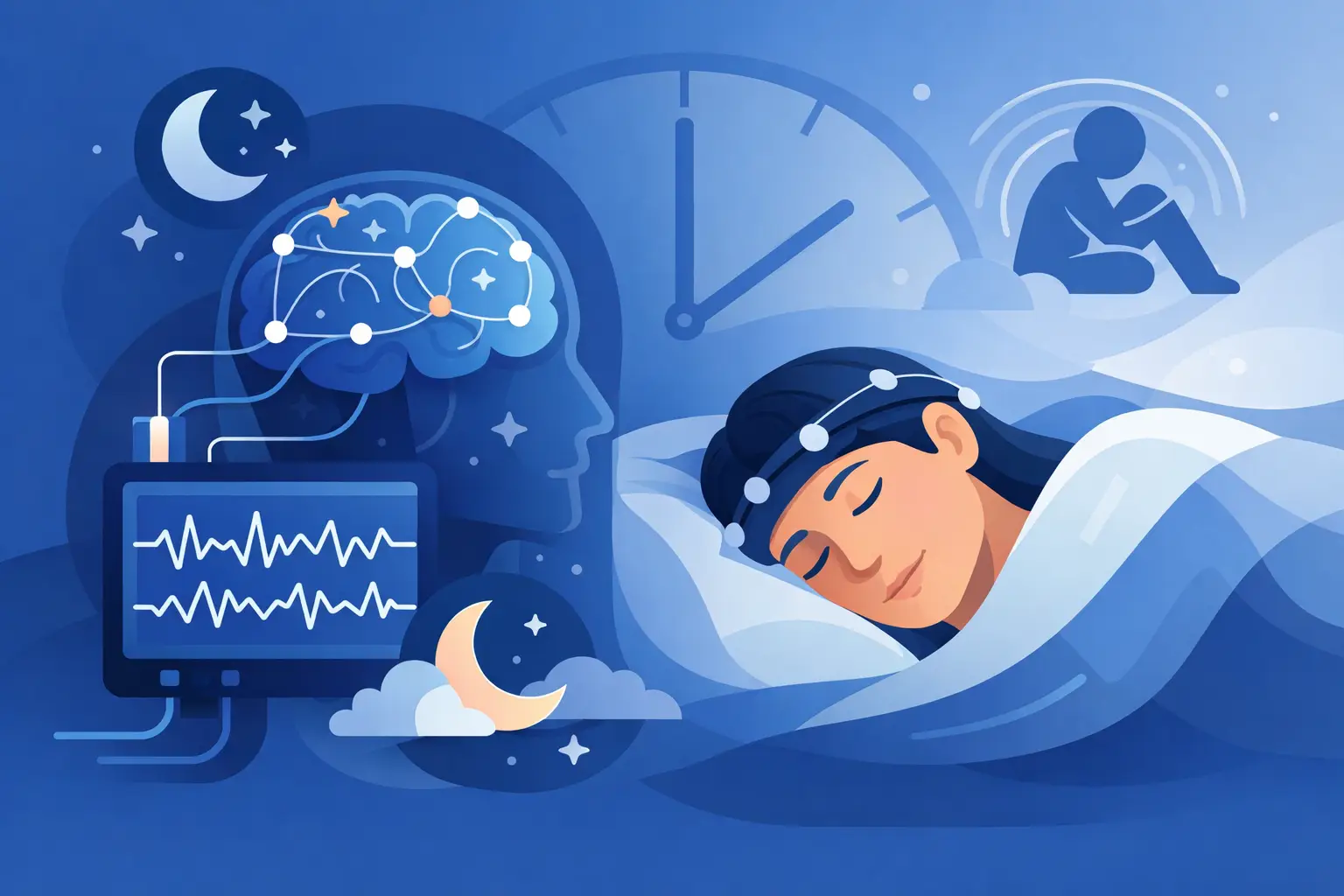
Neurofeedback is a non-invasive form of brain training based on real-time EEG activity. Sensors are placed on the scalp to read brainwave patterns, and the system gives the brain immediate feedback through audio or visual cues. Over time, this helps the brain move away from inefficient patterns and toward better self-regulation.
A simple way to think about it is this: neurofeedback is like a gym for your brain. It does not push or shock the brain. It shows the brain what it is doing in the moment and rewards healthier activity. With repetition, the brain can strengthen those more balanced patterns.
When used for sleep concerns, the goal is not sedation. The goal is regulation. That difference matters. Good sleep depends on the brain being able to shift gears at the right time, moving from daytime alertness into a quieter state and then maintaining stable sleep cycles through the night. If that regulation is off, sleep can become shallow, delayed, or easily disrupted.
Why sleep problems happen in the first place
People often assume sleep trouble is one issue. In practice, it can have many drivers. Stress and anxiety are common, but they are not the whole story. Some people have an overactive brain that struggles to slow down. Others have mood-related changes, burnout, ADHD-related restlessness, trauma patterns, chronic pain, or nervous system dysregulation that keeps the body braced even when they feel mentally tired.
This is why a one-size-fits-all approach often falls short. Two people can both say, “I can’t sleep,” while having very different brain patterns underneath. One may be stuck in hyperarousal. Another may be dealing with unstable sleep architecture. A third may be exhausted but cognitively overactivated in the evening. Effective care starts by asking why the sleep problem is happening, not just whether it is happening.
How neurofeedback may help sleep
Neurofeedback for sleep problems aims to improve the brain’s flexibility and timing. In many cases, better sleep comes as the brain becomes less reactive, more organized, and better able to transition between states.
That can translate into practical changes. Some clients find they fall asleep faster because their mind is less busy at night. Others notice fewer middle-of-the-night awakenings, deeper sleep, or less dependence on external aids to relax. For people whose sleep disruption is tied to anxiety, burnout, or emotional overload, better regulation during the day can also reduce nighttime spillover.
This is not magic, and it is not instant for everyone. Sleep can improve gradually over a series of sessions, especially when patterns have been present for years. Progress also depends on what is driving the issue. If sleep difficulty is strongly linked to lifestyle, hormones, breathing disorders, medication effects, or medical illness, those factors still need attention. Neurofeedback can be a meaningful part of care, but it works best when it is used thoughtfully and individually.
Who may benefit from neurofeedback for sleep problems?
Neurofeedback may be helpful for adults who feel tired but unable to unwind, professionals whose stress follows them into the night, and people who wake up repeatedly with a mind that feels switched on. It can also support children and teens whose sleep is affected by ADHD, emotional dysregulation, or overstimulation, as well as older adults who want a drug-free option to support better rest.
Some of the most promising use cases involve sleep issues that overlap with anxiety, trauma, attention problems, low mood, migraines, or chronic stress. In those situations, sleep is often one symptom of a broader regulation problem. Training the brain can support the larger system, not just bedtime itself.
That said, proper screening matters. If someone snores heavily, stops breathing during sleep, has severe restless legs, or shows signs of a medical sleep disorder, neurofeedback should not replace medical evaluation. The strongest outcomes tend to come when the care plan is based on a full picture rather than assumptions.
What a personalized process looks like
At a clinical level, neurofeedback should never feel random. A personalized process usually begins with a detailed consultation and, in many cases, QEEG brain mapping. This provides a clearer view of brainwave activity and can help identify areas of dysregulation that may be contributing to sleep disruption, emotional strain, or poor recovery.
From there, a practitioner develops a training plan based on the individual’s presentation rather than a generic sleep protocol. That matters because insomnia in an anxious executive may require a different approach than fragmented sleep in a child with ADHD or unrefreshing sleep in someone experiencing burnout.
Sessions themselves are typically comfortable and medication-free. You sit in a chair, sensors read brain activity, and the system delivers feedback while your brain learns. Over time, progress is monitored through symptom changes, functional improvements, and structured follow-up. In a high-quality setting, the process is guided by trained professionals who adjust the plan as needed.
What results can you realistically expect?
The most honest answer is that it depends. Some people notice early shifts such as feeling calmer in the evening, falling asleep faster, or waking with less internal tension. Others improve more gradually as their nervous system becomes less reactive overall.
Realistic expectations are important. Neurofeedback is training, not a sleeping pill. It is designed to help the brain build healthier patterns, and that takes repetition. The payoff is that the changes can feel more natural and sustainable because they are based on self-regulation rather than forced sedation.
It is also common for sleep gains to come alongside other benefits. When the brain is functioning more efficiently, people may notice better focus, fewer stress spikes, improved emotional balance, and more consistent energy. For someone whose poor sleep is part of a wider cycle of anxiety or overload, that broader improvement can be just as valuable as the nighttime changes.
Why expert oversight matters
Because sleep problems can have many causes, neurofeedback should be delivered within a professional framework. Technology matters, but interpretation matters just as much. FDA-approved systems, experienced practitioners, careful assessment, and progress reviews all help create a safer and more effective experience.
This is also where a holistic model can make a real difference. In some cases, neurofeedback works best when paired with counseling, coaching, or other supportive therapies that address stress, habits, and emotional triggers. Brain training can improve the brain’s capacity to regulate, while therapeutic support helps the person use that capacity more effectively in daily life.
That combined approach is especially useful when sleep disruption is tied to grief, high-functioning anxiety, burnout, or long-standing patterns of mental overdrive. The goal is not just more hours in bed. The goal is a system that feels calmer, steadier, and better able to recover.
At Positive Living UAE, this kind of individualized, science-backed care is central to the process. Clients are not treated as a diagnosis or a sleep score. They are assessed as whole people, with unique stress loads, brain patterns, and goals.
A better question than “How do I make myself sleep?”
If sleep has become a nightly battle, it helps to reframe the problem. Instead of asking how to knock yourself out, ask what is keeping your brain from feeling safe enough to rest. That shift opens the door to more meaningful solutions.
For many people, sleep improves when the brain no longer has to fight so hard to regulate itself. That is where neurofeedback can be especially valuable. It supports the brain’s own learning process, offering a path that is gentle, measurable, and deeply personalized.
When rest starts to return, life often feels different in quiet but powerful ways. You think more clearly, react less sharply, recover faster, and meet the day with more of yourself available.