A migraine does not just interrupt your day. It can narrow your world to a dark room, a canceled meeting, a missed family moment, or the constant worry of when the next attack will hit. That is why interest in neurofeedback for migraines keeps growing. Many people are not only looking for pain relief. They want a safer, drug-free way to help their brain become less reactive in the first place.
Neurofeedback is often described as a gym for your brain, and that comparison is useful here. Instead of masking symptoms, it aims to train the brain toward healthier patterns of activity. For people with migraines, that matters because migraines are not simply headaches. They involve the brain, nervous system regulation, sensory processing, stress response, and in many cases, sleep quality and emotional overload as well.
What neurofeedback for migraines is actually trying to do
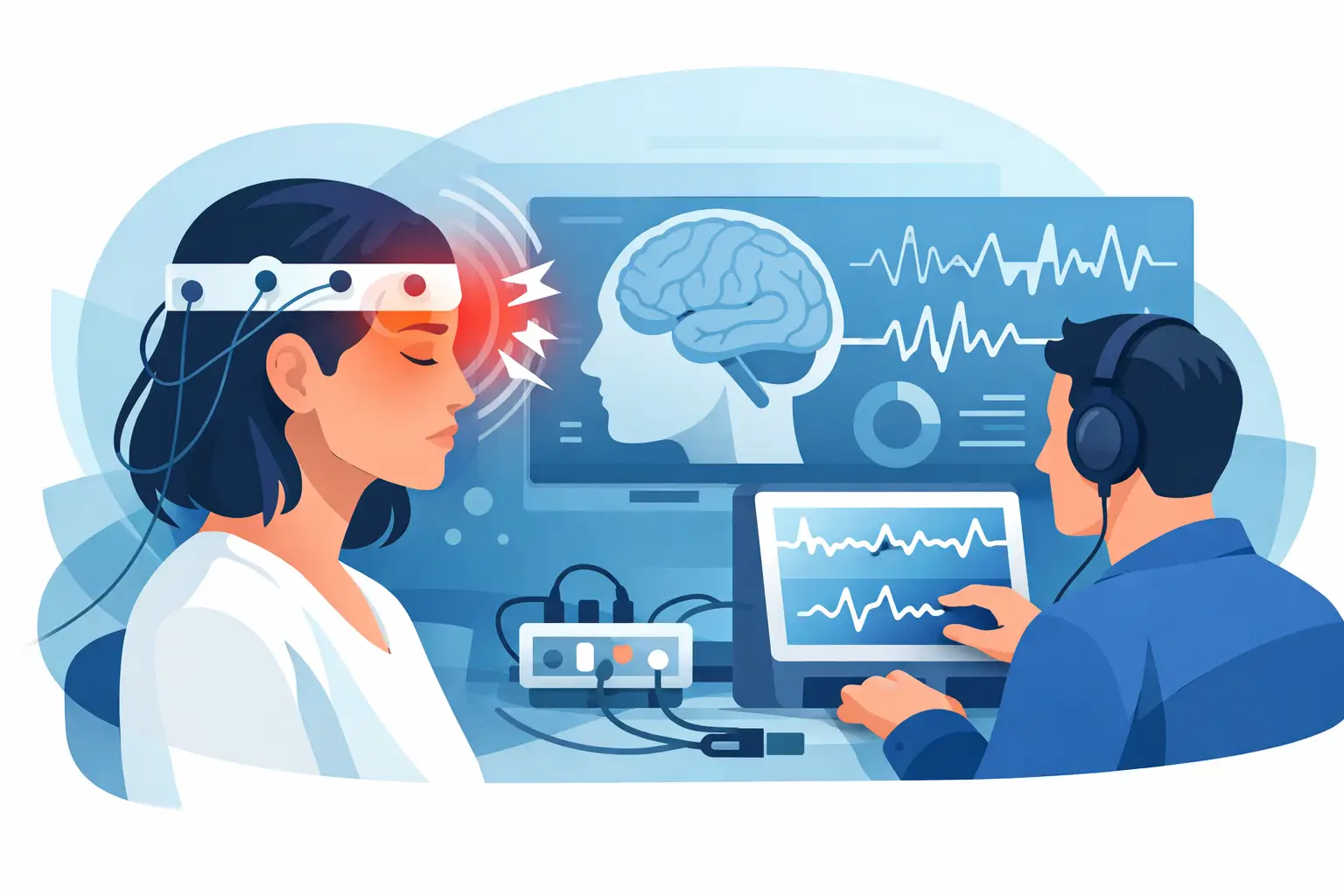
Neurofeedback is a non-invasive form of brain training that uses EEG technology to measure brainwave activity in real time. During a session, sensors are placed on the scalp to read electrical patterns in the brain. The system then gives the brain immediate feedback, often through visual or audio cues, when it moves toward more balanced activity.
The goal is not to force the brain. It is to help it learn. Over time, repeated sessions may support better self-regulation, which can be especially relevant for people whose migraines seem tied to stress, sensory overload, poor sleep, nervous system dysregulation, or difficulty recovering after mental strain.
Migraines are complex, and there is no single brainwave pattern shared by everyone who gets them. That is one reason a personalized approach matters. In clinical settings, practitioners often begin with an assessment such as QEEG brain mapping to understand how the individual brain is functioning. This creates a more targeted training plan rather than a generic one-size-fits-all protocol.
Why migraines may respond to brain training
A migraine-prone brain is often more sensitive than average. It may react more strongly to triggers like bright light, lack of sleep, emotional stress, hormonal shifts, or even changes in routine. Some people describe feeling as if their system is always running too hot or flipping too quickly into overload.
Neurofeedback for migraines is based on the idea that the brain can be trained to become more stable and efficient. If the nervous system learns to recover more smoothly from stimulation, maintain better regulation, and reduce patterns linked with overarousal, migraine frequency or intensity may improve for some people.
This does not mean neurofeedback is a cure for every migraine case. It means it may support one of the deeper mechanisms involved – how the brain regulates itself under stress and stimulation. For some clients, that translates to fewer attacks. For others, it may mean shorter episodes, less intensity, better sleep, improved resilience, or feeling less hijacked by triggers.
What the research says, and where nuance matters
Research on neurofeedback and headaches has shown encouraging results, particularly for migraine and tension-type headaches. Some studies suggest improvements in frequency, intensity, medication use, and quality of life. There is also growing interest in how EEG-based training may support autonomic balance and cortical regulation in people with chronic migraines.
That said, this is not an area where honest providers should overpromise. Research is promising, but individual response varies. Some clients notice changes within a few sessions, while others need a longer course before they can tell whether it is helping. Migraines can also be influenced by hormonal patterns, food sensitivities, neck tension, trauma history, sleep disorders, or other medical conditions. Brain training may be part of the answer, but it is not always the whole answer.
This is where a clinic with a broader, integrative model can make a real difference. If stress, burnout, anxiety, or emotional dysregulation are feeding the migraine cycle, combining neurofeedback with counseling or other supportive therapies may lead to a more meaningful shift than relying on one modality alone.
What a personalized migraine protocol may look like
The strongest neurofeedback programs do not begin with guesswork. They begin with careful assessment. In a professional setting, the process often starts with a consultation, symptom history, and in many cases a QEEG brain map. That brain map helps identify patterns that may be linked with overactivation, poor recovery, attention strain, or sleep disruption.
From there, sessions are tailored to the individual. A child with migraines and sensory sensitivity may need a different approach than an executive whose migraines spike under chronic stress and poor sleep. An adult with long-standing migraines and anxiety may also need a different protocol than someone whose migraines began after concussion or burnout.
During sessions, most clients sit comfortably and watch a screen or listen to audio while the EEG system tracks brain activity. The experience is gentle. There is no electrical current going into the brain. The feedback simply helps the brain recognize when it is moving toward healthier patterns.
Progress is usually tracked over time rather than judged by one session. Practitioners may monitor migraine frequency, duration, intensity, recovery time, sleep quality, stress tolerance, and medication reliance. Follow-up assessments help show whether the brain is changing in measurable ways and whether the protocol needs adjustment.
Who may be a good candidate for neurofeedback for migraines
This approach may be worth considering for people who want a medication-free option, those who cannot tolerate side effects, or those who feel their migraines are closely tied to stress, sleep, sensory overload, or nervous system dysregulation. It may also appeal to parents seeking a gentle intervention for a child, or adults who want to improve both migraine symptoms and overall cognitive resilience.
It can be especially relevant when migraines coexist with anxiety, insomnia, attention difficulties, burnout, or emotional exhaustion. In those cases, the goal is not just to reduce headaches. It is to help the brain and nervous system function more smoothly across daily life.
Still, not every migraine case is ideal for neurofeedback as a first step. If someone has new or sudden severe headaches, major neurological symptoms, or an undiagnosed medical issue, medical evaluation comes first. Neurofeedback works best when used thoughtfully, with proper screening and professional oversight.
Benefits people often hope for
When neurofeedback is a good fit, the hoped-for changes usually go beyond pain itself. Clients often want fewer migraine days, reduced intensity, improved sleep, better focus, less sensitivity to stress, and more confidence in daily life. That broader shift matters because migraines rarely exist in isolation. They affect work, parenting, relationships, energy, and mood.
A well-run program also offers something many migraine sufferers value deeply: a sense of agency. When you have lived with unpredictable attacks, it is easy to feel that your body is in charge and you are just reacting. Brain training can feel empowering because it focuses on building regulation, not just chasing symptoms after they appear.
Why provider quality matters
Neurofeedback is only as good as the assessment, protocol design, and clinical judgment behind it. Equipment matters, but so does expertise. A premium clinic should be able to explain how training is chosen, how progress is monitored, and how care is adapted if results are slow or uneven.
This is particularly important with migraines because there are so many possible drivers. A practitioner should ask about sleep, medication history, stress load, trauma, sensory issues, and coexisting concerns rather than treating migraines as a standalone symptom. At Positive Living UAE, that whole-person perspective is part of what helps clients feel supported rather than processed.
A realistic expectation going in
The best mindset is hopeful, but grounded. Neurofeedback for migraines is not a magic switch. It is a structured process of training the brain over time. Some people experience meaningful relief. Others see moderate gains that work best alongside lifestyle changes, therapy, or medical care. A smaller group may find it is not the right fit.
What makes it worth considering is that it is non-invasive, personalized, and focused on long-term regulation. For many people, that feels like a more respectful way to work with the body rather than against it.
If migraines have been running your schedule, draining your energy, or making you feel less like yourself, it may help to look beyond symptom suppression and ask a deeper question: how well is your brain regulating stress, stimulation, and recovery? Sometimes that is where real progress begins.