When a child is struggling with focus, emotional outbursts, anxiety, sleep issues, or school performance, parents often face a hard question: what will actually help without adding new risks? That is why so many families ask, is neurofeedback safe for children? It is a fair question, and it deserves a clear answer.
In most cases, neurofeedback is considered a safe, non-invasive approach for children when it is delivered by trained professionals, using appropriate assessment, individualized protocols, and close monitoring. It does not involve medication, sedation, or electrical stimulation being sent into the brain. Instead, it uses real-time brainwave information to help the brain learn healthier patterns of regulation.
Is neurofeedback safe for children in clinical practice?
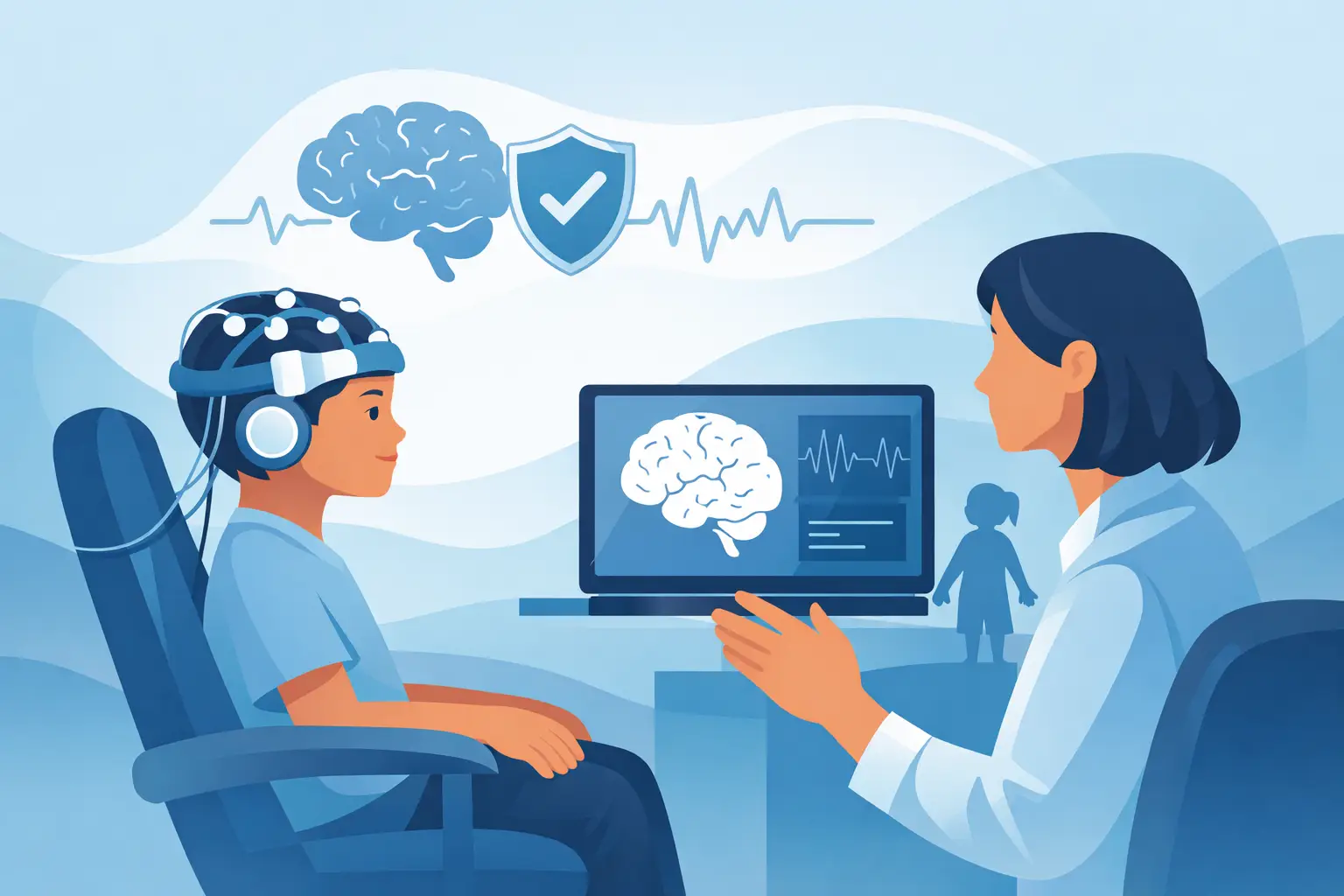
The short answer is yes, neurofeedback is generally regarded as safe for children when it is provided in a professional clinical setting. The reason is simple: the process is observational and training-based. Sensors are placed on the scalp to read brain activity, much like an EEG. The child then receives feedback, often through a game, movie, or visual cue, when the brain produces desired patterns.
A helpful way to think about it is as a gym for your brain. The brain is not forced to do anything. It is being guided, rewarded, and trained to improve self-regulation over time. For children, that can be especially meaningful because many of the challenges parents notice – impulsivity, poor concentration, emotional reactivity, trouble settling at bedtime – are connected to how well the brain and nervous system regulate themselves.
That said, safe does not mean one-size-fits-all. Children are still developing, and their needs vary widely based on age, symptoms, medical history, sensory sensitivities, and the reason they are seeking support in the first place.
How neurofeedback works without medication or invasive procedures
One of the main reasons parents feel more comfortable exploring neurofeedback is that it is non-invasive. Nothing is implanted. Nothing is delivered into the body. The sensors only measure brainwave activity, and the training software responds to that activity in real time.
If a child is able to sustain a more balanced brainwave pattern, the system rewards that state. Over repeated sessions, the brain begins to recognize and repeat those patterns more efficiently. This is why neurofeedback is often described as learning rather than treatment in the traditional sense. The goal is to improve the brain’s own capacity for regulation.
For many families, this matters because they are looking for drug-free support. Some children do very well with medication, and some do not. Others need a broader plan that includes behavioral strategies, school support, counseling, and brain-based training. Neurofeedback can fit into that larger picture when used thoughtfully.
What side effects can happen?
Parents should know that neurofeedback is usually well tolerated, but mild side effects can happen, especially if the protocol is not well matched to the child. Some children may feel temporarily tired after a session. Others may become slightly irritable, energized, emotionally sensitive, or have changes in sleep for a short period.
These effects are typically mild and temporary, and they often improve when the protocol is adjusted. This is one reason professional oversight matters so much. A skilled practitioner does not just run sessions and hope for the best. They track changes, ask detailed questions, monitor the child’s response, and make adjustments based on what the brain and behavior are showing over time.
If a parent hears that neurofeedback has “no side effects,” that is too simplistic. A more accurate statement is that neurofeedback is generally low-risk and non-invasive, but it still needs to be individualized and supervised properly.
Why assessment matters for safety
The safest neurofeedback care starts before the first session. A strong clinic does not jump straight into training without understanding the child’s baseline patterns, symptoms, history, and goals.
In many cases, this process may include an intake review, symptom tracking, and sometimes a QEEG brain map. A QEEG helps identify how the child’s brain is functioning across different regions and frequencies, which can guide a more personalized training plan. That matters because a child with attention difficulties, for example, may not have the same brain pattern as another child who looks similar on the surface.
This is where quality of care makes a difference. Personalized protocols reduce guesswork. They also help avoid overtraining or using a standard approach that does not fit the child.
Which children may benefit most?
Neurofeedback is often explored for children with attention difficulties, anxiety, learning challenges, sleep problems, emotional dysregulation, sensory overload, and stress-related symptoms. Some families also seek it out to support peak performance, stronger focus, or better resilience in school and extracurricular activities.
Still, not every child is an ideal candidate at every moment. A child with severe psychiatric symptoms, unmanaged seizures, active neurological concerns, or a complex medical profile may need additional screening, coordination with other providers, or a different level of care first. This does not mean neurofeedback is unsafe. It means responsible care involves knowing when neurofeedback fits well and when a child needs broader medical oversight.
Parents should expect honest guidance, not blanket promises. If a provider acts as though neurofeedback works for every child in the same way, that is a red flag.
What makes neurofeedback safer for children?
The biggest safety factors are not flashy technology or bold claims. They are clinical judgment, training, and follow-through.
A safe pediatric neurofeedback process usually includes a qualified practitioner, a clear intake process, an individualized protocol, regular progress reviews, and open communication with parents. The child should be monitored not just for symptom improvement, but also for sleep, mood, school functioning, behavior at home, and overall nervous system balance.
It also helps when the setting is supportive and child-friendly. Children respond best when they feel calm, understood, and successful during the process. Safety is not only about preventing side effects. It is also about creating an experience that respects the child and supports steady progress.
At a clinic such as Positive Living UAE, this kind of structured oversight is part of what helps families feel more confident. Parents are not expected to guess whether the training is working. Progress should be reviewed and measured over time.
Is neurofeedback safe for children with ADHD or anxiety?
This is one of the most common follow-up questions, and the answer is often yes, with the same important condition: proper assessment and professional supervision.
Children with ADHD are frequently good candidates because neurofeedback targets self-regulation, sustained attention, and impulsivity at the brain level. For anxious children, the training may support calmer nervous system patterns and better emotional recovery after stress. In both cases, the process should be gradual and personalized.
It is also worth remembering that neurofeedback is not magic. Some children respond quickly, while others improve more gradually. Some need neurofeedback as a standalone support, while others benefit most when it is combined with counseling, parenting strategies, school accommodations, or other therapies. Safety and effectiveness both improve when care is realistic and well coordinated.
Questions parents should ask before starting
If you are considering neurofeedback for your child, ask how the provider assesses suitability, how they personalize protocols, what side effects they watch for, how they track outcomes, and what credentials the team holds. Ask how often progress is reviewed and what happens if your child seems overstimulated, fatigued, or unsettled after a session.
These questions do more than protect your child. They also reveal whether the provider sees neurofeedback as a thoughtful clinical process or simply a service to sell.
A trustworthy answer should feel balanced. You want confidence, but you also want nuance. The right provider will explain that neurofeedback is generally safe, while also respecting the fact that children deserve individualized care rather than assumptions.
For many families, neurofeedback offers something deeply valuable: a way to support the brain without forcing it, suppressing symptoms, or overlooking the whole child. When care is guided by proper assessment, advanced technology, and experienced clinical oversight, safety is not just a selling point. It becomes part of the foundation for real, lasting change.