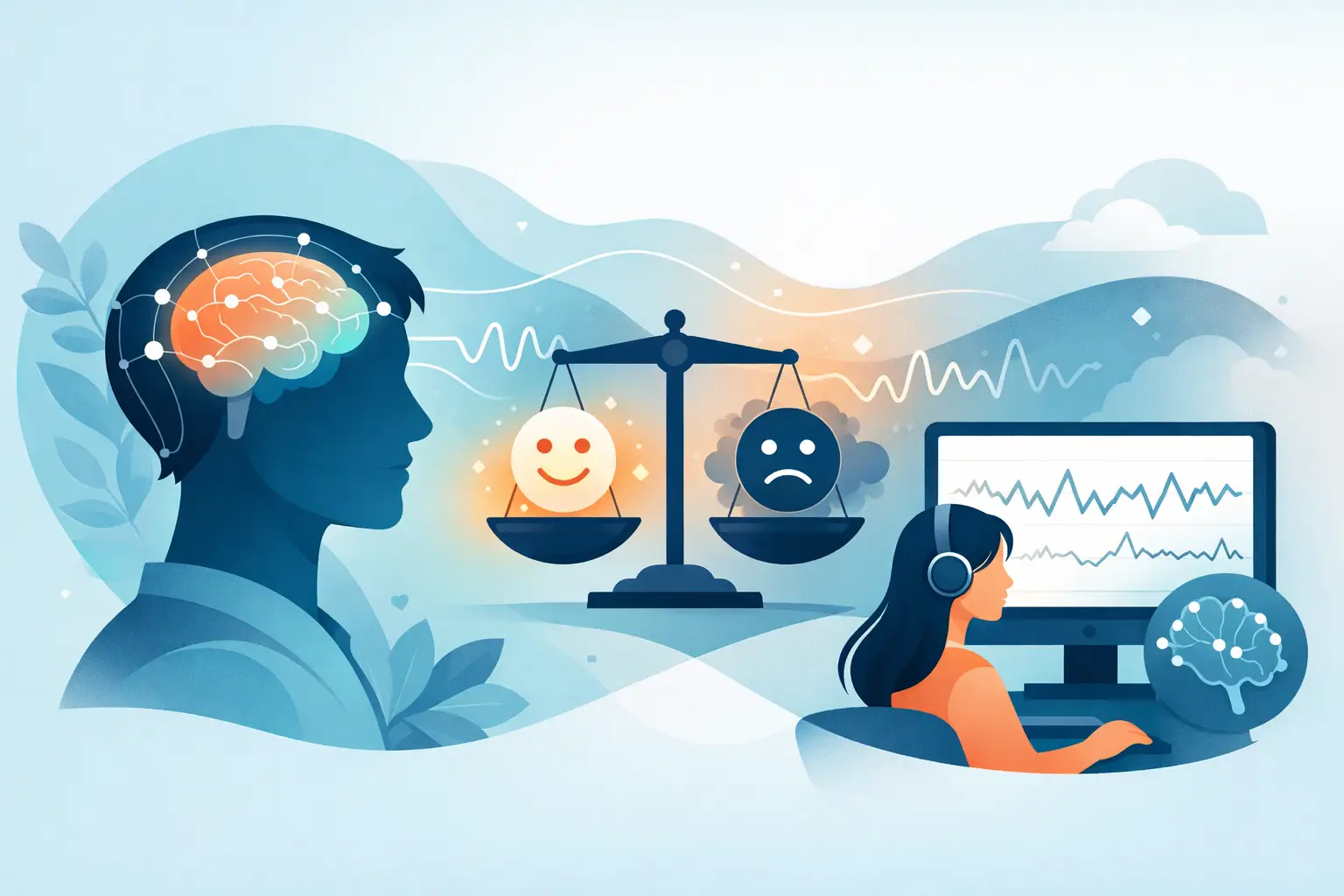
Some people do not feel emotionally overwhelmed all the time. They just feel one step behind their reactions. A small frustration turns into anger too quickly. Stress lingers long after the moment has passed. Sleep becomes lighter, patience gets shorter, and even minor pressure can feel bigger than it should. Neurofeedback for emotional regulation is designed for exactly this kind of pattern – not to suppress feelings, but to help the brain respond with more stability and flexibility.
When the nervous system is stuck in overdrive or struggles to shift gears, emotional control often becomes inconsistent. You may know what you want to do, yet your brain and body react differently. That gap can affect work, parenting, relationships, school performance, and overall well-being. Neurofeedback offers a non-invasive, medication-free way to train the brain toward calmer, more balanced functioning.
What neurofeedback for emotional regulation actually does
A helpful way to think about neurofeedback is as a gym for your brain. The goal is not to force relaxation or “talk yourself out of” difficult emotions. Instead, it helps the brain recognize its own patterns and practice healthier ones through real-time feedback.
Neurofeedback uses EEG sensors placed on the scalp to measure brainwave activity. These sensors do not put anything into the brain. They simply read the brain’s electrical activity while specialized software tracks what is happening in the moment. When the brain moves toward a more regulated pattern, it receives positive feedback, often through visual or auditory cues. Over repeated sessions, the brain learns to spend more time in those steadier states.
For emotional regulation, this matters because dysregulated brain activity can show up as impulsivity, chronic anxiety, irritability, emotional shutdown, mood swings, or difficulty recovering after stress. Training does not remove emotion. It supports better timing, smoother recovery, and less extreme reactivity.
Why emotional regulation can be difficult even when you understand your triggers
Many people blame themselves for being “too sensitive” or “too reactive.” In reality, emotional regulation is not just a mindset issue. It is deeply connected to how the brain processes stress, attention, threat, and self-control.
If certain brain networks are overactive, the person may feel constantly alert, tense, or easily overwhelmed. If other areas are underactive, they may struggle with focus, impulse control, or the ability to pause before reacting. This is one reason insight alone does not always create change. You can understand your patterns and still find yourself repeating them.
Children may show this as meltdowns, frustration intolerance, or trouble transitioning between tasks. Adults may notice snapping at loved ones, overthinking small interactions, or feeling emotionally drained by the end of the day. Seniors may experience increased irritability, stress sensitivity, or cognitive fatigue that affects mood. Different ages, same core issue – the brain is not regulating efficiently.
How treatment is personalized
One of the biggest misconceptions about neurofeedback is that everyone receives the same training. Effective care does not work that way. Emotional dysregulation can come from very different brain patterns, which is why individualized assessment matters.
A clinical program often begins with a QEEG brain map. This assessment measures brainwave activity and compares patterns across different regions of the brain. It helps identify where the brain may be over-aroused, under-aroused, or struggling to coordinate efficiently. That information guides a more precise training plan.
This step is especially valuable because two people can look similar on the surface and need very different protocols. One person may have anxious hyperarousal. Another may have attention-related dysregulation that creates frustration and emotional impulsivity. A third may be dealing with burnout, poor sleep, and nervous system exhaustion. Personalized neurofeedback helps avoid a one-size-fits-all approach.
What changes people often notice
The progress from neurofeedback for emotional regulation is usually gradual, not dramatic overnight. That is often a good sign. The brain is learning, not being forced.
Early improvements may include feeling less “on edge,” recovering faster after stress, sleeping more deeply, or noticing a little more space between a trigger and a reaction. Over time, many people report better frustration tolerance, more consistent focus, improved mood stability, and greater capacity to handle demanding situations without becoming flooded.
For parents, the difference may look like fewer explosive moments and smoother routines at home. For professionals, it may mean clearer thinking under pressure and less emotional spillover after work. For high performers, it can support steadier focus and resilience without sacrificing drive. The exact outcome depends on the person, their goals, and what is contributing to the dysregulation in the first place.
What a clinical neurofeedback process looks like
A strong neurofeedback program should feel structured, measurable, and professionally guided. That matters because emotional symptoms can overlap with ADHD, anxiety, depression, trauma patterns, sleep issues, and cognitive fatigue.
A typical process starts with a consultation and assessment. If QEEG mapping is included, the practitioner uses that data to build a training plan based on the individual’s brain activity and symptom profile. Sessions then take place regularly over a series of weeks. During each session, the client sits comfortably while EEG sensors monitor brain activity and the system delivers feedback as the brain shifts toward target patterns.
Progress is usually reviewed through symptom tracking, clinical observation, and, in some cases, follow-up QEEG evaluation. This is important because treatment should not rely on guesswork. If someone is improving in sleep, attention, emotional recovery, or mood stability, those changes should be monitored and discussed.
At Positive Living UAE, this kind of structured and personalized care is part of what gives clients confidence. Clinical oversight, advanced EEG-based technology, and ongoing evaluation help make the process feel both supportive and grounded in evidence.
Neurofeedback is powerful, but context still matters
Neurofeedback can be highly effective for emotional regulation, but it is not magic and it is not identical for everyone. Some clients respond quickly. Others need more time, especially if their symptoms have been present for years or involve multiple factors such as chronic stress, trauma, sleep disruption, or learning challenges.
It also works best when the broader picture is respected. A person with severe burnout may need lifestyle support. A child with emotional outbursts may also benefit from parent guidance. An adult carrying unresolved stress may improve faster when brain training is paired with counseling or coaching. This is where a holistic model becomes valuable. Brain training can improve the brain’s capacity to regulate, while therapeutic support helps the person use that capacity more effectively in real life.
That combination is often where lasting change happens. It is not just about feeling calmer in a session. It is about creating better daily functioning at home, at work, in school, and in relationships.
Who may be a good candidate for neurofeedback for emotional regulation
This approach can be a strong fit for people who want a drug-free, non-invasive option and are open to a training process rather than a quick fix. It may help those dealing with anxiety, anger, mood instability, chronic stress, ADHD-related impulsivity, sleep-related irritability, or emotional overwhelm linked to cognitive overload.
It can also be useful for people who are functioning on the surface but paying a high internal price. They may appear capable and successful while privately feeling exhausted, reactive, or mentally scattered. In these cases, the goal is not simply symptom relief. It is restoring flexibility, resilience, and steadier control.
That said, proper assessment matters. Neurofeedback should be recommended as part of a thoughtful clinical plan, not as a generic answer for every emotional struggle.
Emotional regulation is not about becoming less human. It is about giving your brain the ability to pause, adapt, and recover with less strain. When that starts to happen, everyday life often feels lighter – not because emotions disappear, but because you are finally able to work with them instead of constantly fighting them.