A sharp mind is not just about working harder. It is about how efficiently your brain regulates attention, stress, recovery, and decision-making under pressure. That is why peak mental performance training has become increasingly relevant for executives, students, athletes, creatives, and anyone who needs consistent focus without burning out.
For many people, the real issue is not motivation. It is brain state. You may have the drive to perform, yet still struggle with mental fatigue, distractibility, poor sleep, emotional reactivity, or that frustrating feeling of being capable of more than you can access in the moment. When that happens, training the brain directly can make more sense than simply pushing behavior harder.
What peak mental performance training actually means
At its core, peak mental performance training is the process of improving how the brain functions so that attention, emotional control, processing speed, memory, and resilience become more reliable. The goal is not to create a superhuman version of yourself. It is to help your brain operate with less noise, less strain, and better self-regulation.
That distinction matters. Mental performance is often misunderstood as a productivity hack. In practice, it is broader than that. A high-performing brain is not only focused. It is flexible, calm under pressure, able to recover after stress, and less likely to swing between overdrive and exhaustion.
This is why performance training often overlaps with symptom relief. A professional dealing with burnout may want better concentration. A teenager with attention issues may want more consistent learning. A senior may want sharper memory and processing. Different goals, same principle: when the brain regulates itself better, performance tends to improve.
Why willpower is not enough
People often try to fix performance problems with stricter routines, more caffeine, longer hours, or motivational strategies. Those can help at the margins. But if the nervous system is stuck in stress mode, or if certain brainwave patterns are interfering with sustained attention, effort alone has limits.
Think of it like training at the gym with poor form. More repetitions do not always produce better results. Sometimes they reinforce the wrong pattern. The brain works in a similar way. If it has developed inefficient patterns around focus, sleep, or emotional regulation, those patterns can show up everywhere – in work, school, sports, and relationships.
That is where brain-based training becomes valuable. Rather than asking the person to fight their own nervous system all day, it aims to improve the system itself.
A better model for peak mental performance training
The most effective approach is usually not one-size-fits-all. Two people can both complain of poor focus and need very different interventions. One may be dealing with chronic overactivation and anxiety. Another may have underarousal, low motivation, and mental fog. The surface symptom looks similar, but the underlying brain pattern may not be.
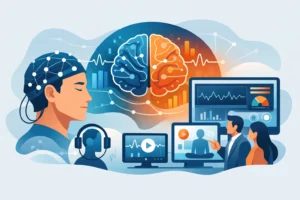
This is why personalized assessment matters. In a clinical setting, performance training may begin with a detailed intake and, in some cases, QEEG brain mapping. This allows practitioners to look at electrical activity in the brain and identify patterns that may be linked to attention control, impulsivity, sleep disruption, stress reactivity, or cognitive fatigue.
That objective view helps remove guesswork. It also gives clients something many have been missing: a clear explanation for why they feel stuck despite trying so hard.
How neurofeedback fits into mental performance
Neurofeedback is often described as a gym for your brain, and that analogy works because it is based on training rather than suppression. It is a non-invasive, medication-free method that uses EEG technology to monitor brain activity in real time and help the brain learn more efficient patterns.
During sessions, the brain receives immediate feedback based on its activity. Over time, with repetition and professional oversight, it can begin to shift toward healthier regulation. That may support improvements in sustained focus, stress tolerance, sleep quality, emotional steadiness, and mental clarity.
For people seeking peak mental performance training, neurofeedback is appealing because it does not rely on pep talks or temporary stimulation. It addresses the operating patterns behind performance. That said, results are not identical for everyone. The timeline depends on the person’s starting point, goals, consistency, and the complexity of what the brain is managing.
If someone is already functioning well and wants optimization, progress may look like sharper concentration during demanding tasks or faster recovery after high-pressure days. If someone is carrying anxiety, burnout, or sleep issues, early gains may show up first as improved calm, better rest, and less mental overload. Those changes often create the foundation for stronger performance later.
What peak mental performance training can help improve
When the training is well designed, people often notice changes that affect daily life in very practical ways. Focus can become easier to sustain without feeling forced. Mental endurance may improve so that long meetings, study sessions, or high-stakes decision-making feel less draining. Emotional regulation can strengthen, which matters more than many people realize because frustration, anxiety, and overstimulation quickly erode performance.
Sleep is another major factor. Many high achievers try to outwork poor sleep, but cognitive performance rarely stays strong when recovery is weak. If brain training helps improve sleep quality, the benefits often spill into memory, reaction time, mood, and concentration.
There can also be gains in self-awareness. Clients sometimes report that they catch stress earlier, recover from setbacks faster, and feel less controlled by mental noise. That may sound subtle, but in demanding environments it can be the difference between reacting impulsively and responding with clarity.
Why a clinical, personalized setting matters
Not all brain training is equal. For something as important as cognitive and emotional performance, professional oversight matters. A premium clinical model offers more than equipment. It provides assessment, protocol design, progress tracking, and adjustments based on how the person is responding.
That level of care is especially important when performance concerns overlap with ADHD, anxiety, migraines, depression, learning issues, or burnout. In those cases, the brain is not simply underperforming. It may be working around dysregulation that needs to be understood carefully.
A well-run clinic can also combine modalities when appropriate. Neurofeedback may be central, but counseling, coaching, or hypnotherapy can support the behavioral and emotional side of change. That combination is often where people gain real momentum. Brain training helps the nervous system become more receptive, while therapeutic support helps the person use that improved capacity more effectively.
Who benefits most from this kind of training
Peak mental performance training can be useful across age groups, but the goals vary. For children and teens, the focus may be better attention, emotional control, and learning efficiency. For adults, it may be clearer thinking, reduced stress, and stronger work performance. For seniors, support may center on memory, processing speed, and maintaining cognitive confidence.
High performers often benefit greatly, but not because they are failing. They benefit because small improvements in regulation can have outsized effects when the demands are high. An executive who thinks more clearly under pressure, an athlete who stays calmer in competition, or a creative who enters deep focus more reliably may all experience meaningful gains from the same core process.
The main caveat is expectation. Good training is not magic, and it is not instant. It works best when people are open to a process, willing to be consistent, and interested in lasting change rather than a quick spike in output.
What to look for in a provider
If you are considering peak mental performance training, look for a provider that explains the science clearly, uses individualized assessment, and tracks progress over time. You should feel both informed and supported. A trustworthy clinic will not promise identical outcomes for everyone. It will explain what is realistic, what is measurable, and how your protocol would be tailored to your goals.
Positive Living UAE reflects this model by combining neurofeedback with broader therapeutic support in a structured clinical environment. For clients who want drug-free, evidence-based help with both performance and well-being, that kind of integrated care can be a strong fit.
The most encouraging part of this work is that better performance does not have to come from more pressure. Sometimes it comes from helping the brain do what it was always meant to do – regulate, adapt, and perform with greater ease.