You can feel exhausted all day and still find your brain wide awake at 2 a.m. That mismatch is often what makes sleep problems so frustrating. When people ask how neurofeedback improves sleep, the real answer starts with brain regulation. Sleep is not only about being tired enough. It is also about whether the brain can shift out of alert mode and settle into the rhythms that support rest.
For many people, poor sleep is tied to an overactive nervous system. The body may be in bed, but the brain is still scanning, replaying, anticipating, or staying stuck in a high-alert pattern. This is common in adults with anxiety, professionals under chronic stress, children with attention challenges, and even high performers whose minds rarely slow down. In those cases, sleep support needs to go deeper than sleep hygiene alone.
How neurofeedback improves sleep at the brain level
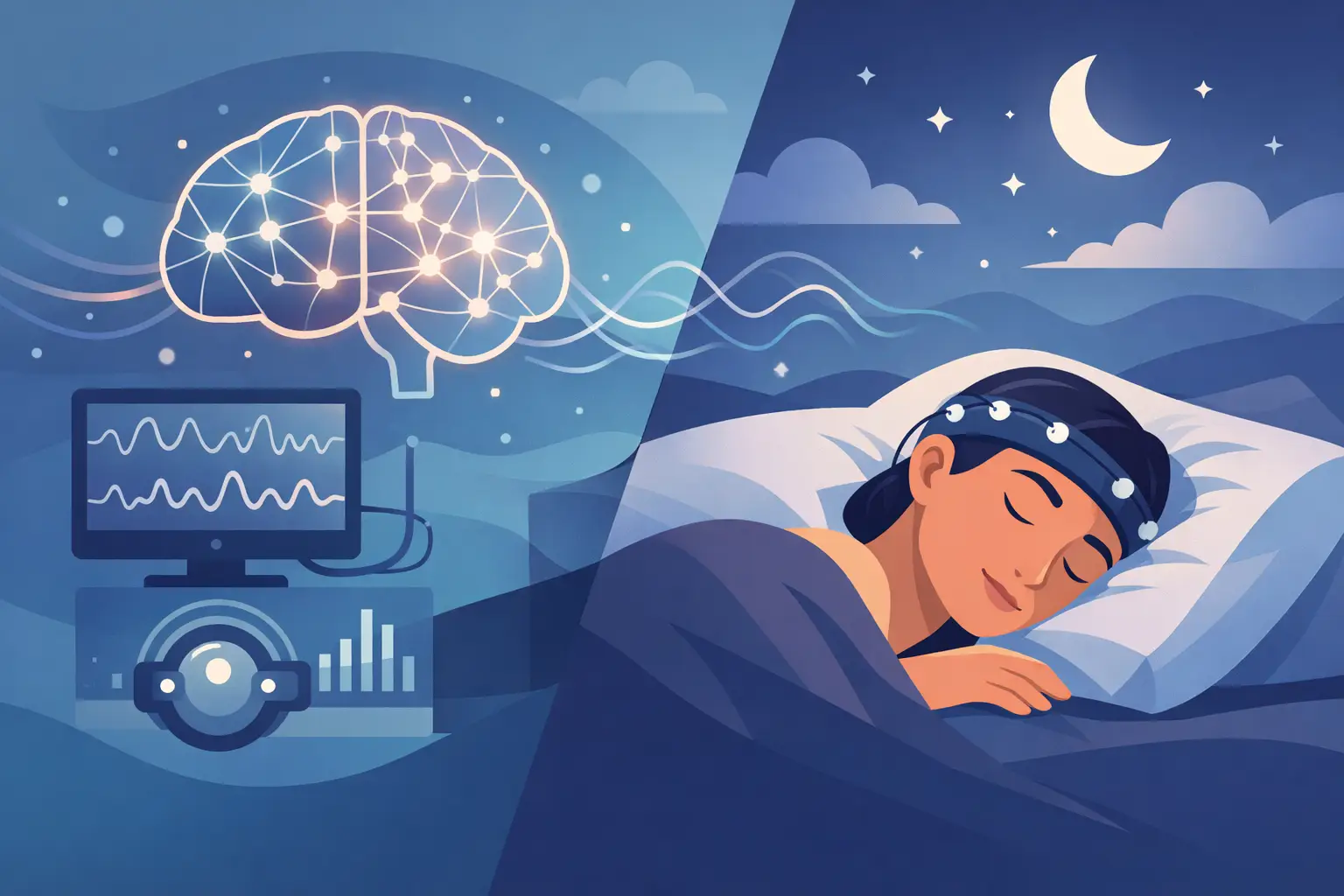
Neurofeedback is a non-invasive form of brain training that uses EEG technology to measure brainwave activity in real time. You can think of it as a gym for your brain. The brain receives immediate feedback about its own activity and begins to learn more efficient patterns over time.
That matters for sleep because healthy sleep depends on flexibility. During the day, your brain needs enough activation for focus, memory, and decision-making. At night, it needs to downshift. If that transition is weak, delayed, or inconsistent, you may have trouble falling asleep, staying asleep, or waking feeling restored.
Neurofeedback does not force the brain to sleep. It trains self-regulation. When the brain becomes better at moving away from patterns linked to hyperarousal, people often notice that they feel calmer in the evening, fall asleep more easily, and experience more stable sleep across the night.
Why some people stay tired but cannot sleep
A common misunderstanding is that insomnia always comes from stress in the emotional sense. Stress is certainly part of the picture, but brainwave dysregulation can be just as important. Some people show patterns associated with excessive fast-wave activity, especially in areas linked to vigilance and mental overactivity. Others may have poor timing in the networks that support relaxation and sleep onset.
This helps explain why two people can report the same symptom but need different care. One person may lie awake with racing thoughts. Another may fall asleep quickly but wake at 3 a.m. every night. A child may be physically restless and unable to settle. An older adult may feel sleepy but never reach deep, restorative rest. The symptom is sleep disruption, but the underlying brain pattern may differ.
That is one reason personalized neurofeedback tends to be more meaningful than a one-size-fits-all approach. Clinical providers often begin with a QEEG brain map, which looks at electrical activity across different regions of the brain and compares it with expected patterns. This creates a clearer picture of what may be contributing to sleep difficulty.
What the brain is learning during training
In a neurofeedback session, sensors are placed on the scalp to read brainwave activity. The process is painless and medication-free. The client watches a screen or listens to audio while the system responds to the brain’s activity in real time. When the brain moves toward a more regulated pattern, the feedback reinforces that shift.
Over repeated sessions, the brain learns through practice. This is why neurofeedback is often described as training rather than treatment in the passive sense. The goal is not to mask symptoms for a night or two. The goal is to help the brain become more stable and adaptive, which can have a lasting effect on sleep quality.
How neurofeedback improves sleep in real life
The benefit most people care about is simple: they want to rest and function better. Better sleep can show up in several ways.
Some clients notice they fall asleep faster because bedtime no longer triggers a surge of mental activity. Others report fewer middle-of-the-night awakenings. Some say they still wake briefly, but now they can drift back to sleep instead of becoming fully alert. Many also notice a difference in morning recovery. Even if total sleep time changes only modestly at first, sleep can feel deeper and more restorative.
This can create a positive chain reaction. When sleep improves, emotional regulation often improves with it. Focus becomes easier. Stress tolerance rises. Headaches, burnout symptoms, and irritability may decrease. For children, better sleep can support learning and behavior. For professionals, it may improve performance, patience, and decision-making. For older adults, it can mean better daytime energy and mental clarity.
Who may benefit most
Neurofeedback can be helpful for people whose sleep issues are connected to nervous system dysregulation. That includes individuals dealing with anxiety, chronic stress, trauma-related hypervigilance, ADHD, burnout, and some mood-related difficulties. It may also support people who want a drug-free option or who have not gotten lasting results from basic sleep advice alone.
That said, sleep problems are not all the same. If someone has sleep apnea, significant hormone disruption, unmanaged pain, medication side effects, or another medical sleep disorder, neurofeedback may be only one part of the picture. Good clinical care means recognizing those limits. Brain training can be powerful, but it works best when the full cause of sleep disruption is understood.
Why personalization matters
Generic relaxation tools can help, but they do not always address the actual pattern keeping the brain stuck. One person may need support for excessive arousal. Another may need work around timing, sensory sensitivity, or emotional reactivity. This is where individualized protocols matter.
At a clinic such as Positive Living UAE, QEEG-informed training and structured progress reviews allow practitioners to adjust sessions based on how the client responds. That is especially important with sleep, because changes may happen gradually. Some people notice earlier bedtimes and a calmer mind within a few sessions. Others improve more slowly as deeper stress patterns begin to settle.
What to expect from the process
Neurofeedback is not usually an overnight fix, even though sleep may begin to improve early. Most people need a series of sessions for the brain to build more reliable regulation. The number varies depending on age, symptom history, nervous system sensitivity, and whether sleep issues exist alongside anxiety, attention problems, or emotional overload.
A quality process often starts with assessment, then a personalized training plan, then regular review of symptoms and response. That review matters because better sleep is not measured only by hours in bed. Clinicians also look at sleep onset, wake-ups, dream intensity, morning energy, daytime calm, and overall resilience.
The experience itself is gentle. Clients are not being shocked or stimulated. They are simply receiving information from their own brain activity in a way that supports learning. For people who feel cautious about trying something new, that non-invasive and medication-free aspect can be reassuring.
The trade-offs and realistic expectations
Neurofeedback is promising, but it should be discussed honestly. It requires consistency, and results vary from person to person. Someone with long-standing insomnia and high stress may need more sessions than someone whose sleep worsened recently. A child with ADHD-related restlessness may improve differently than an adult with trauma-related night waking.
It is also not meant to replace appropriate medical care when another condition is driving the problem. The strongest outcomes usually come when neurofeedback is part of a broader plan that respects the whole person. For some clients, that includes counseling, coaching, or other forms of support that reduce the emotional and behavioral patterns feeding poor sleep.
Still, one of the biggest strengths of neurofeedback is that it aims at regulation rather than suppression. Sleeping pills may have a place in some cases, but many people want an approach that helps the brain function better instead of simply sedating the body. That is where neurofeedback stands apart.
A calmer brain often leads to better nights
If your sleep feels fragile, irregular, or constantly interrupted by a mind that does not switch off, the issue may not be a lack of discipline. It may be that your brain needs help relearning how to settle. Understanding how neurofeedback improves sleep can shift the conversation from coping with exhaustion to building real regulation. When the brain becomes more balanced, rest stops feeling like a battle and starts becoming something your system knows how to do again.