Managing stress and anxiety requires a dual approach: immediate somatic grounding techniques to regulate the nervous system during acute distress, combined with long-term holistic lifestyle strategies to resolve underlying triggers. By combining breathwork, structured routines, and professional holistic therapy, individuals in high-pressure environments like Dubai can effectively restore balance, resilience, and emotional well-being.
1. What Is the Difference Between Stress and Anxiety?
Stress is a physiological response to an immediate external trigger, such as a workplace deadline or lifestyle shift, which resolves once the pressure subsides. Anxiety, however, is a sustained internal sense of apprehension or fear that persists even in the absence of an immediate stressor, often requiring structured somatic and psychological intervention.
While stress and anxiety share overlapping physical symptoms, such as a racing heart, tight shoulders, and disrupted sleep—understanding their distinct mechanisms is essential for effective management.
When you encounter a demanding situation in daily life, your body activates its sympathetic nervous system, releasing cortisol and adrenaline. In a typical stress response, your body returns to baseline once the external pressure passes. Anxiety occurs when the central nervous system remains in a hyper-alert state, triggering continuous panic or dread without an obvious external threat.
| Characteristic | Stress | Anxiety |
| Primary Cause | External trigger (e.g., work deadline, relocation). | Internal reaction (sustained apprehension or worry). |
| Duration | Short-term; subsides when the trigger is resolved. | Long-term; persists long after stressors pass. |
| Physical Manifestation | Muscle tension, tension headaches, irritability. | Hyperventilation, stomach distress, racing heart, fatigue. |
| Primary Management Focus | Time management, boundary setting, problem-solving. | Somatic regulation, nervous system reset, holistic therapy. |
2. Immediate Techniques to Relieve Stress and Anxiety In the Moment
To stop acute stress or anxiety in the moment, you must engage the parasympathetic nervous system through targeted physical interventions. Methods such as box breathing, progressive muscle relaxation, and 5-4-3-2-1 sensory grounding send immediate biological signals to the brain that lower heart rate, reduce cortisol, and restore emotional control quickly.
When anxiety spikes, or stress becomes overwhelming during a busy day, passive thinking is rarely enough. You must use physical cues to shift your body out of a fight-or-flight state.
Key In-the-Moment Strategies:
- Box Breathing (4-4-4-4 Technique):
- Inhale quietly through your nose for 4 seconds.
- Hold your breath for 4 seconds.
- Exhale slowly through your mouth for 4 seconds.
- Pause and hold your empty lungs for 4 seconds.
- Repeat for 4 cycles to slow down an elevated heart rate.
- The 5-4-3-2-1 Sensory Grounding Exercise:
- 5 things you can see around your room or workspace.
- 4 things you can physically touch (e.g., your desk surface, linen fabric).
- 3 things you can hear (e.g., air conditioning hum, distant traffic).
- 2 things you can smell.
- 1 thing you can taste.
- Somatic Decompression: When stress hits, cortisol accumulates in the muscles. Stand up and shake your arms, hands, and legs gently for 60 seconds. This physical movement mimics how animals in nature discharge excess adrenaline after surviving a stress event.
Pro Tip: If you experience sudden anxiety at work, step into a quiet room and place a cold compress or cool water on the back of your neck. This stimulates the vagus nerve, initiating a rapid decrease in your heart rate.
3. Long-Term Holistic Strategies to Prevent Stress and Anxiety
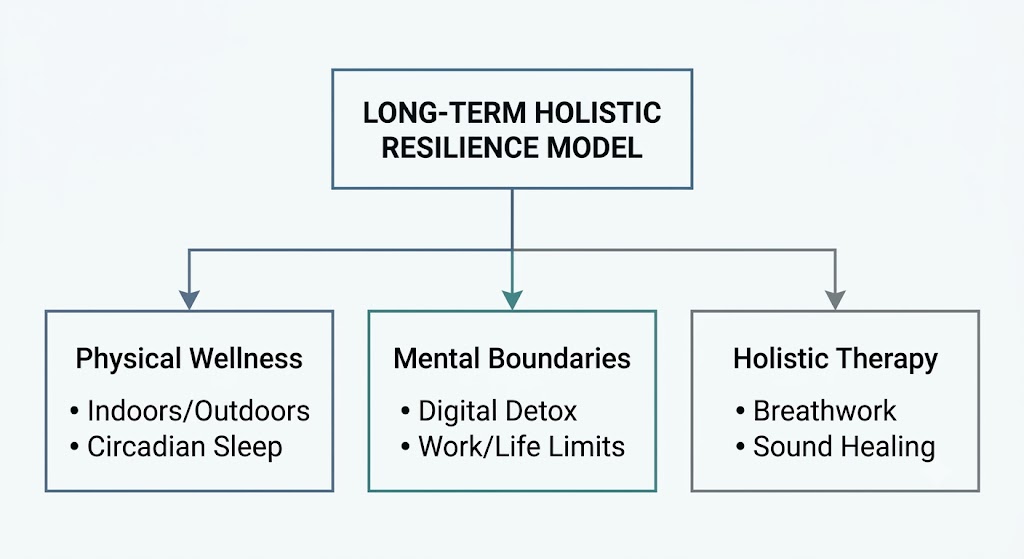
Long-term prevention of stress and anxiety involves lifestyle choices that support nervous system health. Key practices include climate-adapted daily exercise, structured sleep hygiene, nutrient-dense nutrition, mindfulness, energy healing, and somatic therapy. These techniques address root causes rather than just managing symptoms, promoting long-lasting mental wellness and emotional balance.
Living in a fast-paced environment like Dubai—where demanding careers, intense schedules, and environmental factors intersect requires a proactive approach to mental well-being.
Adapting Wellness Habits to the UAE Climate
During hotter months, staying active outdoors can be challenging. Staying indoors for extended periods, however, can impact your circadian rhythm and lower mood due to reduced sunlight exposure.
- Indoor Movement: Incorporate indoor swimming, reformer pilates, or yoga into your daily routine during peak heat.
- Circadian Lighting: Get 10–15 minutes of early morning sunlight before 8:30 AM to regulate melatonin production and stabilise evening sleep patterns.
Managing Work Pressure and Expat Adjustment
Relocating and adjusting to demanding work schedules can stretch personal support systems thin.
- Establish Clear Digital Boundaries: Set strict cut-off times for work messages in the evening to let your nervous system fully unwind.
- Build Community Connections: Counter loneliness by joining group wellness sessions, workshops, or community gatherings.
Integrating Holistic Modalities
True stress management goes beyond basic relaxation techniques; it involves releasing accumulated tension stored deep within the body:
- Somatic Breathwork: Guided, conscious breathing helps release trapped emotional stress from bodily tissues.
- Sound Therapy & Frequency Healing: Utilising acoustic vibrations (such as Tibetan singing bowls or gongs) helps quiet brainwave activity, shifting your mind from active beta waves into restorative theta states.
- Reiki and Energy Healing: Works by rebalancing energetic pathways, calming an overactive nervous system, and promoting deep mental clarity.
Common Pitfall: Relying solely on temporary stress relief methods—like excess caffeine, high-sugar snacks, or overworking can worsen anxiety over time by destabilizing blood sugar and overloading your adrenal glands.
4. When Should You Seek Professional Support in Dubai?
Professional guidance is essential when stress or anxiety chronically interferes with daily responsibilities, sleep quality, physical health, or personal relationships. Seeking help early from certified holistic practitioners or licensed mental health professionals prevents burnout, restores body-mind harmony, and provides personalised, evidence-based coping tools.
While self-care strategies are valuable for daily maintenance, persistent anxiety often requires professional support. You should consider seeking professional guidance if you experience:
- Frequent panic attacks or feelings of overwhelming dread.
- Chronic fatigue, insomnia, or digestive issues despite normal medical tests.
- Difficulty concentrating or making decisions at work.
- Persistent emotional numbness, irritability, or social withdrawal.
Professional holistic centres combine evidence-based practices with individual care, giving you a safe space to explore and address the root causes of stress.
5. Frequently Asked Questions (FAQs)
What is the fastest way to stop severe anxiety or a panic attack?
The fastest way to de-escalate severe anxiety is through the physiological sigh: take two quick inhales through your nose, followed by one long, slow exhale through your mouth. Repeat this cycle 3 to 5 times. This immediately expands the alveoli in your lungs, releases carbon dioxide, and signals your parasympathetic nervous system to slow your heart rate.
Can chronic stress cause physical pain and stomach issues?
Yes. The gut and brain communicate constantly through the gut-brain axis via the vagus nerve. Chronic stress keeps your body in a fight-or-flight state, which diverts blood flow away from digestion. This often leads to issues like bloating, stomach cramping, acid reflux, tension headaches, and chronic shoulder or neck pain.
How does holistic therapy differ from conventional stress management?
While conventional methods often focus primarily on cognitive management or symptom control, holistic therapy treats the whole person. It addresses the physical, emotional, and energetic roots of stress by combining somatic movement, breathwork, energy healing, and lifestyle support to restore long-term balance.
Reclaim Your Inner Calm with Positive Living UAE
Navigating daily stress and anxiety doesn’t have to be a solo journey. At Positive Living UAE Holistic Centre in Dubai, we offer integrative, personalised care designed to help you release deep-seated tension, regain emotional balance, and build lasting resilience.
Whether you’re looking for transformative somatic breathwork, sound healing, energy therapy, or personalised wellness consultations, our expert team provides a tranquil sanctuary tailored to your unique needs.
Take the first step toward lasting peace of mind.
Book Your Holistic Wellness Consultation at Positive Living UAE Today or visit our Dubai centre to start your journey toward a balanced, vibrant life.