What Is Marriage Counselling?
Marriage counselling is a specialised form of psychotherapy designed to help couples identify conflict patterns, improve communication, and rebuild emotional or physical intimacy. Conducted by licensed therapists, it provides a neutral environment where partners evaluate relationship dynamics, resolve deep-seated disputes, and develop practical tools for long-term relational stability.
At its core, marriage counselling is a collaborative, goal-oriented process. Unlike individual therapy, which focuses primarily on an individual’s personal mental health history and intrapsychic conflicts, marriage counselling treats the relationship itself as the client.
Therapists evaluate the invisible patterns, unexpressed expectations, and communication loops that cause distress between two people. The objective is not to determine who is “right” or “wrong,” nor is it simply to eliminate arguments. Rather, evidence-based marriage counselling equips couples with psychological frameworks to process conflict constructively, foster emotional safety, and make conscious decisions about their joint future.
In dynamic, multicultural hubs like the UAE, marriage counselling serves an even broader role. It provides a structured space for couples navigating unique expatriate stressors—such as distance from extended family support networks, high-pressure professional environments, fast-paced lifestyle transitions, and cross-cultural communication gaps.
How Does Marriage Counselling Work? The 4-Phase Therapeutic Process
Marriage counselling works through a structured, multi-phase clinical framework that transitions couples from active conflict to sustainable connection. Therapists evaluate interaction patterns, neutralise systemic triggers, teach evidence-based communication strategies, and guide partners through practical exercises to foster emotional safety, mutual understanding, and shared long-term life goals.
Clinical couples therapy follows a systematic, evidence-based trajectory rather than unstructured venting sessions. While every therapist customises their approach, high-quality care generally moves through four distinct phases:
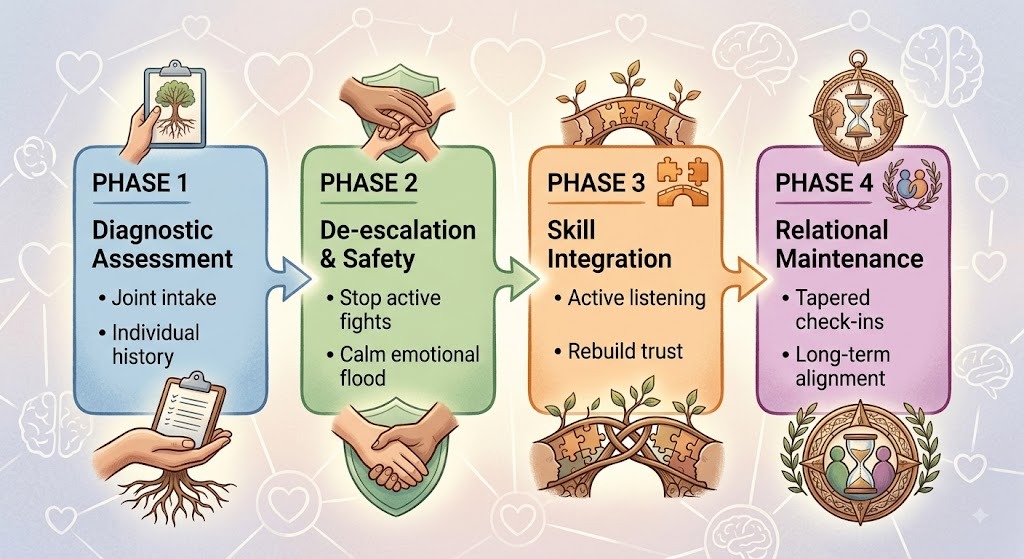
Phase 1: Diagnostic Assessment & Intake
The initial 1 to 3 sessions focus on comprehensive assessment. The therapist evaluates the couple’s relationship history, strengths, conflict triggers, and underlying attachment styles. This phase usually includes a joint diagnostic session followed by brief individual assessment sessions with each partner to understand personal backgrounds and screen for individual mental health factors or unexpressed concerns.
Phase 2: De-escalation and Emotional Stabilisation
Once diagnostic baseline data is established, therapy focuses on stopping destructive conflict cycles. Partners learn to spot immediate emotional dysregulation (flooding) and pause arguments before they escalate into personal attacks or emotional withdrawal. The focus here is establishing immediate emotional safety inside and outside the clinic.
Phase 3: Skill Building and Reconnection
With acute volatility stabilised, the clinician introduces targeted intervention tools. Couples practice active listening, emotional attunement, conflict negotiation, and intimacy building. Past hurts—such as broken promises, financial breaches, or infidelity—are processed systematically using structured repair protocols.
Phase 4: Integration and Relational Maintenance
In the final phase, session frequency drops from weekly to bi-weekly or monthly. Couples apply their newly acquired skills independently in daily life, utilizing therapy sessions primarily to fine-tune strategies, address emerging life transitions, and consolidate long-term relationship goals.
What Happens During a Marriage Counselling Session?
A marriage counselling session is a structured, 50-to-90-minute confidential consultation guided by a licensed clinician. Sessions begin with agenda-setting, followed by guided dialogue, real-time communication coaching, and emotional regulation exercises. Therapists maintain strict neutrality while providing actionable home assignments to reinforce behavioural changes between meetings.
A standard session begins with the clinician reviewing the couple’s past week, checking progress on homework assignments, and setting a specific focus for the hour. Rather than allowing partners to debate past events unproductive, the clinician acts as a real-time facilitator and communication coach.
When a confrontation occurs during a session, the therapist interrupts negative communication loops (such as contempt, defensiveness, or stonewalling) and guides partners to rephrase their statements using healthy emotional frameworks.
Clinical Pro Tip: Effective couples therapy requires active participation between sessions. Research consistently demonstrates that couples who complete targeted behavioral homework—such as 15-minute daily check-ins or structured appreciation exercises, achieve measurable clinical progress up to 40% faster than those who rely solely on in-clinic discussion.
Common Pitfalls to Avoid in Therapy
- Expecting the Therapist to Act as a Judge: A licensed marriage therapist will not take sides, assign guilt, or declare a “winner.” Their role is to illuminate relational dynamics neutrally.
- Using Sessions as an Arena for Attacks: Venting hostility without structured reflection reinforces negative cycles. Therapy is designed to transform dynamic breakdowns, not highlight defects.
- Delaying Treatment Until Separation Is Imminent: Waiting years after conflict patterns become ingrained drastically increases the clinical effort required to rebuild trust.
Evidence-Based Modalities Compared: Gottman, EFT, CBT, and Imago
Evidence-based marriage counselling utilises scientifically validated therapeutic modalities tailored to a couple’s specific needs. Leading frameworks include the Gottman Method for behavioural skill-building, Emotionally Focused Therapy (EFT) for attachment repair, Cognitive Behavioural Therapy (CBT) for cognitive reframing, and Imago Relationship Therapy for resolving childhood-rooted relational patterns.
Different relationship challenges require different clinical tools. Below is an infographic overview and comparative breakdown of primary evidence-based therapeutic modalities:
| Therapeutic Modality | Core Focus & Philosophy | Primary Techniques Used | Best Suited For | Typical Clinical Scope |
| Gottman Method | Dismantling destructive communication habits; building the “Sound Relationship House.” | Dissecting “Four Horsemen,” emotional bids tracking, physiological calm-down protocols. | Frequent escalation, chronic conflict, communication breakdowns. | Short to Medium-term (12–20 sessions) |
| Emotionally Focused Therapy (EFT) | Rebuilding emotional secure attachment bonds based on human attachment theory. | Identifying negative interaction cycles, expressing primary attachment needs, emotional attunement. | Emotional distance, loss of intimacy, post-infidelity trust repair. | Medium-term (15–24 sessions) |
| Cognitive Behavioural Couples Therapy (CBCT) | Identifying and modifying negative cognitive distortions and behavioral assumptions. | Thought records, communication skill training, joint problem-solving matrices. | Specific functional disagreements (money, chore equity, schedule conflicts). | Short-term (8–12 sessions) |
| Imago Relationship Therapy | Linking adult romantic conflict to unhealed childhood attachment wounds. | Structured “Imago Dialogue” (Mirroring, Validating, Empathizing). | Recurring, deeply emotional triggers that feel irrational or disproportionate. | Medium-term (12–16 sessions) |
Common Relationship Issues Addressed in Marriage Therapy
Marriage therapy addresses a broad range of relational challenges, including communication breakdowns, infidelity, emotional distance, financial strain, intimacy loss, and parenting conflicts. In multicultural hubs like the UAE, it frequently resolves secondary pressures such as cross-cultural communication barriers, expat isolation, dual-residency logistics, and acute professional burnout.
While every couple’s story is unique, systemic distress generally stems from predictable categories. Professional marriage counselling systematically evaluates and treats:
- Communication Deadlocks: Chronic interruptions, defensive reactions, passive-aggressive silence, or feeling unheard despite continuous discussions.
- Infidelity & Trust Violations: Recovering from emotional or physical affairs, secrecy, digital boundaries breaches, or severe breaches of honesty.
- Emotional Distance & Intimacy Loss: Transitioning from “roommates” back to romantic partners by addressing reduced physical affection, desire mismatch, or emotional detachment.
- Financial Disagreements: Reconciling differing money mindsets, budgeting friction, investment risk tolerances, or financial transparency issues.
- Parenting & In-Law Strain: Aligning on disciplinary philosophies, boundary-setting with extended family, and managing step-family dynamics.
- UAE Expat & Cross-Cultural Stressors: Resolving cultural misunderstandings in cross-cultural marriages, coping with social isolation away from home countries, managing demanding regional career travel, and balancing dual-country financial commitments.
When to Seek Marriage Counselling: Early Intervention vs. Crisis Management
Couples should seek marriage counselling when communication repeatedly turns defensive, unresolved conflicts recur, or emotional intimacy deteriorates. While effective during acute crises like infidelity or separation threats, proactive therapy undertaken during major life transitions—such as relocation, parenthood, or career shifts—yields higher long-term success rates.
A common misconception is that marriage counselling is strictly a last resort before divorce court. In clinical practice, couples who seek support early retain significantly higher relational equity and resolve issues much faster.
Key Indicators That It Is Time to Consult a Therapist
- The “Four Horsemen” Are Present: Criticism (attacking character), Contempt (sarcasm, disrespect, mockery), Defensiveness (victim-playing), or Stonewalling (withdrawing entirely from interaction).
- Unresolved “Groundhog Day” Arguments: Replaying the exact same fight repeatedly for months or years without reaching closure or compromise.
- Living Parallel Lives: Functioning like transactional roommates who co-parent or cohabit efficiently but share zero emotional connection or conversational depth.
- Major Life Transitions: Preparing for marriage, welcoming a child, relocating internationally to the UAE, or navigating retirement.
Crucial Safety Note: Marriage counselling is designed for relationships where mutual goodwill exists, even if buried under distress. In cases involving active domestic abuse, coercive control, or severe unmanaged addictions, joint marriage counselling is clinically contraindicated. In these situations, individual therapy and specialised safety resources should be prioritised.
Marriage Counselling in the UAE: Licensing, Privacy, and Local Context
Marriage counselling in the UAE is strictly regulated to protect patient privacy and clinical standards. Licensed practitioners operate under the Community Development Authority (CDA) or Dubai Health Authority (DHA). Services accommodate multicultural dynamics, offering bilingual therapy, culturally sensitive frameworks, and legal confidentiality protections compliant with UAE healthcare regulations.
Seeking mental health and relationship support in the United Arab Emirates involves specific regulatory protections and cultural frameworks that couples should understand:
Regulatory Bodies & Licensing Standards
To practice legally in Dubai and the wider UAE, marriage counsellors and psychology professionals must hold valid credentials from official regulatory authorities:
- Community Development Authority (CDA): Licenses social sector professionals, including marriage and family therapists, counsellors, and non-clinical psychologists in Dubai.
- Dubai Health Authority (DHA) / Department of Health (DOH) Abu Dhabi: Licenses clinical psychologists and psychiatrists operating within medical clinics and hospitals.
Always verify that your chosen clinic and practitioner hold active CDA or DHA/DOH licensing to ensure adherence to professional, evidence-based care and strict ethical standards.
Confidentiality Laws
The UAE maintains strict data protection and medical privacy laws. Patient records, session notes, and diagnostic details are legally protected under federal health data privacy laws. Information shared during therapy cannot be disclosed to third parties, employers, or family members without explicit written consent, except under rare, legally mandated emergency circumstances involving immediate harm.
Cultural Sensitivity and Diversity
With over 200 nationalities residing in the UAE, qualified local clinics specialize in cross-cultural therapy. Counsellors are trained to respect traditional values, religious backgrounds, and diverse family structures while delivering modern, evidence-based clinical interventions. Bilingual services (such as English, Arabic, French, and South Asian languages) are widely available.
Duration, Costs, and Clinical Success Rates
The duration of marriage counselling typically ranges from 8 to 20 weekly sessions, depending on issue severity and couple commitment. Clinical research indicates that approximately 70% to 75% of couples receiving evidence-based therapy experience significant relationship improvement, with optimal outcomes achieved when couples seek intervention within two years of conflict onset.
How Many Sessions Will You Need?
Therapy is not meant to last indefinitely. A typical evidence-based therapeutic commitment follows these benchmarks:
- Short-Term Focused Work (6–8 Sessions): Ideal for specific functional issues, pre-marital alignment, or minor communication tune-ups.
- Standard Clinical Treatment (12–20 Sessions): Required for deep-seated communication breakdowns, emotional distance, or navigating major life transitions.
- Complex Trust Restoration (20+ Sessions): Necessary for healing after acute infidelity, severe breaches of trust, or long-standing complex relational trauma.
What Determines Success?
According to data from the American Association for Marriage and Family Therapy (AAMFT) and international clinical trials, over 70% of couples report significant relational improvement following evidence-based couples therapy. The primary variables influencing success include:
- Level of Commitment: Both partners being genuinely willing to examine their own behaviours rather than fixating solely on changing their spouse.
- Timeliness: Seeking help before resentment turns into complete emotional detachment.
- Consistency: Attending sessions regularly and practising assignments in daily life.
Frequently Asked Questions (FAQs)
Can marriage counselling work if only one partner is willing to attend?
While joint attendance is optimal for observing real-time interaction patterns, individual therapy focused on relational dynamics (sometimes called “one-ended marriage therapy”) can still create positive systemic change. When one partner shifts their communication patterns, reactions, and boundaries, it inevitably changes the overall dynamic of the relationship.
How does pre-marital counselling differ from traditional marriage counselling?
Pre-marital counselling is a proactive, educational form of therapy undertaken before marriage. Rather than fixing existing distress, it helps couples explore alignment on core life pillars—such as financial goals, career expectations, family boundaries, parenting philosophies, and conflict styles—to prevent future friction.
Is marriage counselling covered by health insurance in the UAE?
Coverage depends on your specific health insurance policy and insurer network. While basic medical insurance plans in the UAE rarely cover non-clinical marriage counselling, comprehensive or premium international policies may offer partial reimbursement under mental health benefits, provided the practitioner is DHA/DOH licensed. It is recommended to check directly with your insurance provider.
What is the difference between a marriage counsellor, a clinical psychologist, and a life coach?
In the UAE, a marriage counsellor or social therapist (CDA-licensed) holds a Master’s degree in counselling or therapy and focuses specifically on relational systems. A clinical psychologist (DHA/DOH-licensed) holds advanced clinical degrees and is qualified to diagnose and treat individual mental health conditions (such as depression or severe anxiety) alongside therapy. A life or relationship coach is typically unregulated and does not possess licensed clinical training to treat psychological distress or deep relational trauma.
Rebuilding Your Relationship with Positive Living UAE
Navigating relationship difficulties can feel overwhelming, but you do not have to handle them alone. At Positive Living UAE, our team of CDA and DHA-licensed marriage therapists provides compassionate, evidence-based couples therapy tailored to the unique cultural and lifestyle realities of partners residing in Dubai and across the UAE. Whether you are seeking to resolve chronic communication loops, heal from trust violations, or proactively strengthen your emotional connection, our personalised counselling programs deliver the practical tools required for lasting relational harmony.
Take the first step toward a stronger, healthier partnership.
Book a Confidential Consultation with Positive Living UAE Today or speak with our client care team to match with a clinical specialist suited to your relationship goals.